Nature’s Engineers: Beavers Enhance Our Pleasant Grove Restoration Site

When we set out to restore a natural landscape, we often lay the groundwork—reshaping stream channels, planting native vegetation, and restoring the natural flow of water. But sometimes, a critical piece of the puzzle is put in place not by us, but by nature’s own engineers.
That’s exactly what happened recently at our Pleasant Grove floodplain restoration site. This is one of our restoration projects that helped store 1.25 billion gallons of water during Hurricane Helene last year and acted as a sponge to help mitigate flooding to the surrounding area.
The Unexpected Restoration: Enter the Beavers
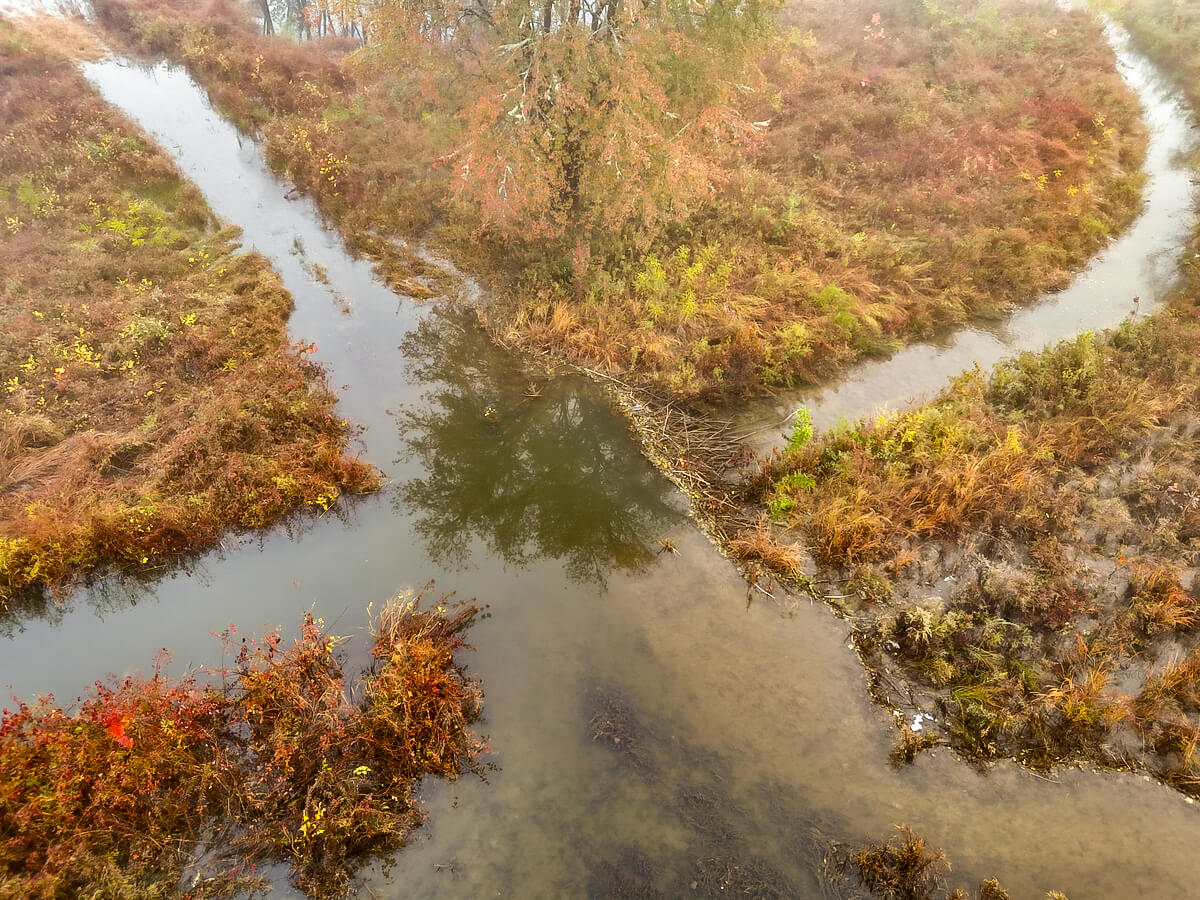
During a recent site visit to Pleasant Grove, our Natural Resources Manager, Torry Nergart, made an exciting discovery: beavers had moved in and built an elaborate dam complex!
What started as a professionally designed restoration project has now been naturally enhanced by a family of beavers, who are creatively using the structures we put in place.
“They built a long stick dam in the road, using the in-channel large rocks that we installed for foot crossings as a perfectly solid anchor for their work… They are taking advantage of the engineered depressions and connections to the main water body,” Torry says.
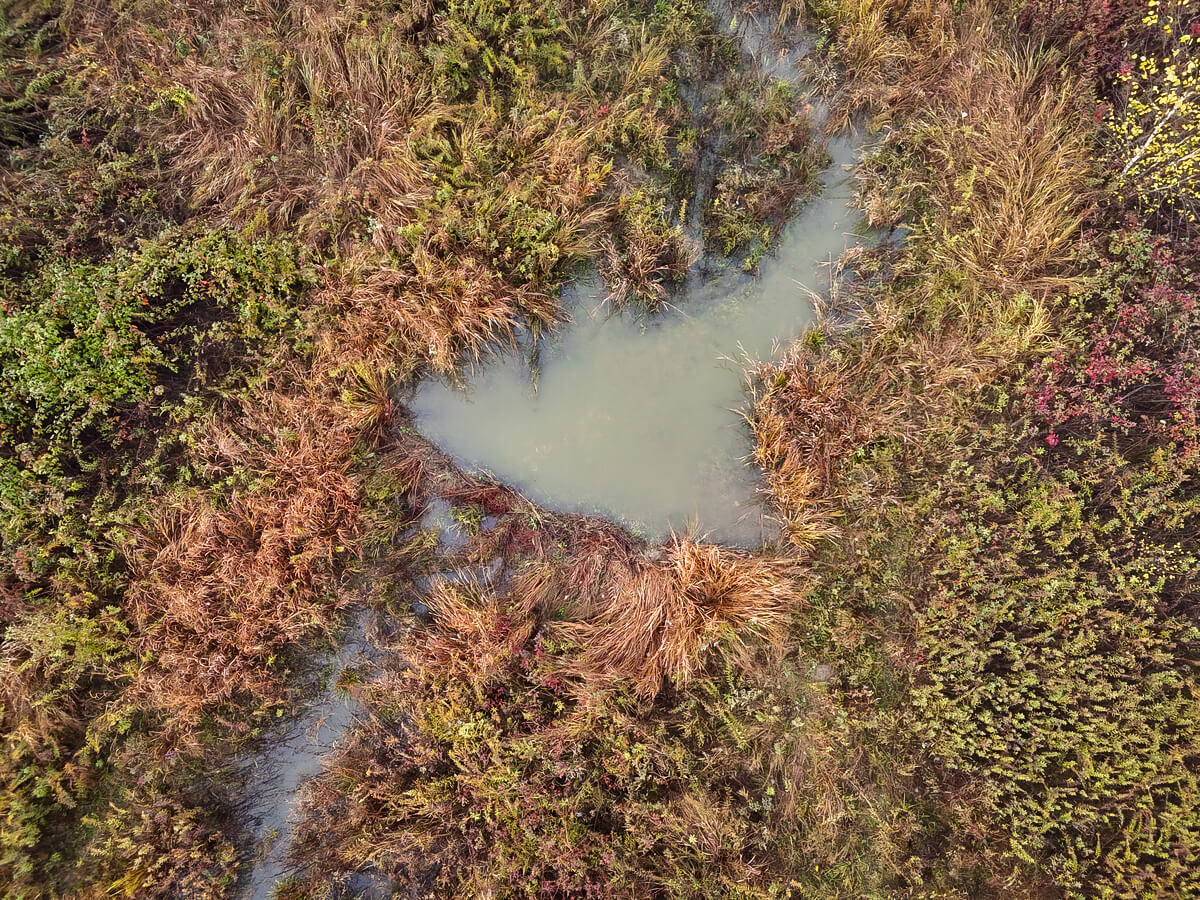
The beavers have effectively raised the water level by approximately two feet, utilizing the existing large rocks and even soil excavated from the old roadbed to create a surprisingly sturdy main dam. They have also constructed smaller stick-and-mud check dams and a mud dam to expand a large pond area.
As Natural Resources Director David Lee summarized, “The beavers are continuing what we started out there.” They are improving floodplain connectivity along Little Willow Creek, providing water storage, and supporting diverse aquatic habitat. “They are accelerating our goals and hopes for the property—and arguably, doing it way better (and of course cheaper) than we can.”
A Flush of New Life

The effect of this unexpected engineering is immediately noticeable. The beavers’ work is directly enhancing a wetland complex we initially created out of old golf course ponds, expanding it into new pockets along Little Willow Creek.
Torry noted the immediate increase in wildlife, a sure sign of a thriving new habitat:
- A pair of Great Blue Herons were spotted fishing, possibly scouting the area for a future rookery.
- Kingfishers skimmed along Little Willow Creek.
- “Lots of new life coming in along with the water,” Torry observed.
The increased water level and new pond areas have created significant additional wetland habitat, boosting the ecological value of the entire site. While the beavers’ gnawing and dam-building may prune some of the shrubs or girdle some canopy trees, this, too, is a natural process that attracts cavity-nesting creatures and other habitat specialists.
David views the beavers’ work as entirely positive, noting that the benefits of the new wetland and open-water habitat will offset any expected loss of planted trees or shrubs.
As with many natural processes, what benefits the ecosystem can also reshape how people use the landscape. The beavers’ creation of additional wetland habitat on the site is another reminder that public access in a functioning floodplain must be designed around the natural movement of water and wildlife.
“Although future public access has always been a goal here, it is secondary to the ecological functioning of the floodplain. During periods of inundation, floodplain trails and public access is limited. That said, when we design the public access paths at Pleasant Grove, we can and will take the beavers into consideration. Their presence will actually help inform where and how we place future trails”
The Keystones of Restoration
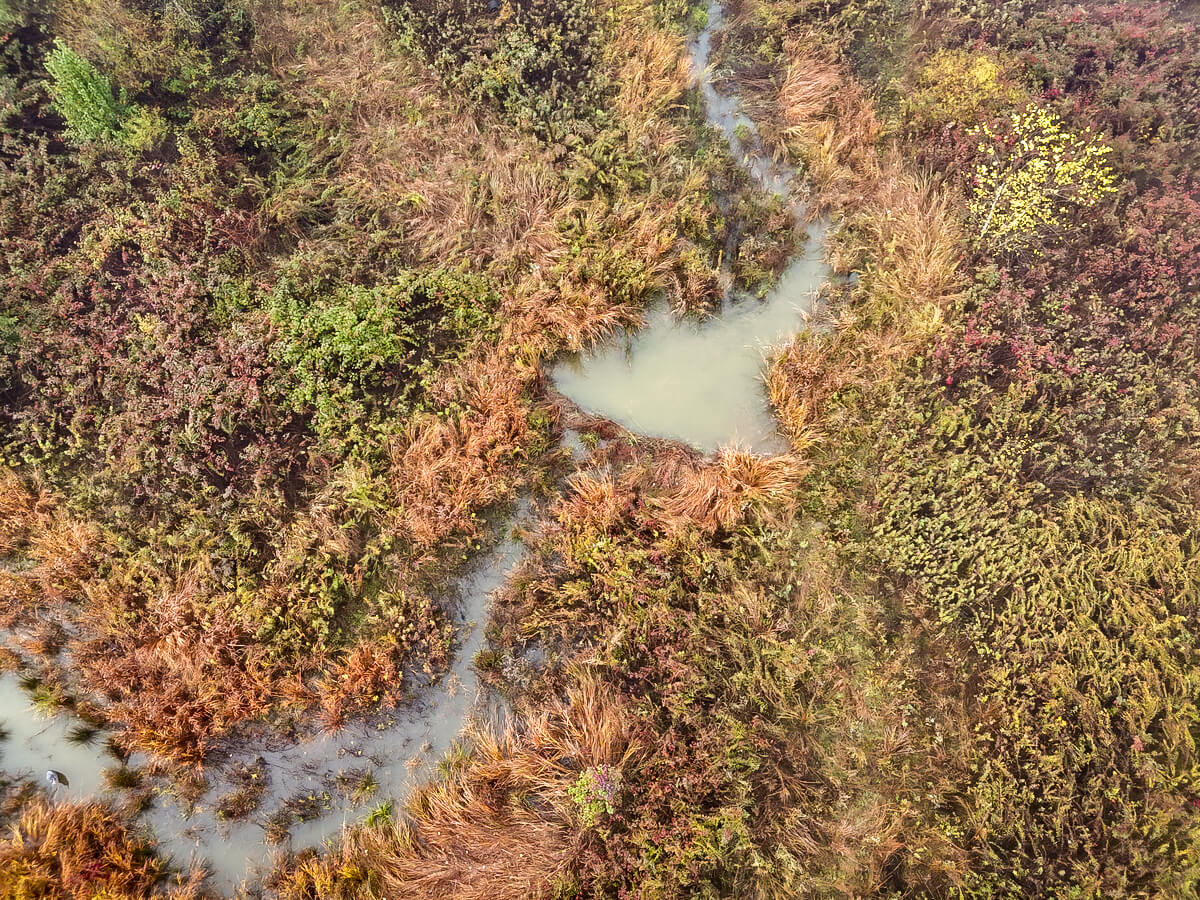
Torry sees in the beavers’ work, “a nice metaphor, as to the order with which environmental restoration has to take place. Many, but not every one of the support stones of the arch were built or re-introduced, and now the keystone is in place. The arch is made whole and strong, and can stand because of the weight.”
In this analogy, our restoration work provided the “support stones,” and the beavers—nature’s response—placed the “keystone,” stabilizing and completing the entire system. This is the essence of effective ecological restoration: setting the stage and letting nature take the lead.
New Site Access and Continued Monitoring

This transformation requires our team to adapt our access and monitoring routines—a welcome challenge that reflects success. Pleasant Grove continues to evolve as a living system, and we’re excited to keep learning from it. This unexpected addition to the site requires some adaptation from our team, but overall speaks very positively to the work accomplished here.
We are thrilled to witness this dynamic and successful evolution at Pleasant Grove. It serves as a powerful reminder that sometimes, the best partnerships are the wild ones.