A Second Look at the Deerwoode Reserve Restoration
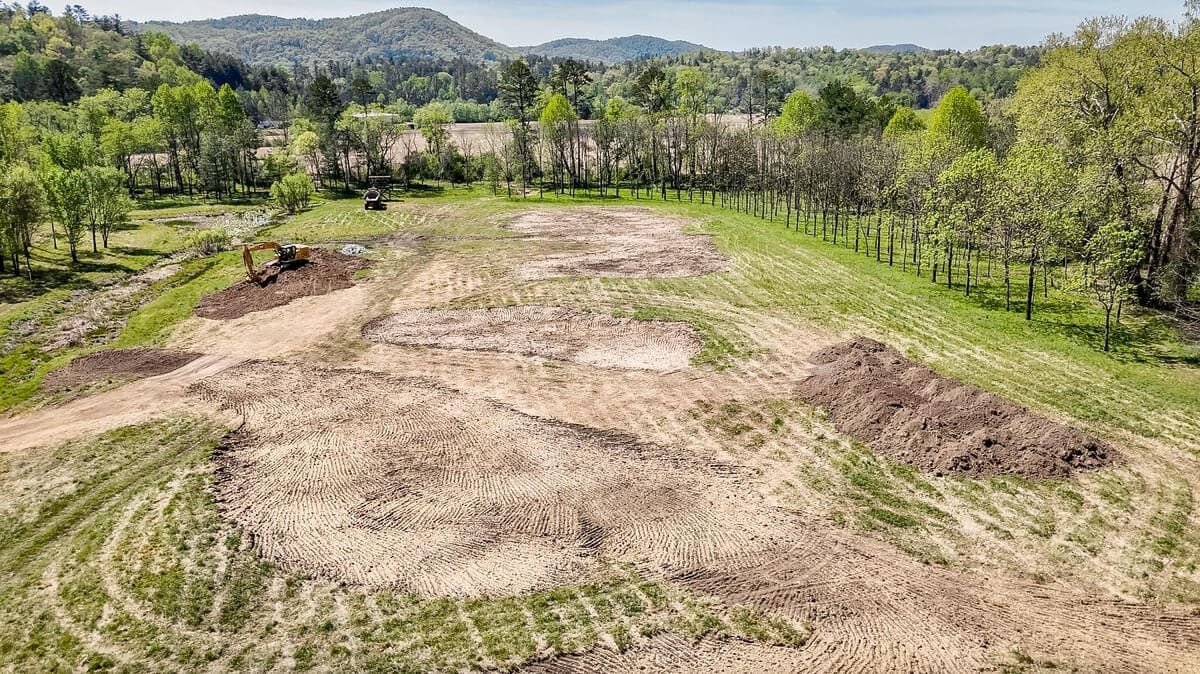
The first time we walked Deerwoode Reserve, the work existed only on paper — engineering plans, site maps, and the careful observations of a group of people learning to read what a river was asking for. The second time, the river was already getting its answer.
Our second educational walk along the French Broad River in Transylvania County brought participants back to a floodplain mid-transformation. Dirt was moving. Bamboo was coming out. And Greg Jennings of Jennings Environmental — the engineer behind the restoration design — was on hand to walk the group through what was happening, why, and what still lay ahead.
A River That Needs Room
One of the clearest themes of the walk was a simple but profound idea: humans love to smooth things out. We flatten, grade, and impose uniformity on land that was never meant to be uniform. But rivers don’t want flat. They want dynamic.
The work at Deerwoode is about returning the floodplain to the kind of varied, textured landscape the French Broad River needs around it. Irregular terrain, diverse vegetation, and the natural complexity that allows a river to do its job when the water rises. The goal, over time, is a thriving riparian forest: a living edge between land and water that supports the river and everything that depends on it.
That’s no small thing. The French Broad is home to roughly 200 species of fish, many of which rely on this stretch of river to reproduce. Those fish support entire sections of the ecosystem. The ripple effects of a healthy floodplain extend far beyond what you can see standing on the bank.
The New Slough
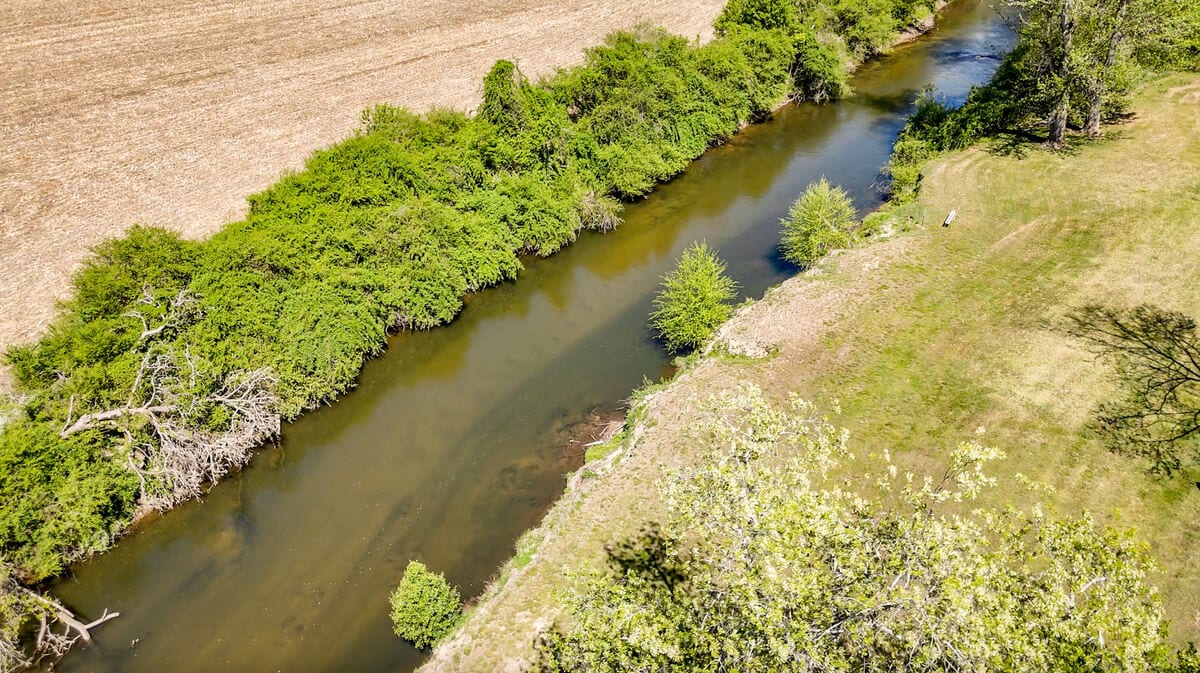
One of the most exciting elements of the project taking shape on the ground is the new slough — a quiet, slow-moving backwater channel that will provide fish habitat, breeding grounds, and shelter for aquatic life. It’s the seventh slough Conserving Carolina has constructed, and its location was chosen carefully.
Where you put a slough matters. The process involves reading the landscape — identifying desirable trees nearby, understanding their root systems, and working around healthy vegetation worth preserving. One of the biggest stressors on a riverbank is the outside of a meander bend, where current hits the hardest. That’s not where you want a slough. The Deerwoode location, Greg explained, checks enough of the right boxes to be a strong candidate. Native trout and even some muskellunge will be among the beneficiaries.
A Wetland That Listens to the River
The two-acre wetland mosaic taking shape on the property will be what’s called an isolated wetland — not directly connected to the river channel, but positioned to soak up floodwaters when the French Broad overflows its banks. That distinction matters. Rather than functioning as a direct extension of the river, it acts as a sponge, capturing overflow and releasing it slowly. It will also provide critical habitat for reptiles, salamanders, and birds — species that depend on exactly this kind of quiet, shallow, seasonally flooded ground.
Bamboo, Walnuts, and the Work of Clearing
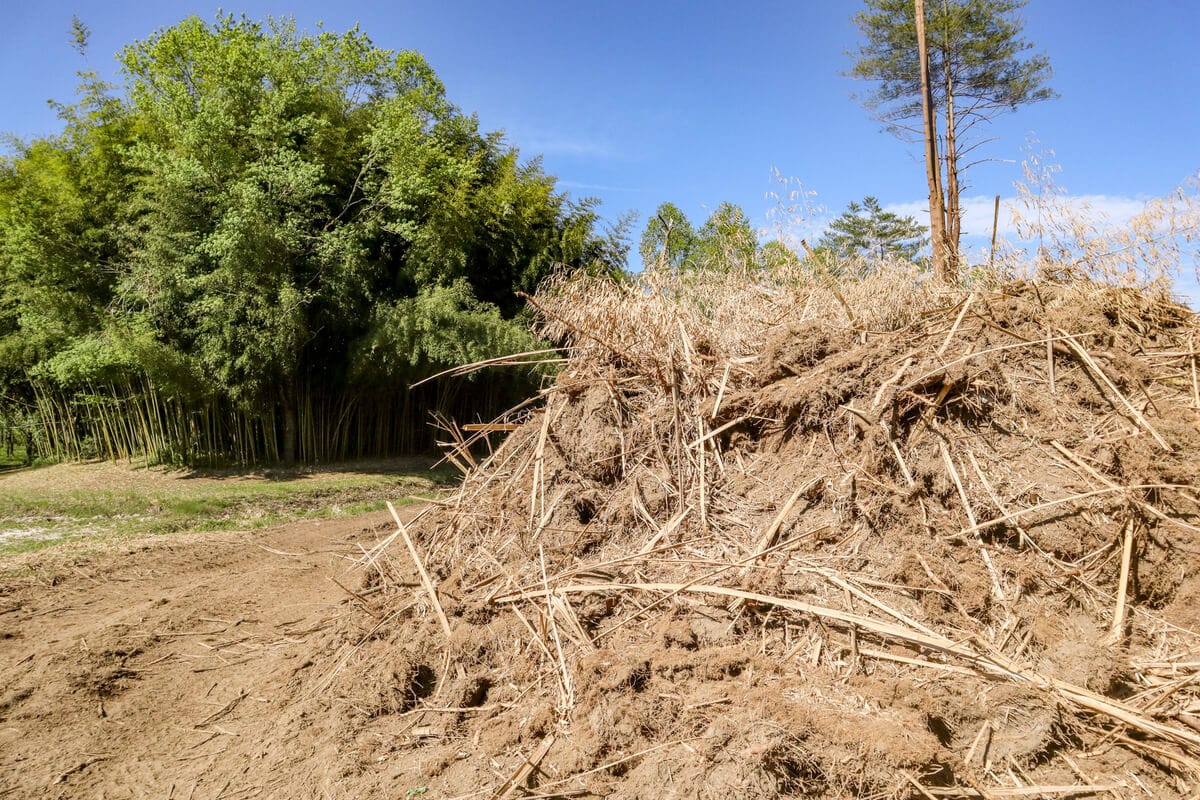
Not all of the work at Deerwoode is about what gets added. Some of it is about what gets removed, and why.
Invasive bamboo has taken hold across portions of the site, and its removal is one of the project’s most labor-intensive challenges. Left unattended for decades, bamboo outcompetes nearly every other plant on the landscape — native or not. Getting it out entirely is a long and difficult process, and the work continues.
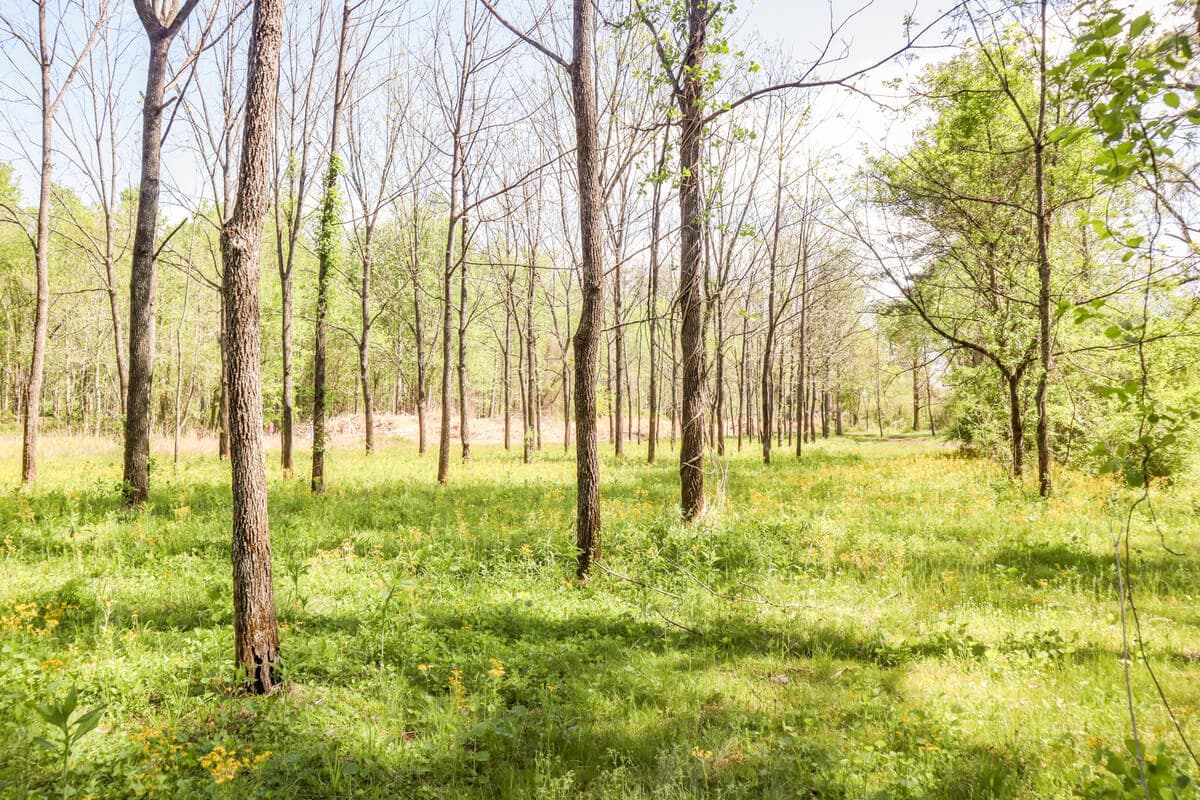
Closer to the river, a near-monoculture of black walnut trees will also be selectively thinned. Walnut, while a native and valuable species in its own right, has shallow roots that don’t provide the deep bank stabilization that a healthy floodplain demands. The goal is to relieve some competition so that the existing population of walnut can thrive as best it can while not crowding out the native oaks, chestnuts, and other deep-rooted species better suited to the work of holding this land together over the long term. Native river cane is also part of the vision — a plant with a long history along Appalachian waterways that Conserving Carolina hopes to return to this floodplain.
The soil displaced by all this work isn’t going to waste either. Dirt moved from lower elevations near the river is being relocated to higher ground on the property, where it will be seeded with native wildflowers — turning a byproduct of construction into a patch of valuable new habitat.
The Work That Never Ends
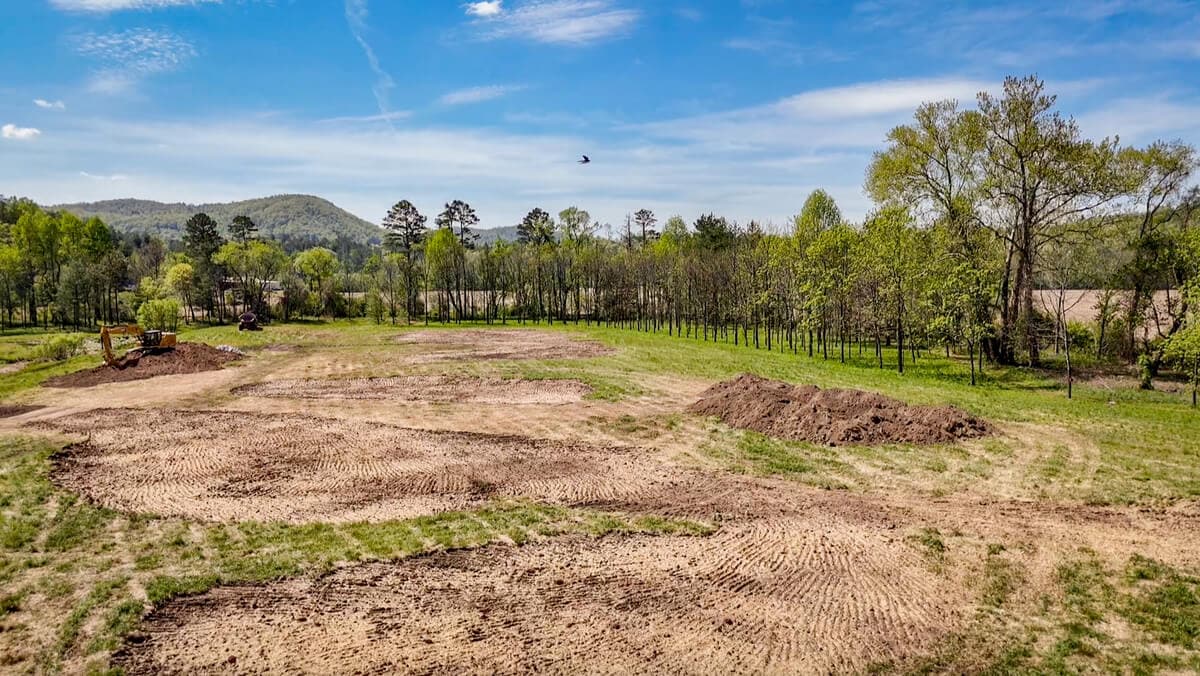
The goal is to have the major engineering work wrapped up by summer. But as Greg made clear on the walk, that’s not where the story ends. Stabilizing a streambank with plants is only the beginning. Those plants need tending, monitoring, and care as they establish. Invasives will need to be kept at bay. The floodplain will need to be watched and responded to as the river continues doing what rivers do.
Floodplain restoration, it turns out, is never really finished. It’s an ongoing relationship between people and a place — one that asks for attention long after the equipment has left and the engineers have gone home.
That’s the long view. And at Deerwoode Reserve, we’re just getting started. Keep an eye out for the third installment of this restoration series, and join us once the work is done!