Getting to Know a River: A First Look at the Deerwoode Preserve Restoration
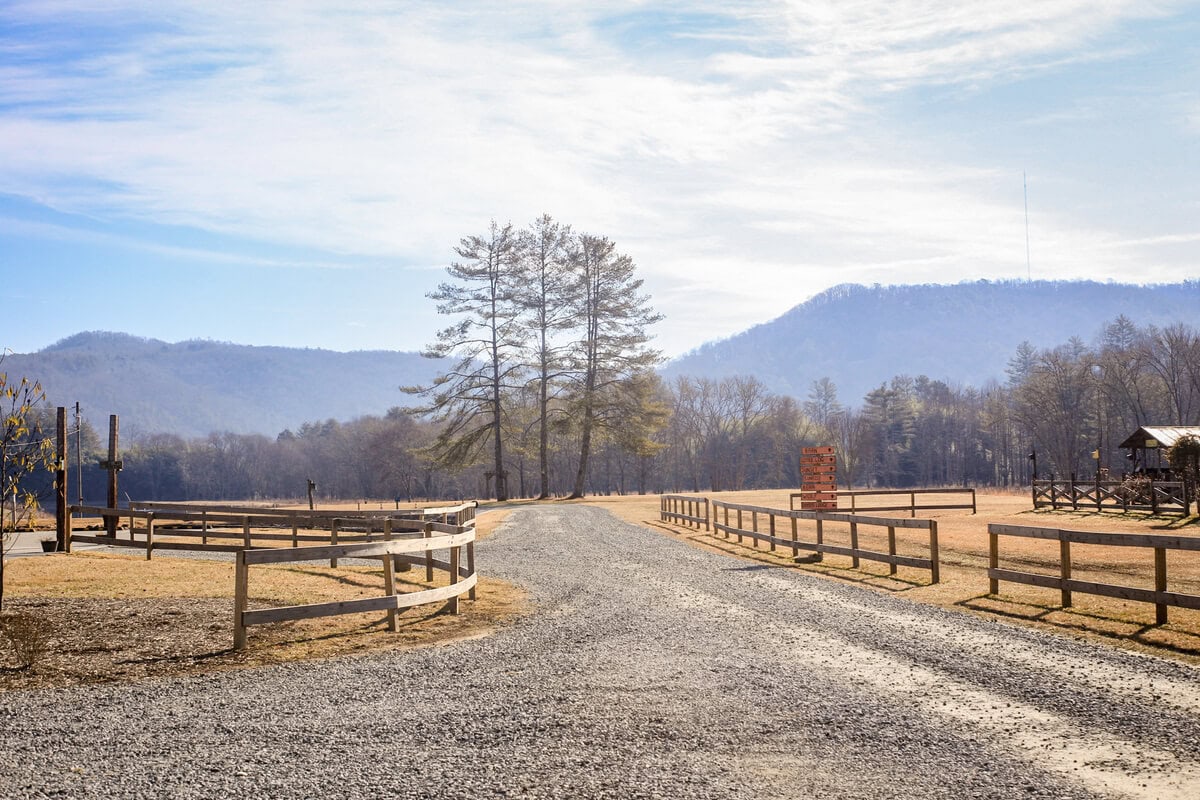
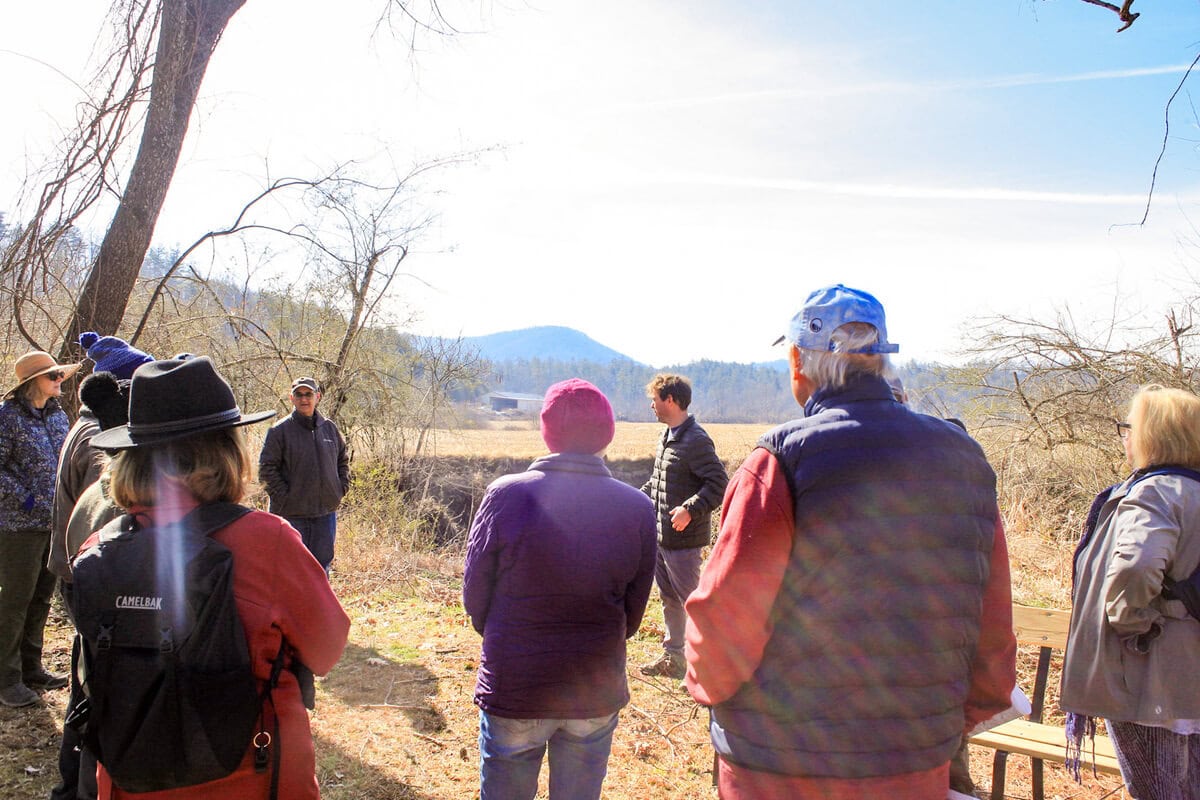
Some of the most important conservation work begins not with tools or heavy machinery, but with a walk. That was the idea behind the first installment of our Deerwoode Preserve restoration series — a guided educational stroll through a 175-acre property in Transylvania County, where Conserving Carolina holds a conservation easement and where the French Broad River has a story to tell.
The goal of this first outing was simple: get to know the land before we change it. Participants walked the property with Conserving Carolina staff as well as the property owners, taking in the layout of the floodplain, observing where the river has been pushing and pulling at its banks over the years, and beginning to understand the scope of what a full floodplain restoration actually looks like on the ground.
And there is a lot of ground to cover.
A River Under Pressure
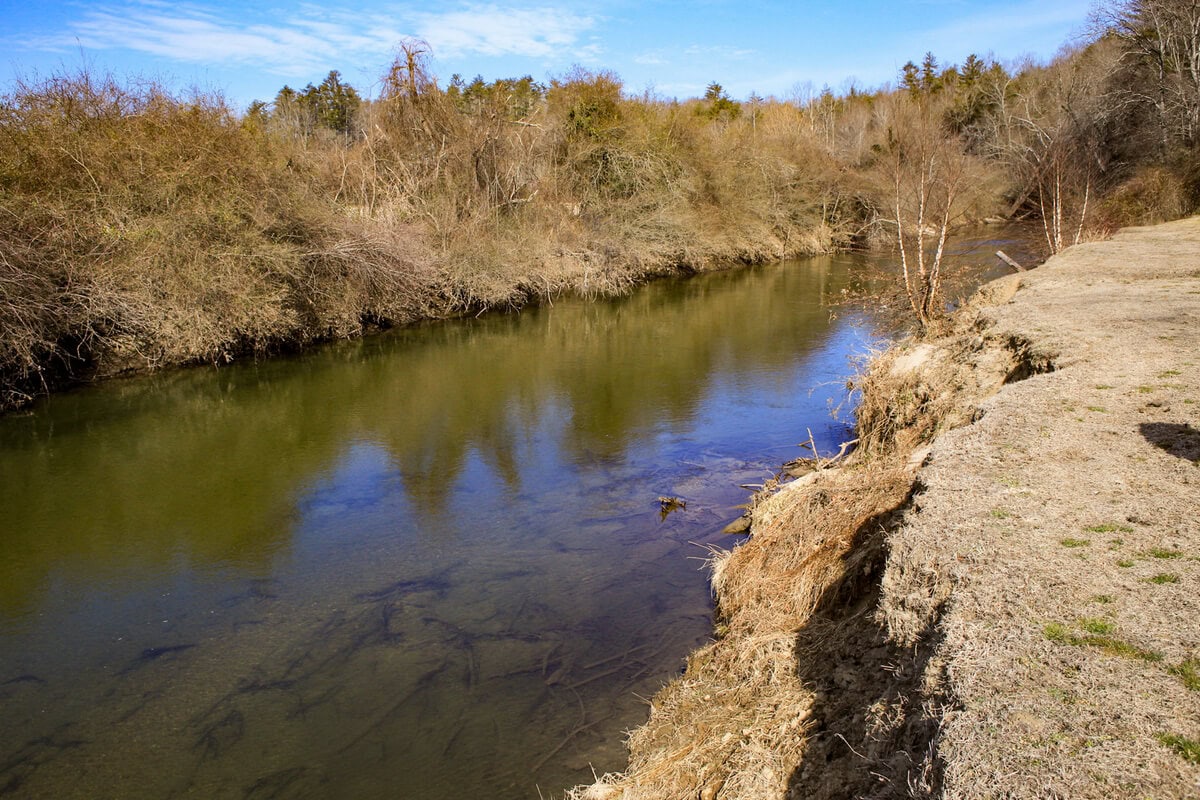
The French Broad River is one of the oldest rivers in the world, and like many rivers in Western North Carolina, it bears the marks of decades of land use decisions that have worked against it. At Deerwoode, stretches of streambank have eroded significantly, with the river undercutting its own banks and losing the stable, vegetated edges that a healthy river system depends on. Invasive bamboo thickets — a recurring villain in our region — have taken hold along portions of the bank, crowding out native plants and doing little to hold soil in place when the water rises.
What the walk made clear is that the river isn’t broken — it’s responding, as rivers do, to the conditions around it. The work ahead is about giving it better conditions to respond to.
What’s Coming
The restoration plan, designed by Jennings Environmental of Asheville, is ambitious in scope and thoughtful in approach. When work begins, the project will unfold across several interconnected efforts along the French Broad.
The most visible work will be bank stabilization — approximately 1,000 feet of of large rock placed along the base of the riverbank in both upstream and downstream sections. This “rock toe” acts as a foundation, armoring the base of the bank where erosion typically begins and where the current does its most relentless work. Above that rocky base, the banks will be pulled back and graded to a gentle, stable slope, then actively planted with a diversity of native trees and shrubs — setting the stage for a resilient, living riverbank that can hold its own for generations to come..
Beyond the banks, the project includes the creation of a wetland mosaic of roughly two acres — a patchwork of shallow, varied-depth wetland habitat that will support a wide range of wildlife. Submerged logs knows as ‘weirs’ will be installed to slow and spread water across the floodplain, and a 100-foot breach in an existing floodplain berm will help reconnect the river to land it hasn’t regularly touched in years. That reconnection is expected to enhance approximately 22 acres of floodplain habitat — and it’s at the heart of what floodplain restoration is all about: letting the river spread out, slow down, and do what rivers naturally do when given the room.
A new slough — a quiet, slow-moving, backwater pool — will also be constructed near the downstream section of the project, offering additional habitat complexity and helping to dissipate energy during high water events. Existing culverts that currently funnel water toward the French Broad will be removed as part of this work, further opening up the floodplain’s natural hydrology.
Throughout the site, invasive bamboo and other non-native invasive species will be cleared, making way for the native plantings and natural recovery that will follow construction.
An Invitation to Watch It Happen
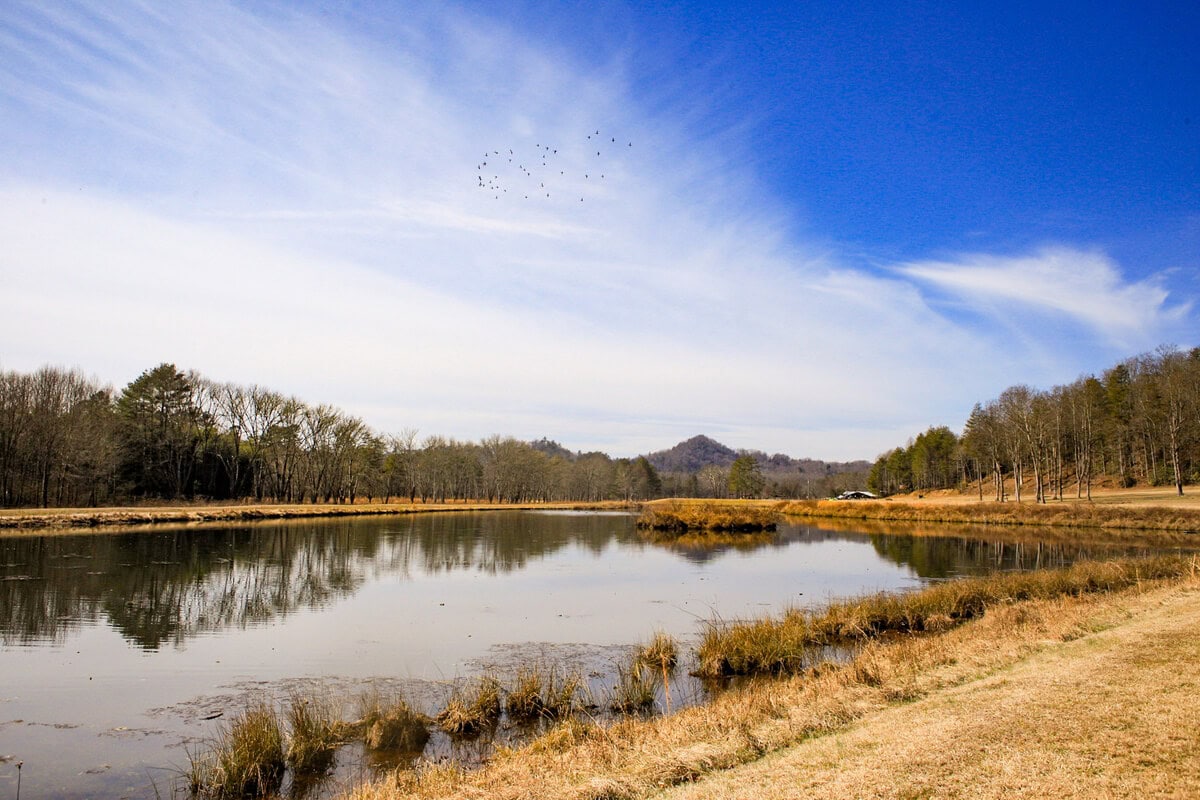
This walk was just the beginning. In the coming months, we’ll return to Deerwoode as the work gets underway — and we’re inviting you to follow along. The next installment of this series will take place during active construction, offering a rare up-close look at what floodplain restoration actually looks like in progress. The third and final installment will bring us back after the dust has settled, to see what the river and the land do when given a chance to heal.
Restoration is a long conversation between people and the land. At Deerwoode Preserve, that conversation is just getting started.