What Kids Can Learn from a Garden
New pollinator gardens get started at local schools.
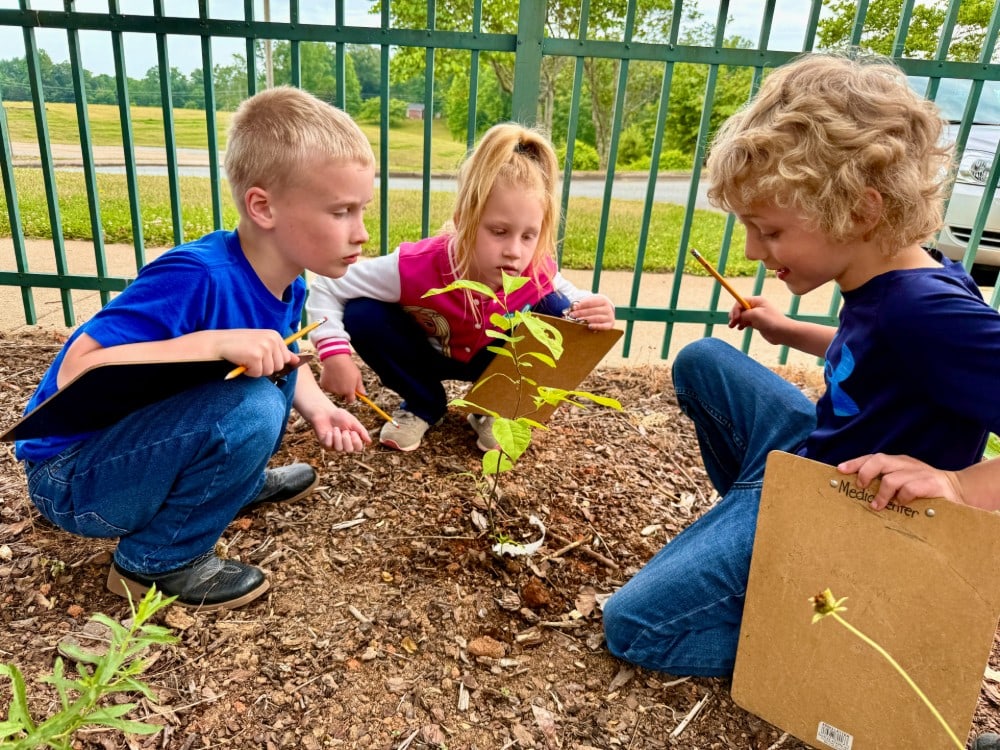
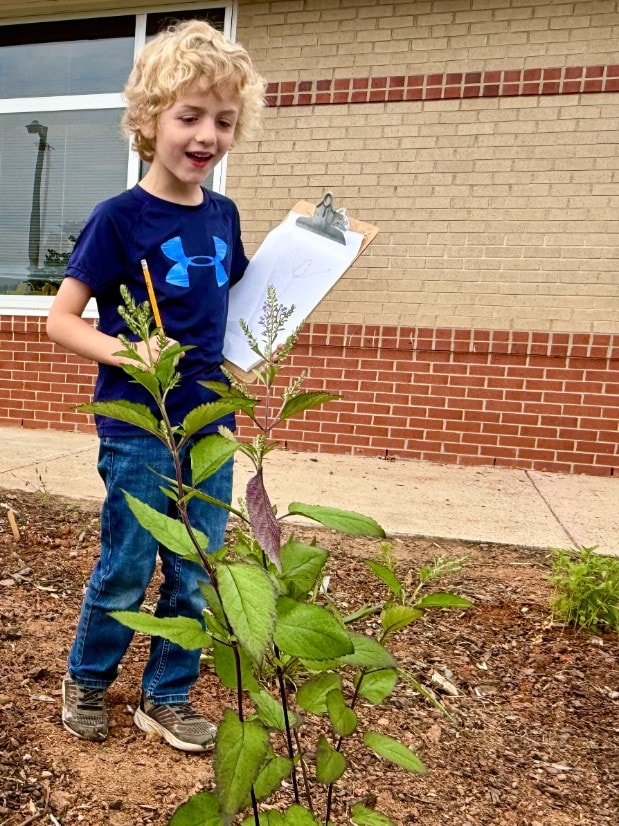
One boy in Jeny Keeter’s first grade class is usually very quiet—but when they went out to plant their pollinator garden, he was like another person.
“When we stepped outside, he had so many questions and we were all like, ‘Who is this kid?’” Keeter says. “He wanted to know stuff, he was participating, he was being very active. And in the classroom, you don’t always see that.”
In the book Last Child in the Woods, Richard Louv coined the term “nature deficit disorder” to describe the effects on kids who are experiencing a new kind of childhood—one spent mostly indoors. Not only do children who spend less time in nature struggle with their physical health and emotional wellbeing; they also lose opportunities for learning by exploring and discovering outdoors.
Since then, Louv went on to found the Children and Nature Network, supporting solutions that reconnect kids with the outdoors. This organization has compiled research showing that learning in natural environments can:
- Improve outcomes in reading, writing, math, science, and social studies.
- Enhance creativity, critical thinking, and problem solving.
- Increase focus and reduce ADHD symptoms.
- Boost enthusiasm and engagement with learning.
- Lead to better impulse control and less disruptive behavior.
Four New School Gardens
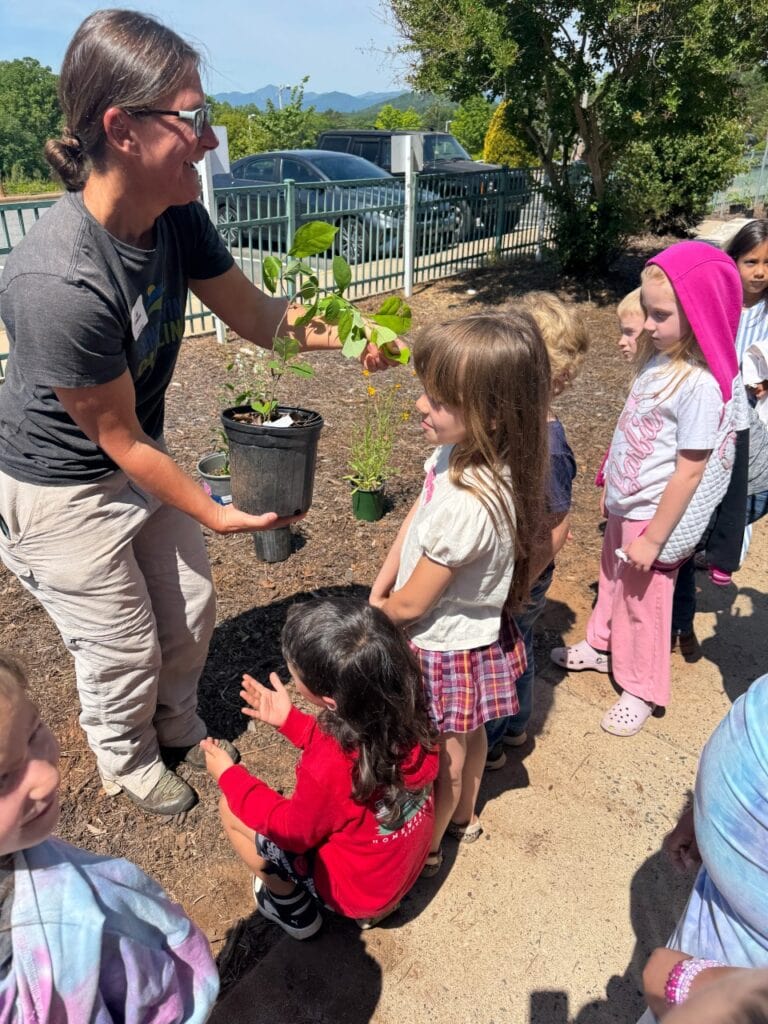
This school year, local partners have been opening doors for more engaged learning by supporting pollinator gardens at our schools. Conserving Carolina has supported new gardens at four schools, including Pinnacle Elementary in Rutherfordton where Keeter teaches, as well as schools in Hendersonville, Fletcher, and Columbus NC.
In addition, with the help of dedicated volunteers, Conserving Carolina recently helped to create five more pollinator gardens at places such as a camp, a library, and a greenway.
Community Engagement Director Pam Torlina says that Conserving Carolina has been able to support more gardens this year, thanks to a growing supply of native plants that she tends at her home. “We’ve really just gotten in a place where we can fully support pollinator garden installations,” she says. “It’s taken some years to grow and collect enough plants.”
A portion of this homegrown plant nursery started as a large donation by Carolina Native Nursery. Torlina has been propagating these and other plants in order to grow more pollinator gardens at schools and other community hubs.
Discoveries in the Garden
Last summer, Keeter spent four weeks working with Conserving Carolina as a Kenan Fellow—a continuing education program for teachers. As part of her fellowship, she developed a six-week unit centered on pollinators.
Keeter says that, starting out, a lot of her first graders were afraid of bees, especially the large carpenter bees that float and zoom around their playground.
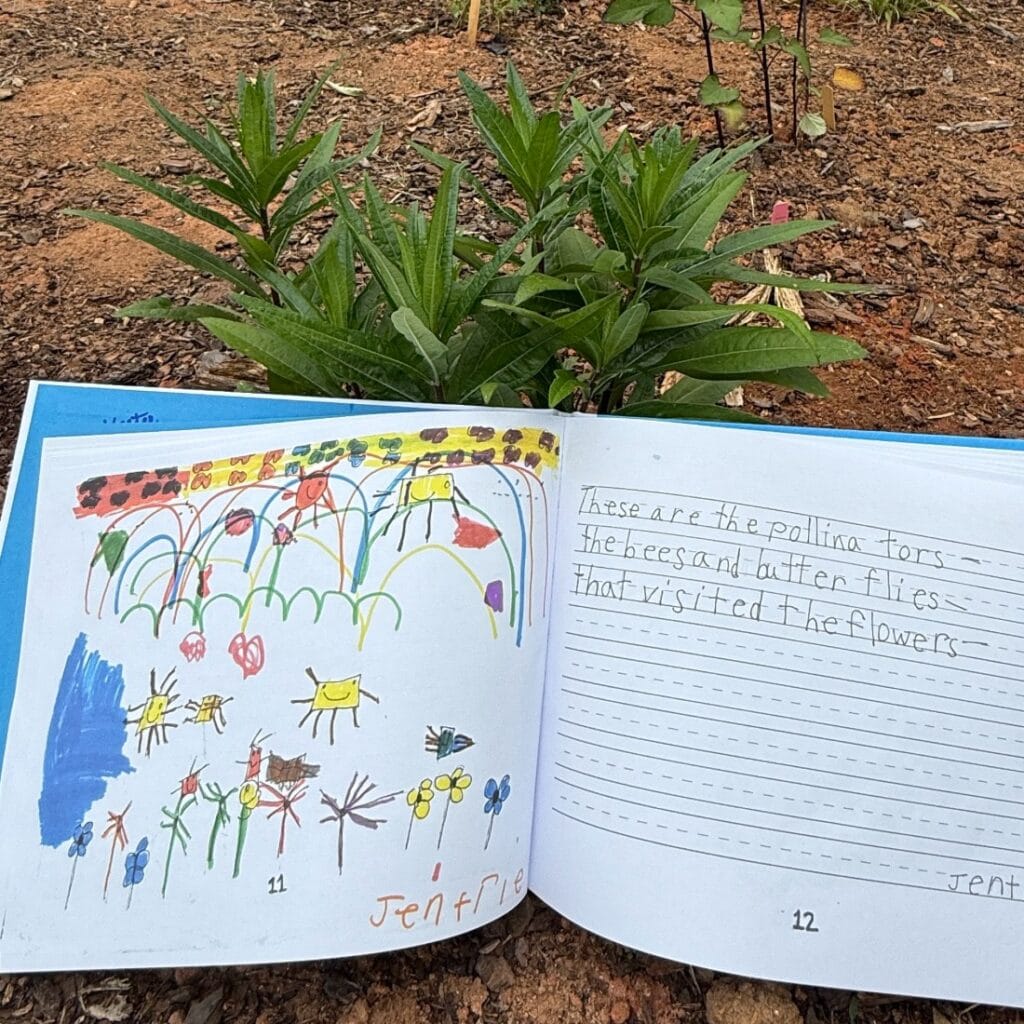
She taught lessons on why we actually need pollinators such as bees, butterflies, and hummingbirds—because plants need them to make food that people and animals eat, as well as seeds so the plants can reproduce. Among other activities, her students wrote and illustrated a book about the pollinator garden they would create.
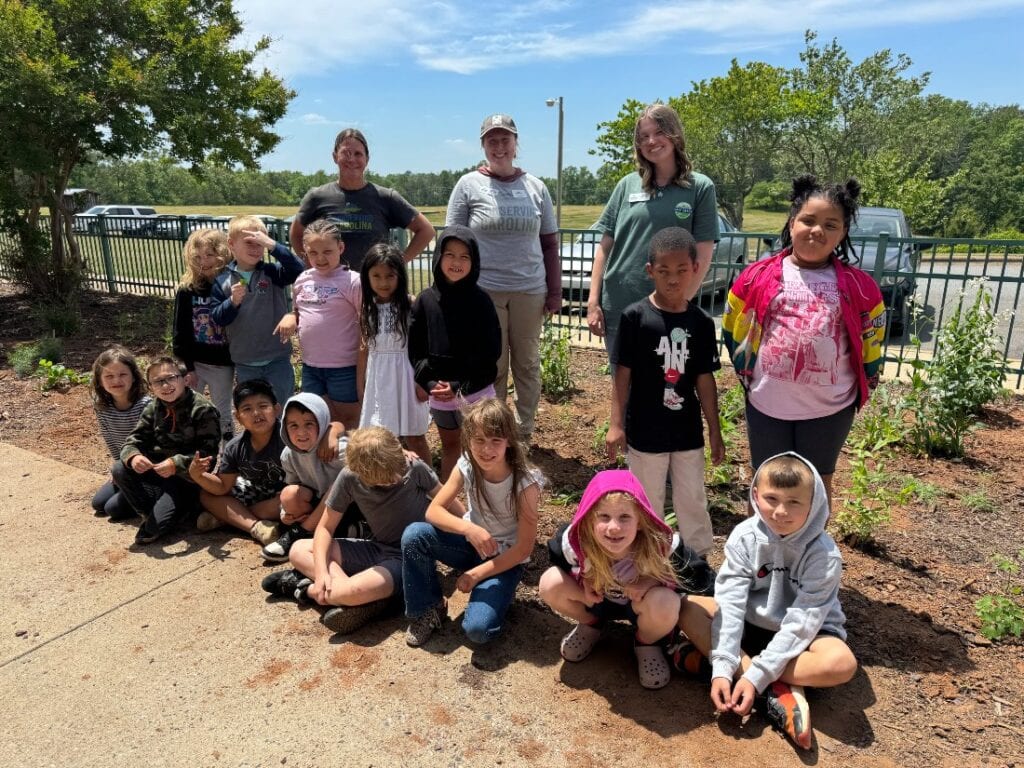
Then in May, all of the first graders in the school helped to plant the new garden just outside their classrooms, with pollinator-friendly flowers like milkweed, coneflower, and bee balm.
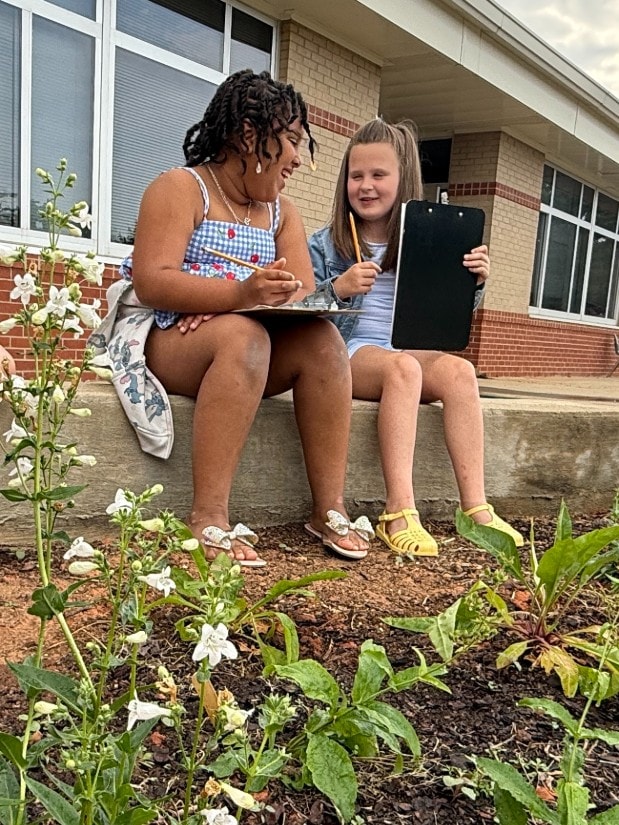
Keeter says that some of her students learn better this way—and she uses the garden project to teach reading, writing, science, and math. “I have some that you could sit and spit facts at them all day and they’re not going to remember, but when you give it to them in a context like this, where they’re seeing and experiencing it, they engage much better.”
“They’re not all ‘classroom kids,’” she says. “Some of them do better with more tactile, hands-on things, especially at this age. I feel like they make better connections. Now when we go outside, they’re noticing things that they didn’t before. They’ll say ‘Oh, there’s a pollinator and I know what they’re going to do. Look, they’re going from flower to flower!’ And that makes them realize we rely on those plants, those plants rely on us, there’s a whole big system to it. And they don’t realize this is science that they’re learning.”
Close to the last day of school, after coming in from the garden, the students enthusiastically shared that they saw insects on almost every plant! One boy broke into the discussion, “People are scared of bees, but they’re good!”
Hendersonville Elementary’s New Garden
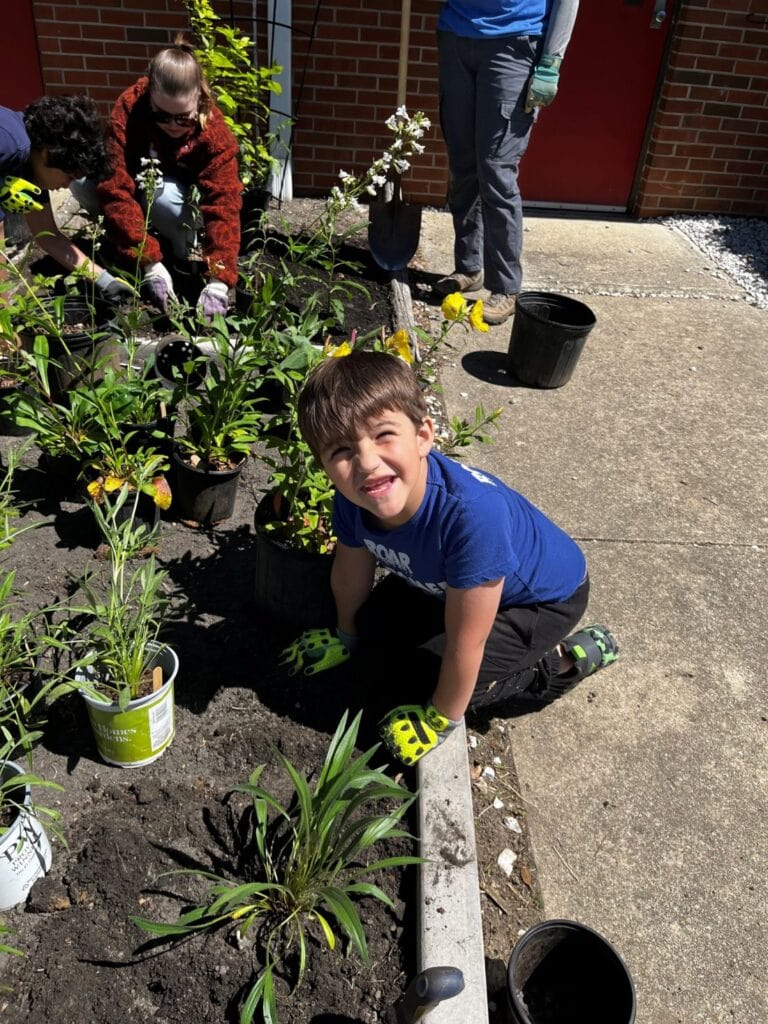
Also in May, Conserving Carolina helped to start a new pollinator garden at Hendersonville Elementary, in partnership with Caregivers of Mother Earth. Chelsy Jackson, who teaches special needs students in grades 3-5, says that her students enjoyed being outside, learning how to carefully drop plants out of pots and discovering how many worms live in the ground. It’s good for them to move their bodies more during the school day, she says.
The garden that they planted is a benefit to the whole school, since teachers can use it in lessons and students can appreciate the beauty when they walk outside. The garden will also be integrated into the school’s curriculum with Mountain Roots, a Brevard-based outdoor education program that all fifth graders at the school participate in.
“Nature is the best teacher for so many aspects of becoming a healthy and productive adult,” says Elle Travis, the founder of Caregivers of Mother Earth. Founded in 2022, this Hendersonville-based nonprofit is currently involved in seven school garden projects. Travis says the students learn many things, including teamwork and problem solving. “They learn to collaborate and care for living systems that are continuously growing and changing.”
A Lifelong Love for Nature
Both of the garden projects at Pinnacle and Hendersonville Elementary were supported by two AmeriCorps Project Conserve volunteers with Conserving Carolina—Camille Alexander and Sarah Branagan.
Alexander says that educating kids is her favorite part of her AmeriCorps service. She says, “These projects are so important because environmental education is a privilege that not everyone receives access to. Because of this, not every child gets to create the bond with the natural world that grows them into a steward of the earth in adulthood. Bringing environmental education into schools is a way to overcome this barrier.”
Branagan says that a program like this made a difference in her own life. Growing up in Brevard, she often went with her family to DuPont State Recrational Forest. But when she went out to a waterfall with her school, in a Muddy Sneakers outing, she engaged with the place in a different way. They were asking different questions, learning new things, noticing things she had missed before—a chickadee calling in the trees, the smell of the waterfall.
Unlike most days in school, she still remembers it—and the experience helped motivate her to work in conservation.
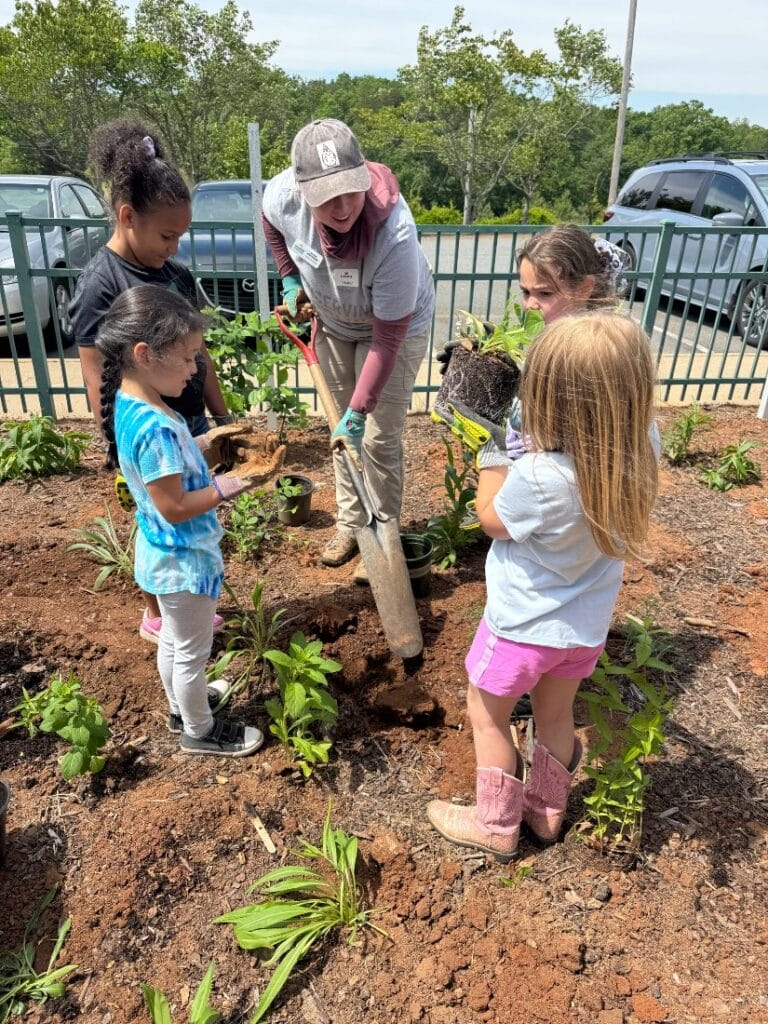
She says, “I can’t speak highly enough about environmental education and how important it is to get kids outside and just noticing birds, noticing bugs.”
Torlina agrees that environmental education is essential for passing on a conservation ethic to the next generation, so they will care for the natural world.
“Kids are far more likely to protect what they know and love,” she says. “By introducing them to native plants and pollinators early, we are helping grow a generation that values conservation, understands ecological relationships, and recognizes that healthy ecosystems are essential to healthy communities.”
Article by Communications and Marketing Director, Rose Lane.