Let’s Talk About Snakes
Including Why You Would Want Them in Your Yard and How to Deal With Venomous Species
By Naturalist and Photographer, Sharon Mammoser

I know you’ll agree with me when I say most people are not a fan of snakes. Perhaps you fall into this group. For some people, the mere idea of having a snake in their yards is enough to have them running for cover and putting a pest control company on speed dial. Others are in the habit of killing any snake they see, out of ignorance and fear. There are many articles online about how to keep snakes from setting up shop in your yard, and how to get rid of ones you do find. Much of the information out there will have you believing every snake is “bad” and warrants “getting rid of it.” Things naturalists and educators have been telling you to do to create habitat are some of the same things that might attract snakes. Leaving the leaves, creating brush or rock piles, not using pesticides, are some of the things these companies and websites warn you against doing. But are all snakes equal and do you really need to “get rid of them” at all? Would you hear me out, for just a few minutes about how we can more smartly deal with snakes, including venomous ones?
First, let’s talk about two words: venomous and poisonous. These words do not have the same meaning. If you eat a mushroom, or berry and it’s poisonous it could kill you or make you sick. If you get bitten by a venomous spider or snake, it could kill you or make you sick. Calling a snake poisonous is not correct since you are not eating it!
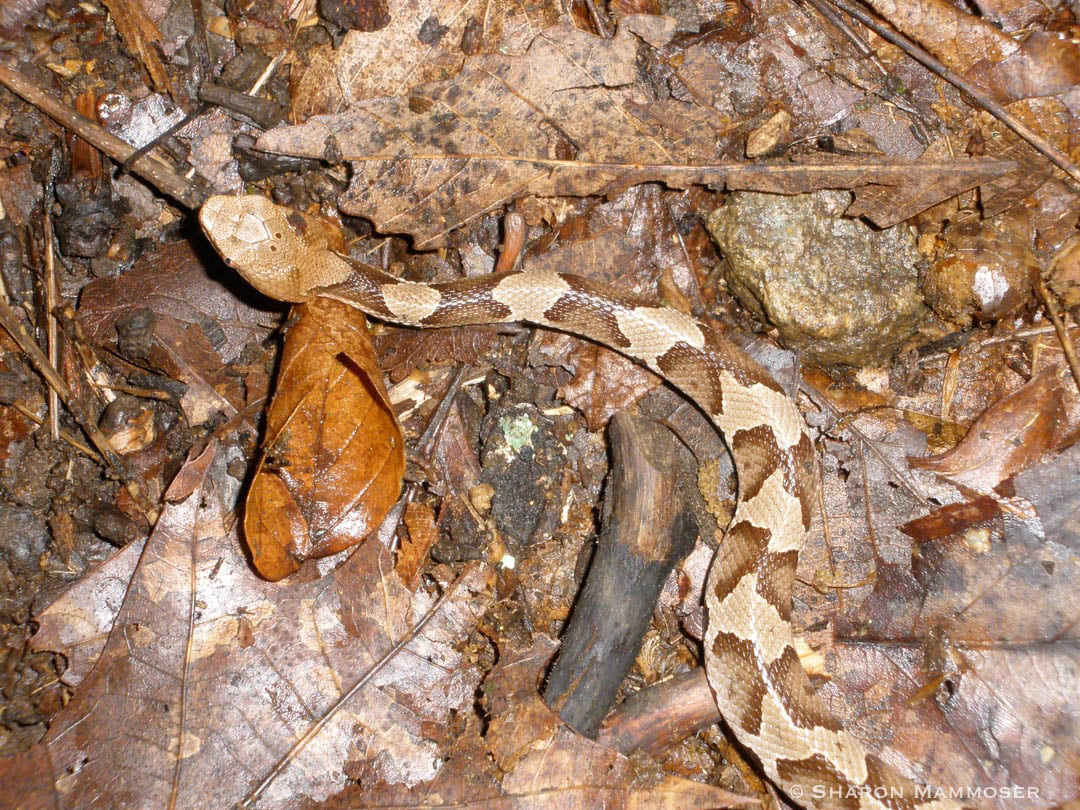
Secondly, let’s talk about the venomous snakes that live in our mountains of western NC. There are only TWO here, the eastern copperhead and timber rattlesnake. (Many old-timers will try to convince you that we also have the venomous cottonmouth/water moccasin here, but this is FALSE.) Rattlesnakes and copperheads are venomous pit vipers with the characteristic triangular head, thick body, and banded pattern. They have curved hollow fangs designed to inject venom into their prey. Rattlesnakes have a rattle-like tail that they may or may not rattle to warn predators of their presence. Some other snakes, including black rat snakes, and king snakes may mimic a rattlesnake, moving its tail in a convincing way through the leaves that might fool a novice.
Three pieces of advice:
- Just leave a snake alone when you see one and s/he will usually return the favor. Most snakes will try to get away as their first line of defense– biting you– an animal MUCH larger than them– is not usually something they want to attempt and will only do as a last resort.
- Don’t attempt to handle, kill, move, or harass ANY snake, and you will avoid most of the risk. The majority of snake bites come from people doing one of these four things, or accidentally stepping on a snake. According to the University of Florida, “you are nine times more likely to die from being struck by lightning than from a venomous snake bite.” The fear of snakes greatly outweighs the actual risk. If in the rare event you do get bitten by what you think is a venomous snake, seek medical attention immediately.
- If you don’t feel confident identifying the snake yourself, use your zoom to snap a photo and then look it up online, or share it with someone who can positively help you identify it.
If you discover that a snake on your property IS one of these two venomous snakes, please don’t kill it! Instead, call someone who can safely relocate it. Last summer when I found a copperhead near my house, I was alarmed, knowing my dog, myself, or a guest to my property might accidentally step on it and get bitten. Much as I thought the snake was beautiful and recognized its value to the ecosystem, I understood that I could not leave it there. From a Naturalist Rally in Roan Mountain, I knew of an organization that will relocate snakes FREE, ( called FreeSnakeLocation.com) anywhere in the United States. I went online, looked at a map to find a volunteer near me, made a call, and less than 24 hours later, a guy had come out and safely captured the snake and took it away to relocate somewhere deep in Pisgah National Forest or another wild place where there is little chance someone will encounter it. It was a win for me and my family, and a win for the snake who would be able to live in a new safer place away from people.
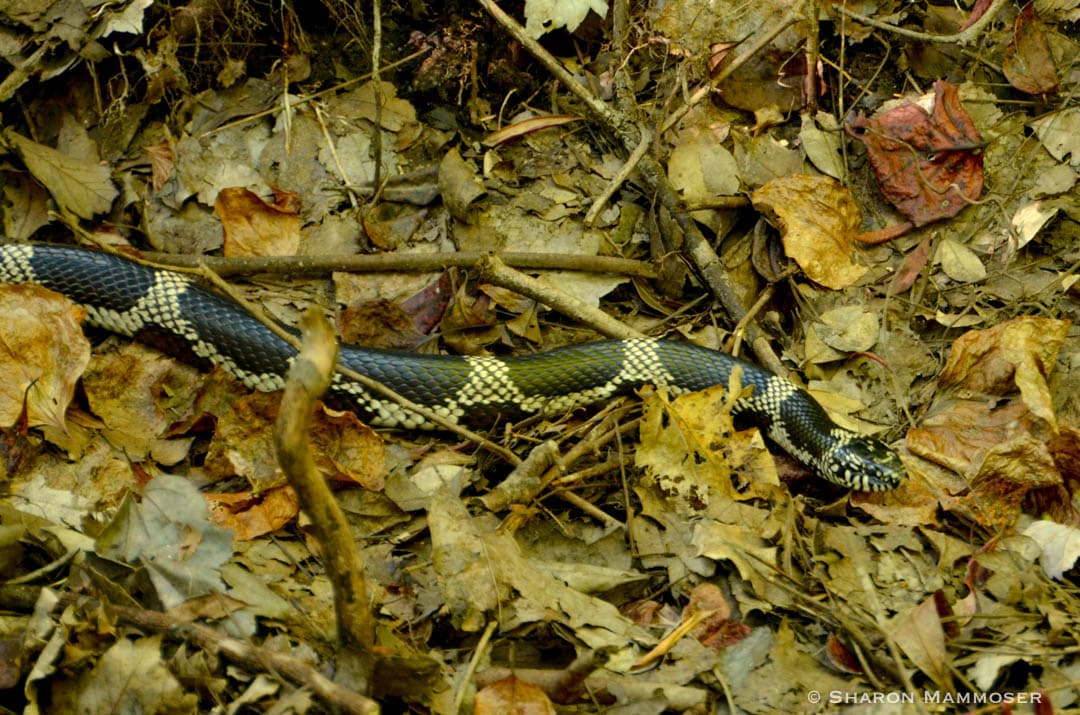
So let’s talk about the other snakes– the non-venomous ones we might encounter in our yards or other wild places. What good are those, and why would we want to welcome them to our yards?
Here are a few reasons we might want to encourage these to share our wild spaces
- Snakes offer free pest control services! They keep rodents like mice, voles, moles, as well as slugs, toads, insects, and other small animals in check.
- Snakes play an important role in maintaining ecological balance in our food chains. They eat a lot of pests, and are eaten by hawks, crows, other birds and predators.
- Snakes present an educational opportunity. They are easy to watch, setting up a perfect chance to teach your children or guests about predator/prey relations, adaptations, and food webs.
- Snakes slow the spread of diseases by eating animals like mice and other rodents who may be infested with ticks that carry Lyme disease.
And lastly, for those willing to make an effort and change, snakes can teach us how to just BE, how to make time for relaxation, how to soak up the sun, and how to move slowly and not be in a hurry all of the time. Snakes offer a zen-like quality to our yards that we can learn to appreciate and admire.
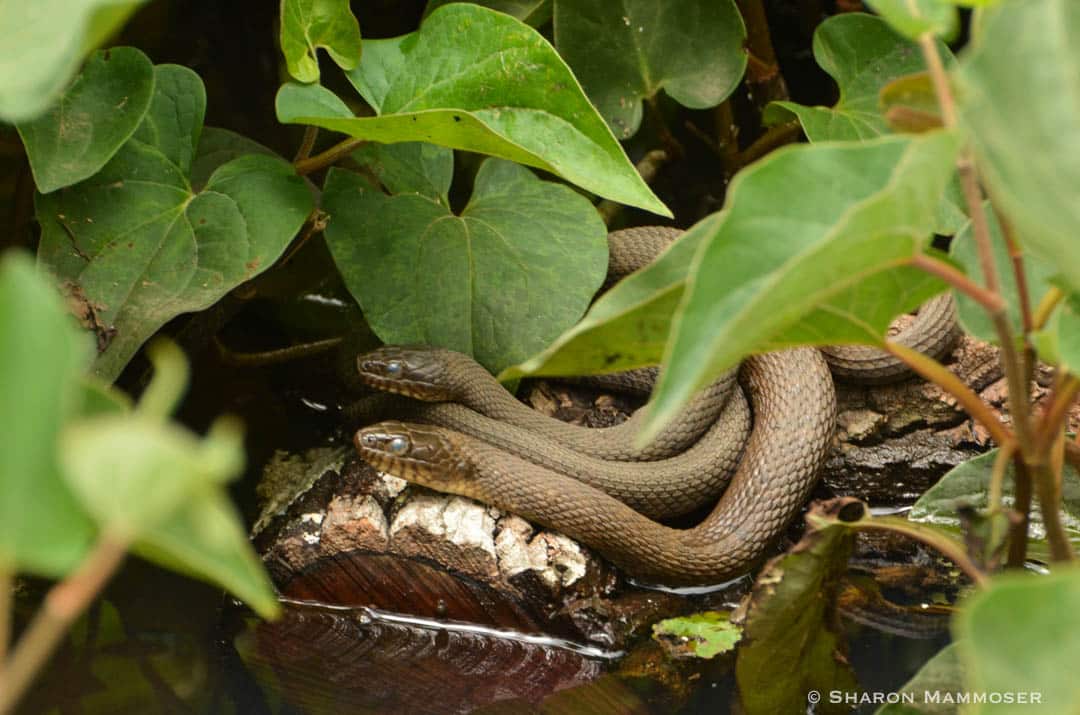
Next time you encounter a snake, perhaps you can start to overcome your fear. Perhaps instead of running the other way, you can watch from a safe distance and appreciate the important role it plays in a healthy, functioning ecosystem. Snakes have value and deserve to be here, just like our beloved songbirds, and colorful butterflies. I hope you’ll join me in giving them a chance.
Again, if you find a venomous snake on your property and want to do the right thing– contact FreeSnakeRelocation.com.
Want to learn more? Here are ten cool things about snakes, and another, ten things you may not know about copperheads and ten things you may not know about rattlesnakes.