How to Attract Goldfinches to Your Yard
Article and photos by naturalist Sharon Mammoser.
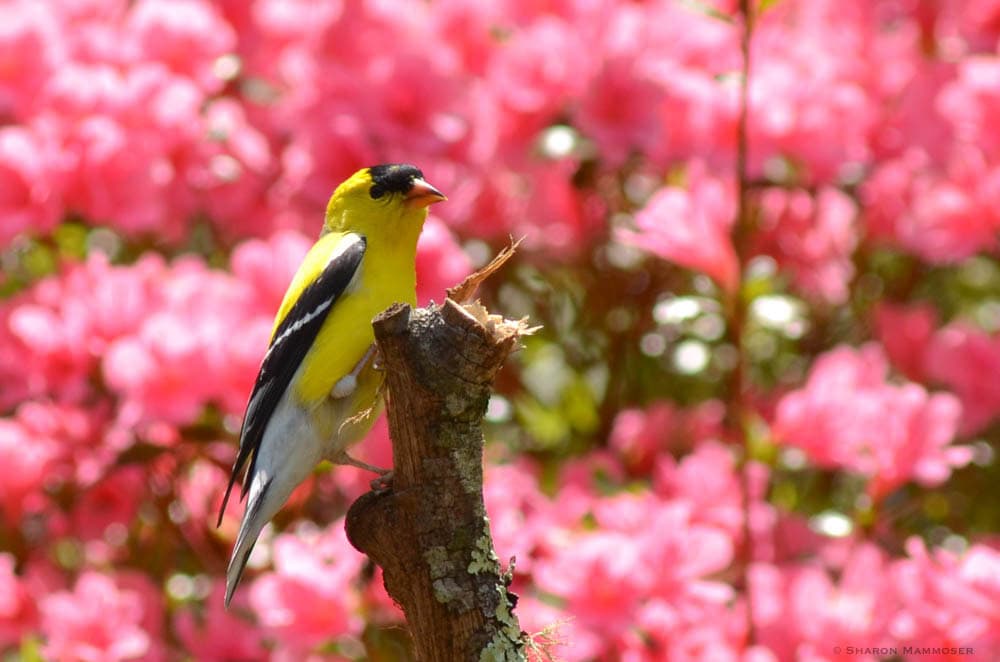
If you’re like me and keep feeders out so you can delight in the birds that visit your yard, I bet you love to see the American goldfinch—a bird whose bright yellow plumage feels like sunshine for the soul on even the cloudiest of days. Have you seen flocks of goldfinches in flight, their feathers lit by the sun, looking like flecks of shimmering gold against the blue sky? When flying, the five inch long birds bounce up and down, “as if skimming over unseen billows,” said Henry David Thoreau. And of course, if you’re going to bounce in flight, you may as well sing too—so they repeat a wonderful lilting call, “ac-cip-i-tee, ac-cip-i-tee” over and over as they flit from tree to tree.
Truly, can you find anyone whose day isn’t made better by seeing a goldfinch?
What Do Goldfinches Eat?
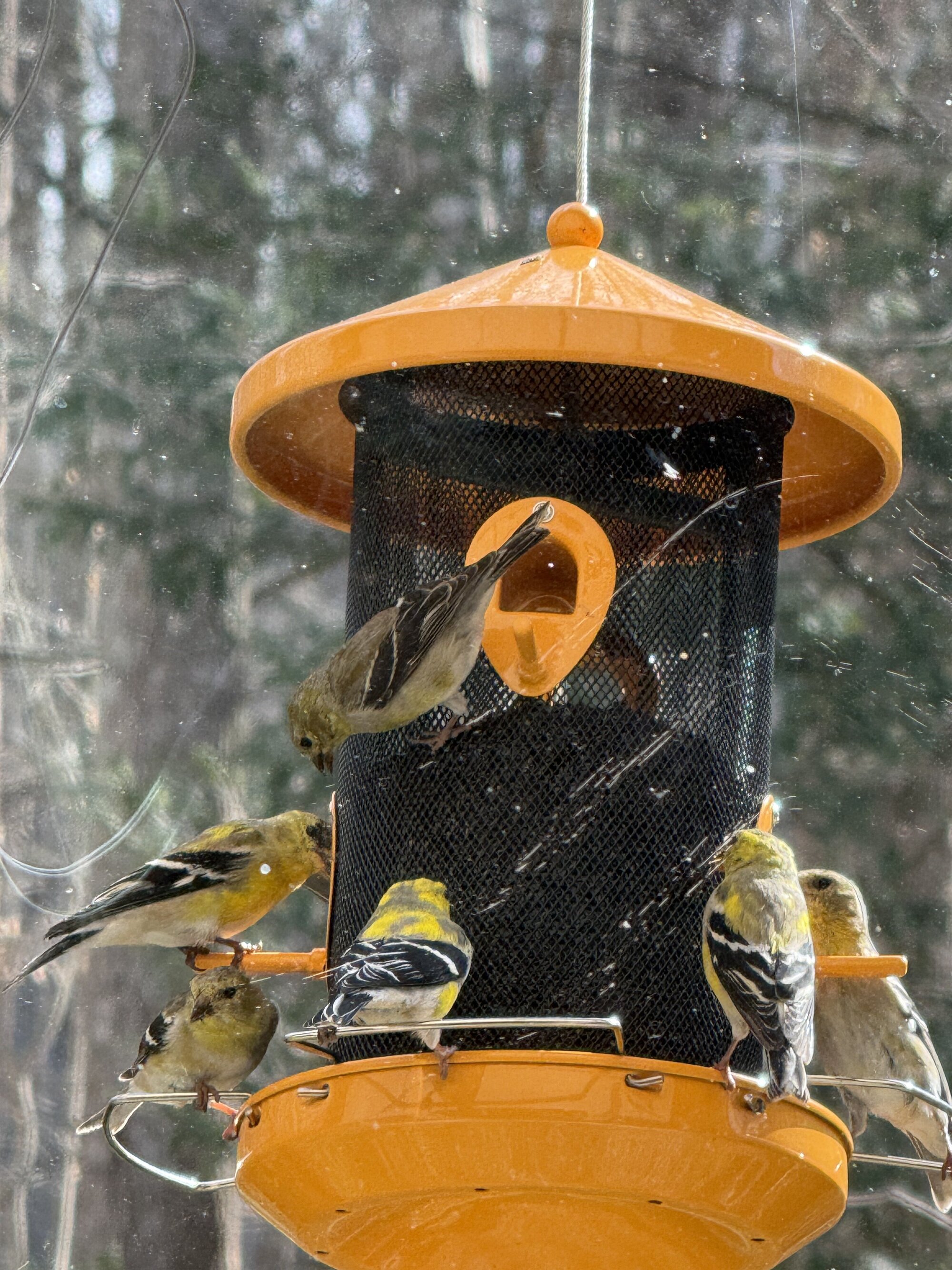
American goldfinches are gregarious birds, sometimes seen in mixed flocks with pine siskins, house, purple or other finches. When they visit feeders as a flock, they can deplete the bird seed in just a few hours or a day, sometimes to the dismay of the homeowner! Goldfinches love black oil sunflower seeds, or the tiny black seeds called Nyjer. Unlike some birds like tufted titmice and chickadees, who will take one sunflower seed at a time to eat it away from the feeder, goldfinches just feed right at the feeder, working methodically on each seed until the outer husk is completely gone, then moving on to another seed.
Goldfinches have a very particular diet—strictly vegetarian, which is unusual among songbirds, as 96% of songbirds, even if they eat seeds, require insects when raising their babies.
This works against the parasitic brown-headed cowbirds who lay their eggs in other birds’ nests. Cowbirds will sometimes choose goldfinch nests to lay their eggs in. When the cowbird chick hatches out and the goldfinch parents feed all of the babies seeds, the cowbird chick eventually dies of starvation, while the goldfinch chicks do just fine.
What Do Goldfinches Need for Nests?
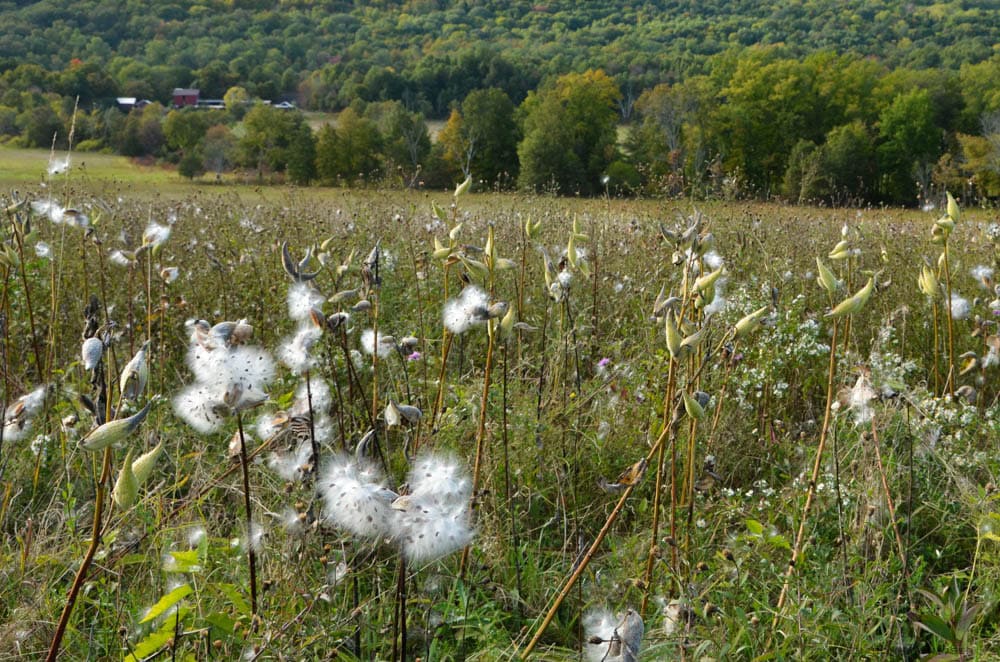
Goldfinches are one of our latest nesters, waiting well into June or even July before they build their nests. They do this to wait for the thistle, ragweed, sunflowers, milkweeds, cattails, and other plants to be going to seed, using the fluffy parts of the seed for insulation in their nests, and the seeds to feed their growing chicks. They weave all of the grasses and plant material together into a small cup, bound so tightly with spider silk that the nest can actually hold water, making it especially appealing to white-footed mice who may adapt them for their own use.
Female goldfinches lay 2-7 light blue or greenish-blue eggs in nests that are usually 4-10 feet off of the ground, in a tree or thick vegetation, preferring dogwood, willow, and hawthorn. Eggs hatch in 12 days and then take another 12 days before the babies are ready to fledge. Females may leave Dad to finish raising the first brood while she goes off to build a second nest and then raising that brood on her own. Talk about dedication! Pairs usually stay together for one season.
Goldfinches Change Color with the Seasons
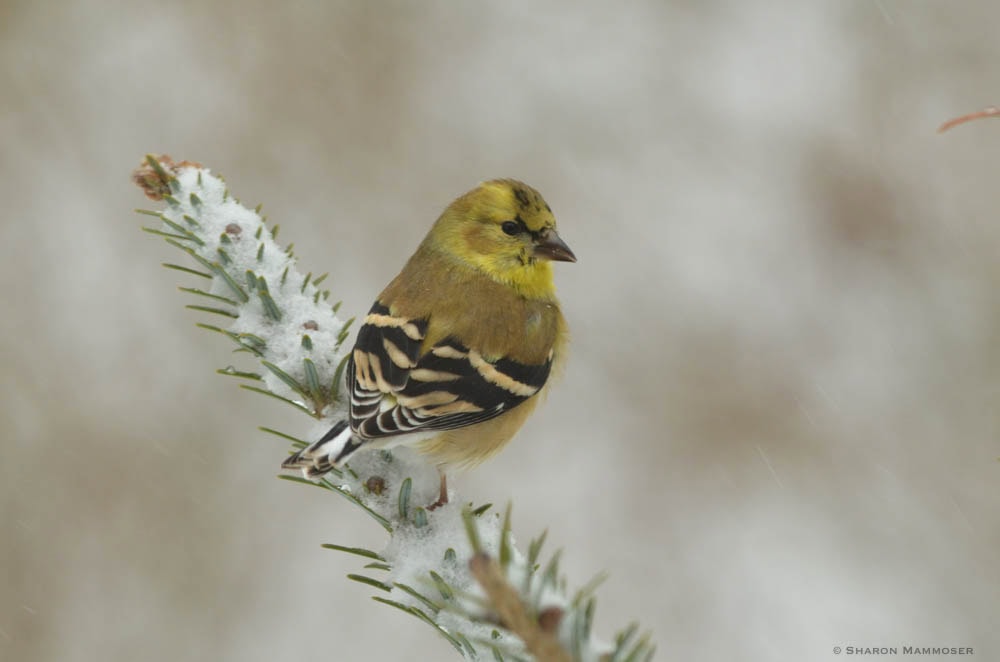
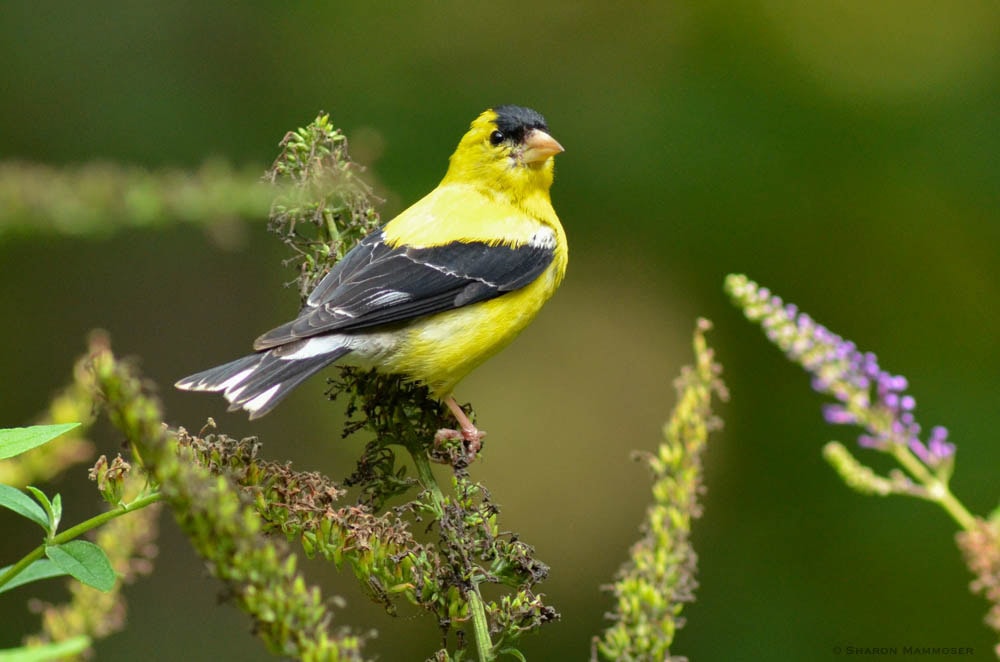
Unlike most other songbirds, American goldfinches molt two times each year, in the spring and in the fall. Right now in our area, in April, the birds are just getting their bright yellow feathers and ink-black forehead and wing markings. Females are less-bright than males, with their plumage being more olive colored on their heads and backs. Bills of both males and females turn from a dull gray to a yellow orange.
Want to attract these beautiful birds to your yards so you can enjoy them up close?
Plants to Grow to Attract American Goldfinches
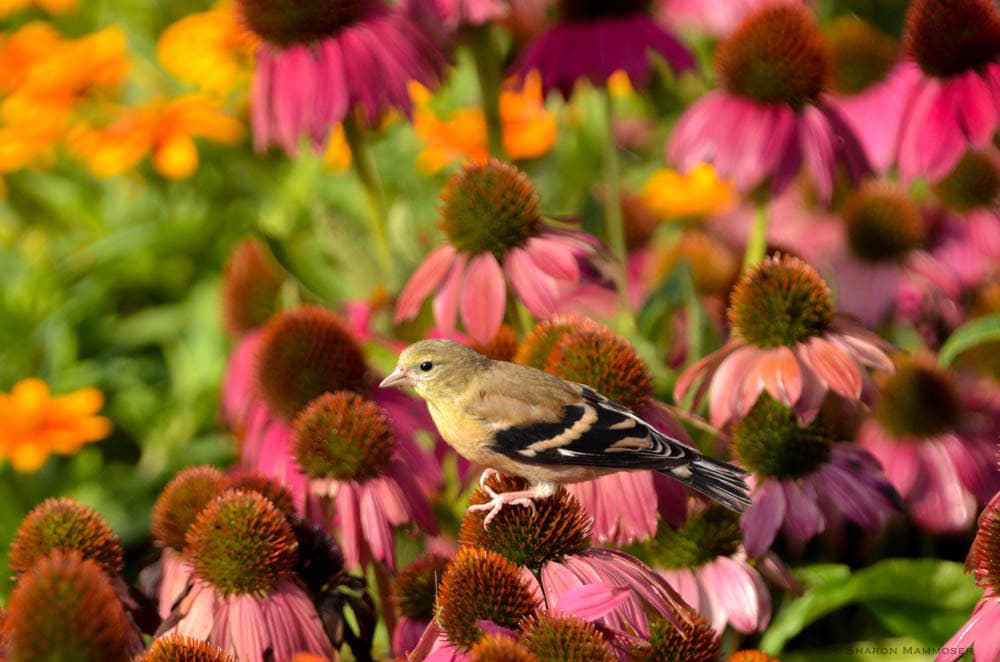
Goldfinches need plants that produce seeds for them to eat. They also love plants that can provide soft, downy material for their nests. Sometimes these are the same plants, with the seedhead providing both a nutritious seed and a fluffy part meant to carry the seed on the wind. To attract goldfinches, choose a variety of mostly native flowers that bloom throughout the spring, summer, and fall that provide both seeds and nesting materials.
Great plants to grow for goldfinches include:
- Purple coneflower (echinacea)
- Milkweed
- Sunflower
- Aster
- Field thistle
- Wavyleaf thistle
- Cup plant
- Black-eyed Susan
- Liatris
- Joe pye weed
- Ironweed
- Tickseed
- Dandelion
- Yellow giant hyssop
- Coreopsis
- Sedum
- Sneezeweed
- Bee balm
- Goldenrod
- Zinnia (not native, but not invasive.)
- Add a bird bath or water feature.
More Ways to Support Goldfinches in Your Yard
- Add a bird bath or water feature.
- Offer black oil sunflower seeds and Nyjer seeds. In feeders less than 3 feet from windows, OR more than 30 feet way to prevent fatal window strikes.
- Keep your cats indoors.
- Refrain from using pesticides.
- Provide more habitat than lawn.
- Welcome spiders to your yard as their silk is necessary for the nests of goldfinches, hummingbirds, and many other species.
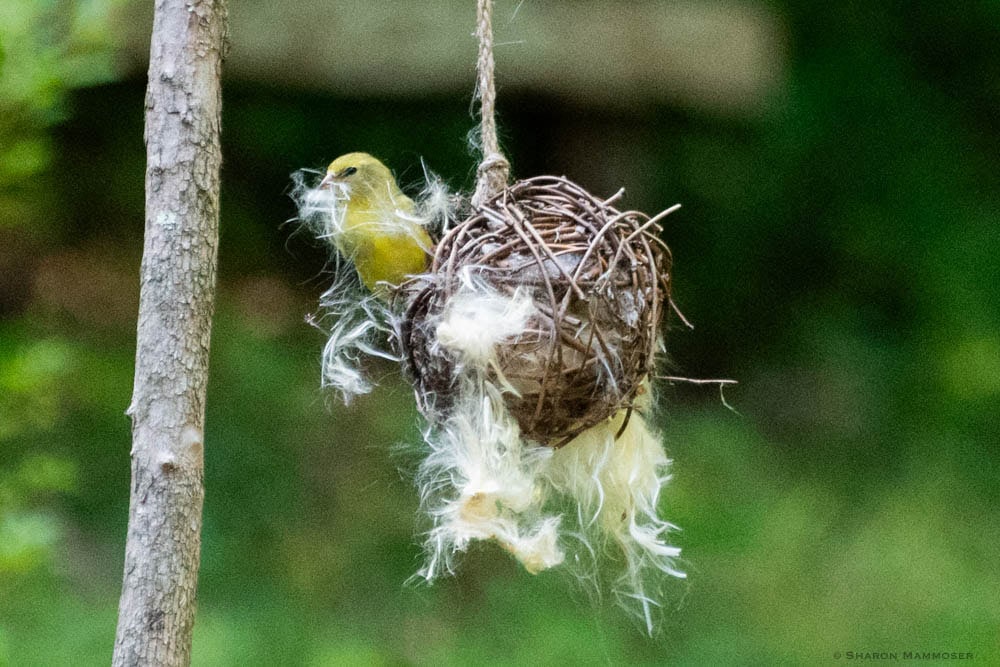
- Put out a “milkweed fluff ball” in your yard. This features a ball shape woven of willow or grape vines, filled with milkweed or cattail fluff. Watch the birds take the fluff for their nests!
Happy bird watching!