A Family Cemetery and a Lost Trail System
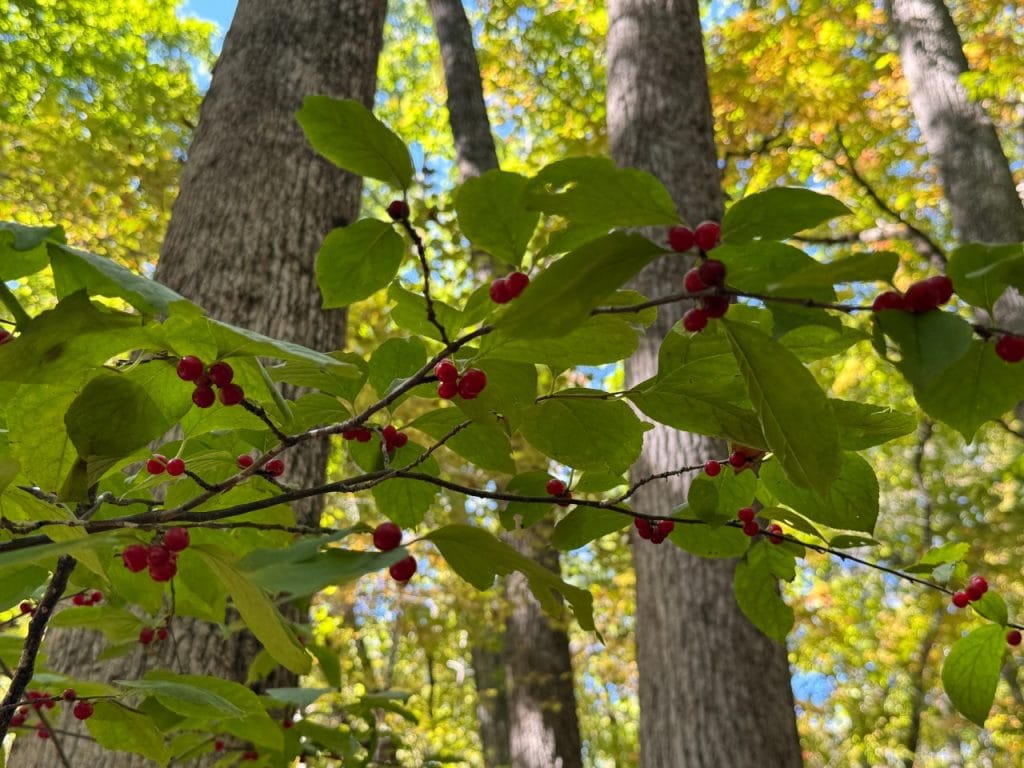
There used to be more trails in the woods next to the hospital in Polk County.
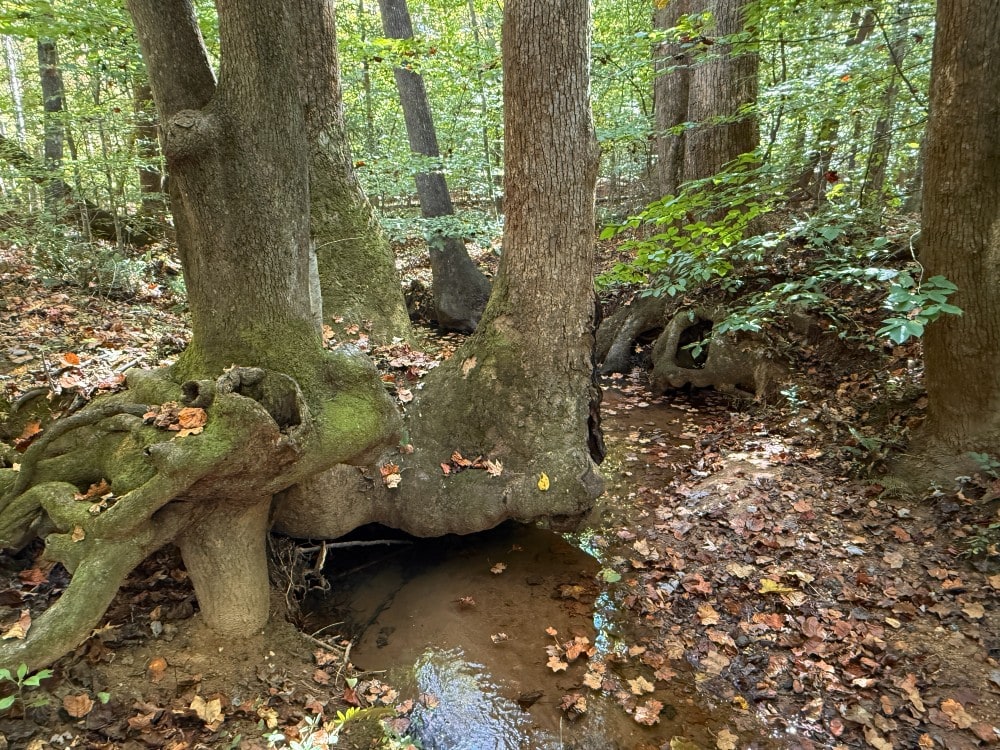
There’s a 56-acre forest there, protected by a conservation easement. From around 2006 to 2011, there were walking trails that you could take through the woods, with hilly terrain and flowing streams. If you had a loved one in the hospital, you could get outside and find some relief from the stress. For hospital staff, it was a chance to take a break from challenging jobs and come back again ready to work. The 1.5 miles of trails connected to the short Tom Raymond Memorial Fitness Trail on the hospital grounds. They also linked to Polk County Library and Isothermal Community College. It was a beautiful place to hike or run or walk your dog, without needing to go far.
Then, the trails closed.
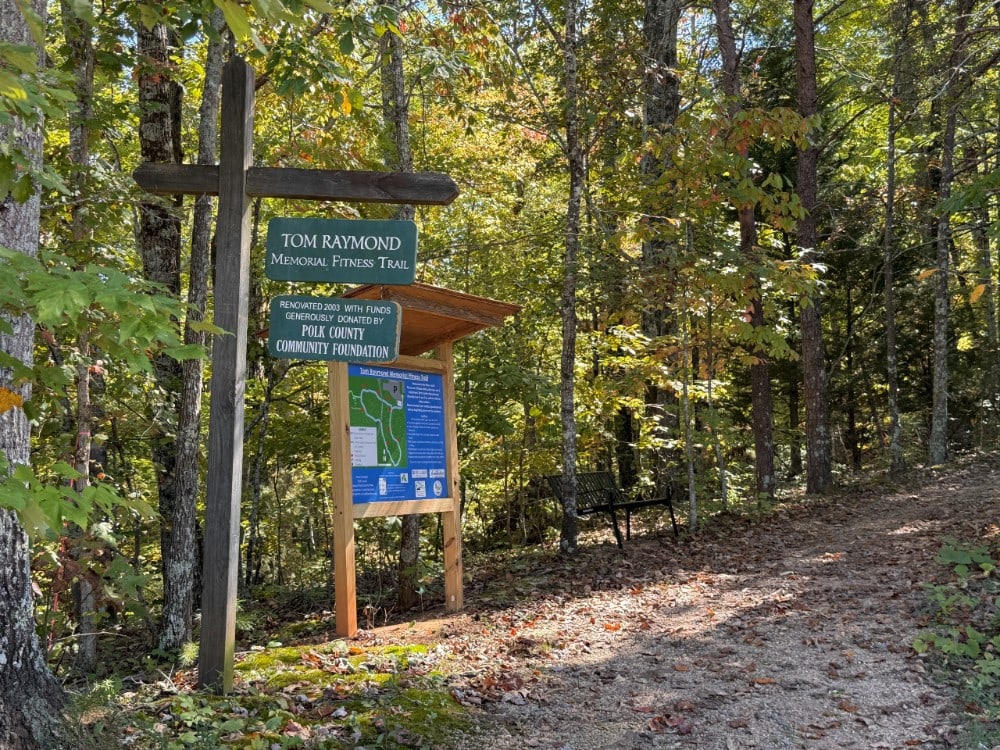
Here’s the backstory: In the late 1990s, the Shuford family and the Carolina Bird Club worked together to protect this land with a conservation easement donated to the Pacolet Area Conservancy, one of two groups that later merged to form Conserving Carolina. It remained private land, but the forest was protected.
Landowner Robert Shuford III wanted to offer trails, so the conservancy raised money, including a grant from the Polk County Community Foundation, and mobilized volunteers to build them. But after Shuford’s death, the next landowner was less friendly to conservation—and he shut the trails down.
That’s where things stood until someone with deep family ties to the land—someone who had never even been to Polk County—unexpectedly helped to turn things around.
Generations on the Land
Butch Weaver lives in Colorado and his interest in Polk County began after his mother’s death. “Part of my grieving process was diving into our family history,” he says. “When you lose a parent, what does that mean? I was asking, where did I come from? Where did my siblings come from? For my children, what is their origin story? What is our ancestors’ story?”
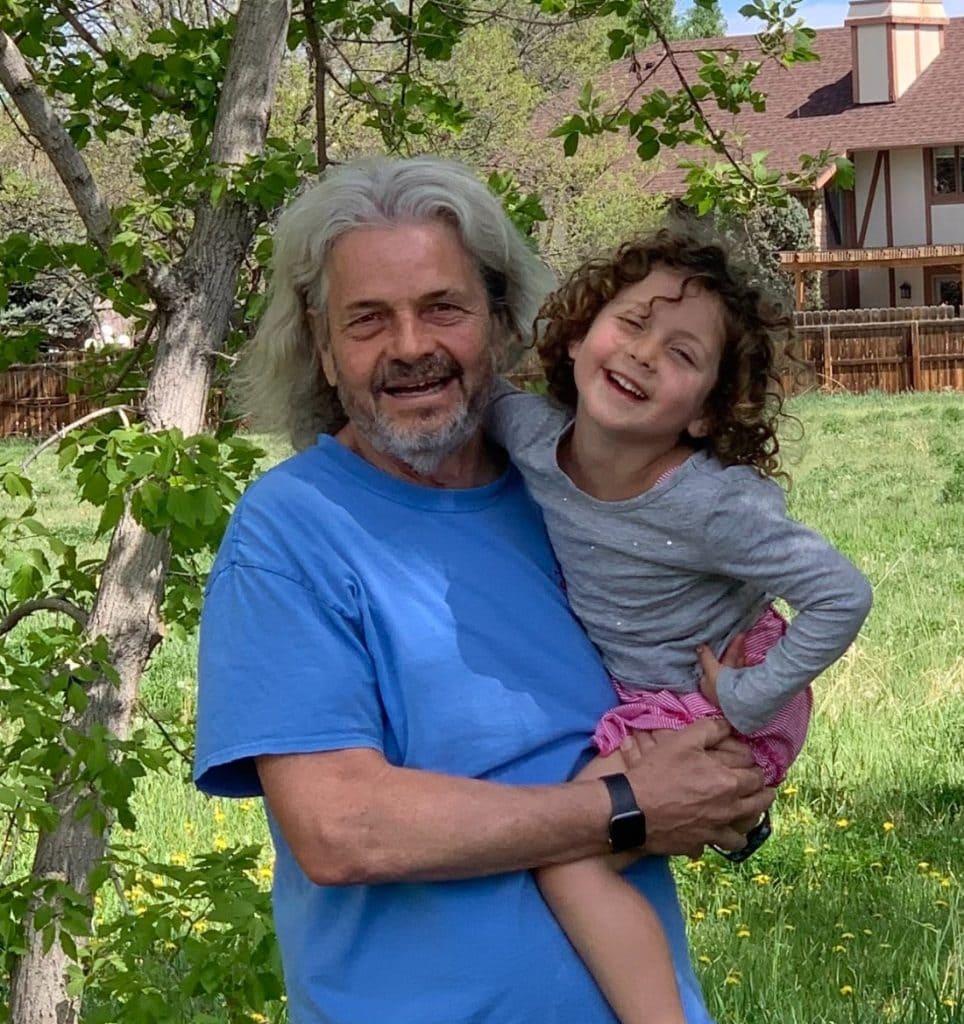
His family’s story on this continent began in 1635 when Clement Weaver sailed across the ocean, from England to Boston. Generations later, after the War of 1812, Butch’s ancestors sailed south, carrying mill equipment. They traveled to Charleston and then followed the rivers upstream looking for a good site for a mill. They established the Weaver Mill, one of the first textile mills in upstate South Carolina.
In 1841, Butch’s great-grandfather Francis Asbury (F.A.) Weaver bought land in what is now Polk County—361 acres on either side of Horse Creek. He was in his early twenties then, recently married to Mahulda Williams. On their land in Polk County, they raised a large family with ten children. They operated a grain mill and produced whiskey and brandy.
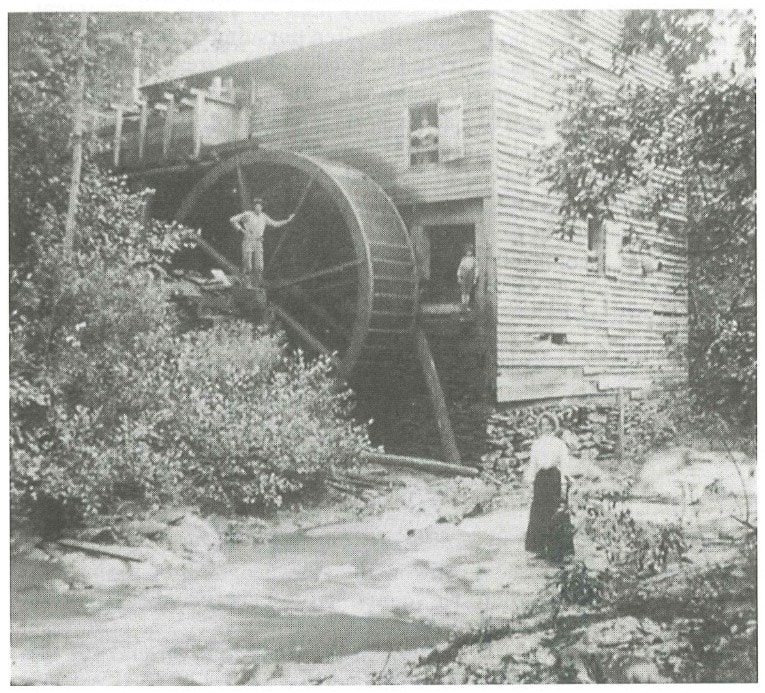
But F.A. Weaver’s life was cut short by violence. It happened in 1864 during the chaos of the Civil War—a time of divided loyalties, deserters hiding in the mountains, and inflamed tensions between neighbors. As recounted by historian Pam Wilson (also a descendant of F.A. Weaver), it started with an attack on the home of Polk County’s wealthiest plantation owner, Dr. Columbus Mills—for whom the town of Columbus, NC is named. Mills claimed that marauders broke into his home, threatened him, and stole his furniture, horses, and wagons.
While other raids like this had been attributed to deserters, Mills blamed several prominent citizens of Columbus. He gathered a posse of soldiers affiliated with the Home Guard. These militia men hunted down and executed F.A. Weaver and others.
After the war, F.A. Weaver’s widow Mahulda repeatedly went to court for justice in this killing. She also fought for possession of their family land, which she won. After her death, the land was divided between numerous heirs, then brought back together under the ownership of Butch’s grandfather, Francis Lindsey (F.L.) Weaver.
But in the next generation, the family lost the land and in doing so, fell into poverty. F.L. Weaver married his second wife Estelle when she was 23 and he was 51. After his death, there was a battle over the estate, pitting Estelle and her children against the children of F.L. Weaver’s first wife. In the end, the land was divided and sold in the dismal market of the Great Depression, leaving Estelle without means to raise her four children.
Estelle went to live in a women’s shelter in Winston-Salem. Her young son—who was Butch Weavers’s father—stayed with her until he began to reach puberty. At that point, he could no longer live with the women and was sent to grow up in a nearby institution called The Children’s Home.
An Opportunity to Bring Back Trails
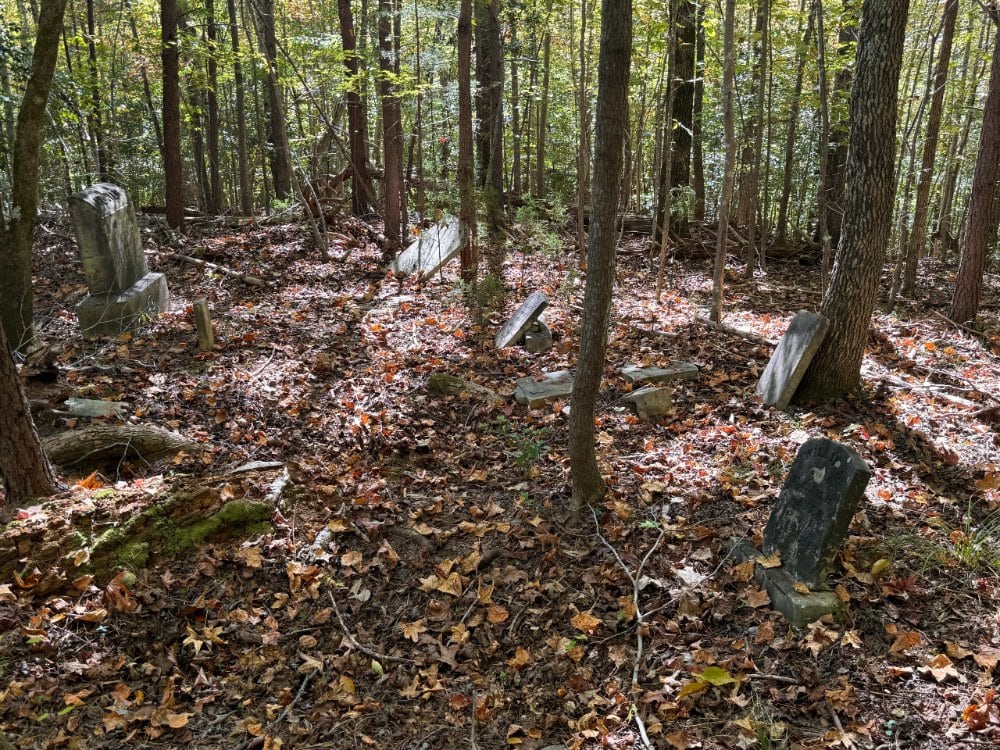
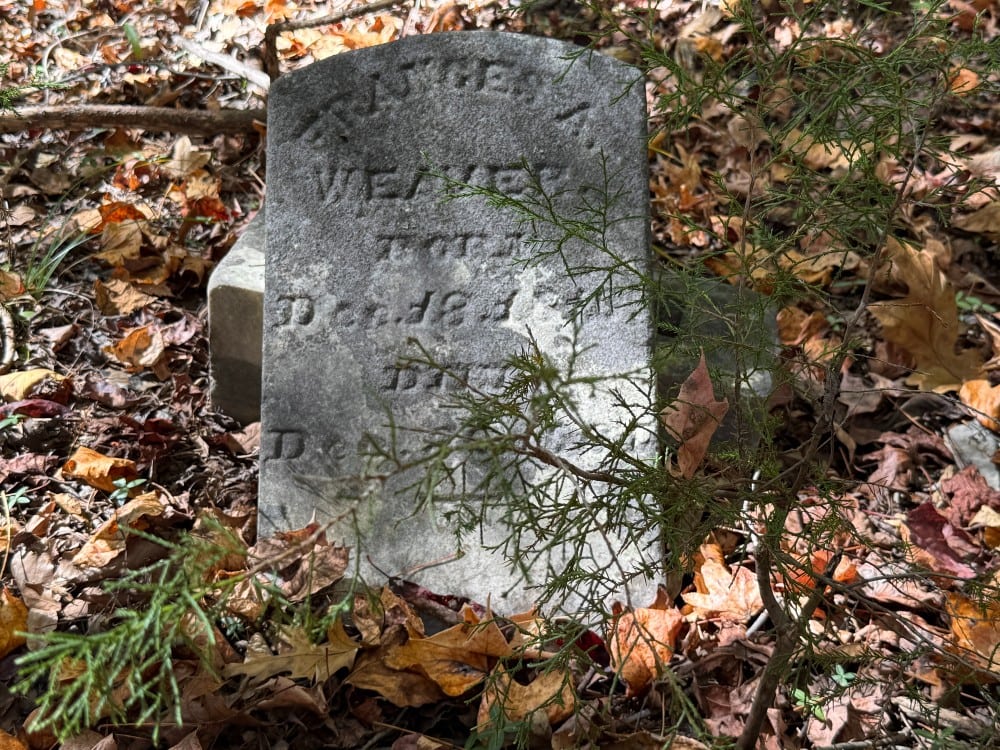
In researching all of this, Weaver learned of an abandoned cemetery in Polk County where F.A. Weaver and other family members are buried. Among the trees are tilting and broken gravestones, the letters fading with age. For some graves, there is only a field stone to mark the place.
This family cemetery is on the land near the hospital where Conserving Carolina holds a conservation easement. This led Weaver to reach out to Tom Fanslow, Conserving Carolina’s land protection director, in 2019. Fanslow told him where things stood.
“I expressed interest at that point in helping Conserving Carolina acquire the land,” Weaver says.
His father, after his destitute childhood, had found opportunity through athletic scholarships and the G.I. Bill after serving in World War II, and he became a chemical engineer. For his part, Weaver became an electrical engineer and computer scientist. He was one of the first employees of Qualcomm, now a multinational corporation. His successful career in tech put him in a position to help—and he believes in giving back. He was raised that way, he says, and he also saw philanthropy modeled by his mentors at Qualcomm.
If Conserving Carolina could own the land outright, they would be able to restore public access. For years, the land was not available for sale—until suddenly, it was. This summer, the landowner offered to sell if they could act fast, purchasing the property just one week later!
Fanslow says, “Given the regret that so many have felt over the loss of public access, we seized the opportunity.” The conservancy borrowed from its reserves to make the purchase, counting on Weaver’s promise of support.
Weaver provided half of the project cost, which was matched by the Polk County Community Foundation.
Weaver says, “Having a responsible organization like Conserving Carolina own the land, with its record of maintaining land in trust for the community, is the right answer for the long-term preservation of this site.” Although he has not yet been to Polk County, he plans to visit the property—perhaps when the trails reopen—and he hopes to be able to connect with some of F.A. Weaver’s other descendants.
It will take work to build new trails since the old trails are overgrown, but Conserving Carolina plans to bring back public access within the next few years.
Sara Bell, president of the Polk County Community Foundation, says “It’s very meaningful for us to move toward bringing back the trails that we originally helped put in place, back in 2006. With their connection to the hospital, library, and community college, these trails will be a valuable asset supporting good health and a high quality of life for Polk County residents.”
After years of work to acquire the land, Fanslow reflects, “They say the best things in life are worth the struggle, and that is certainly true of this gem. We’re fortunate that Mr. Weaver’s deep connection to his roots in Polk County helped to create this opportunity.”
Article by Rose Lane.