Saluda Grade for a New Generation
Summer Flynn was in a job interview, and she was asked this question: What’s the first thing you would do if you got this job?
It was for the position of Saluda Grade Trail Manager with Conserving Carolina—and Summer did have an idea to throw out there.
She would do a project to engage local students with the rail trail project, she said.
In her words,
“I live along the corridor myself and I’m raising a child along the corridor, so it felt quite important to me to understand who is the actual owner of this trail—and it’s the next generation.”
Young people growing up here, like her own child, have only ever known the Saluda Grade rail line as a strip of unused tracks, overgrown with trees and vines.
But Summer has heard stories from older friends and neighbors who recall a very different time, when the rhythm of trains was the heartbeat of the local economy. Some folks can recall how crowds would gather at the depot to see who got off the train that day—like the wealthy summer people who came from Charleston or Savannah to escape the heat. Some people could tell you about the struggles that went into building the railroad into the mountains, including forced labor from convicts, many of them Black men. Families passed on stories of the daring it took to operate trains on the treacherously steep rail line—like one time when the brakes failed and the engineer and crew had to leap from the runaway train to save their lives.
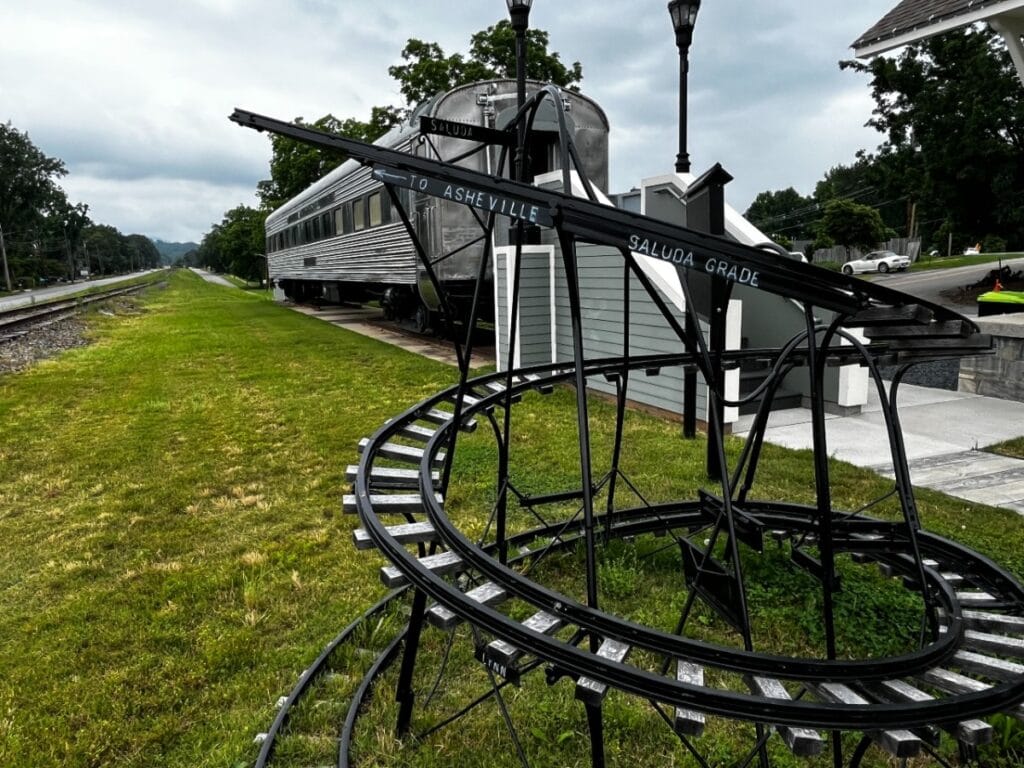
But passenger rail stopped on the Saluda Grade in 1968 and the last freight trains ran in 2001. So, young people growing up in the community today have no memory of an active rail line. And many of the people who remember the heyday of the railroad are in their eighties and nineties. If no one captures their stories soon, they could be lost.
In the meantime, as plans are moving forward to reinvent the 31-mile rail line as the Saluda Grade Trail, not many people are asking kids what they want to see.
But, to Summer’s mind, they should. She says, “With this job, I knew I was stewarding something that would matter more to my child and the children of this area than to the adults planning it today.”
She did get the job and went on to help coordinate extensive community engagement. One striking finding was that 95% of people said they want to see educational programming—the strongest area of consensus. The community also made clear that they want to honor the past, with an emphasis on local history.
So, this school year, Summer is working with local teachers on a project that immerses students in both the past and the future of the Saluda Grade.
A Sense of Pride
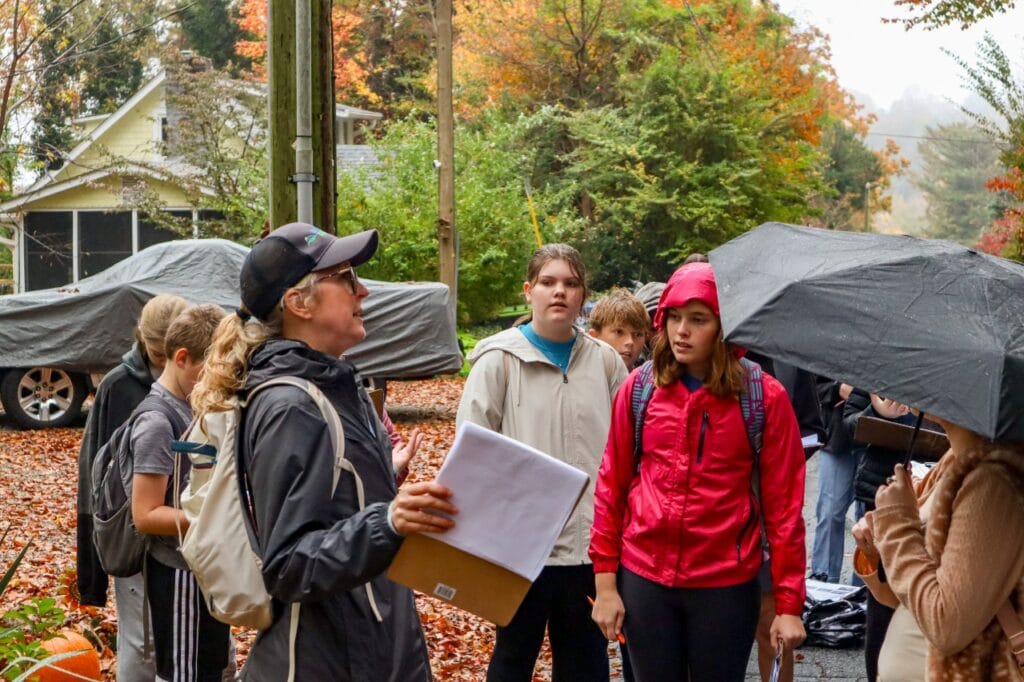
For Andrea Walter’s elementary students, this means engaging visits from experts, historians, and storytellers. For Jeanne Ferran’s middle school students, it means field trips that turn the Saluda Grade into a living classroom.
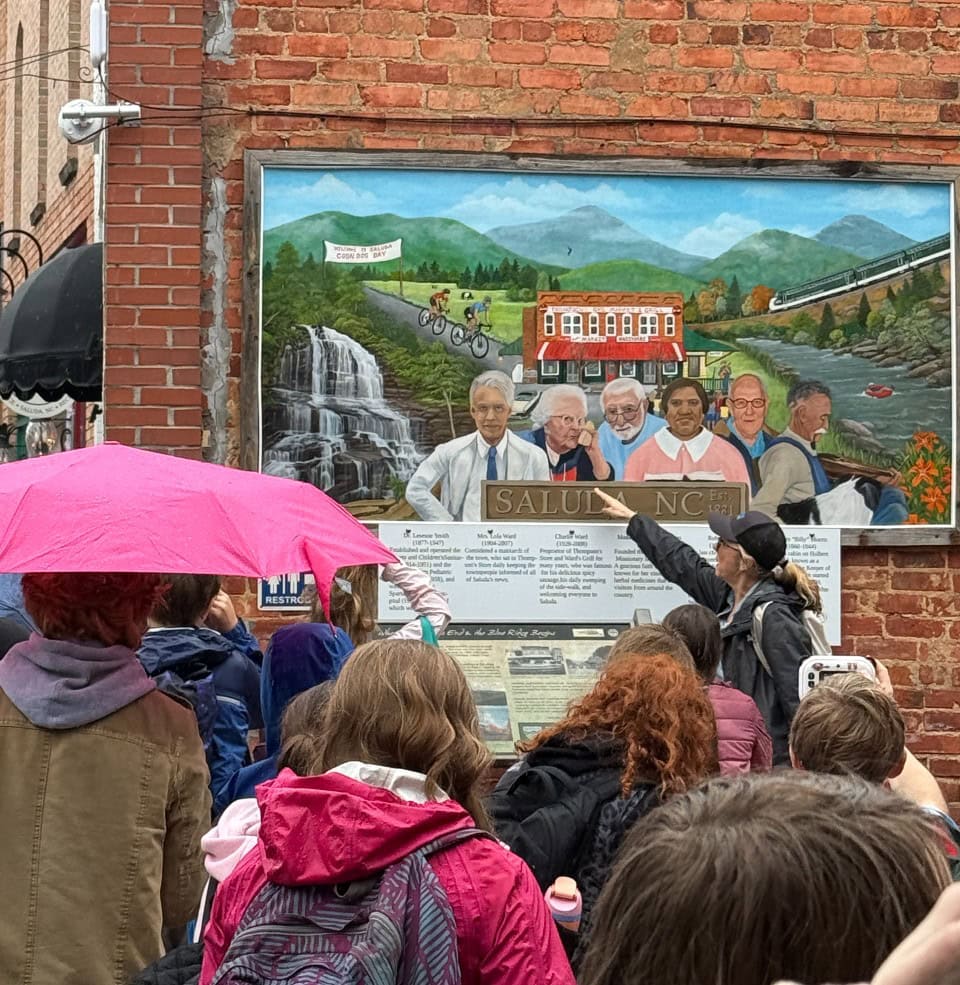
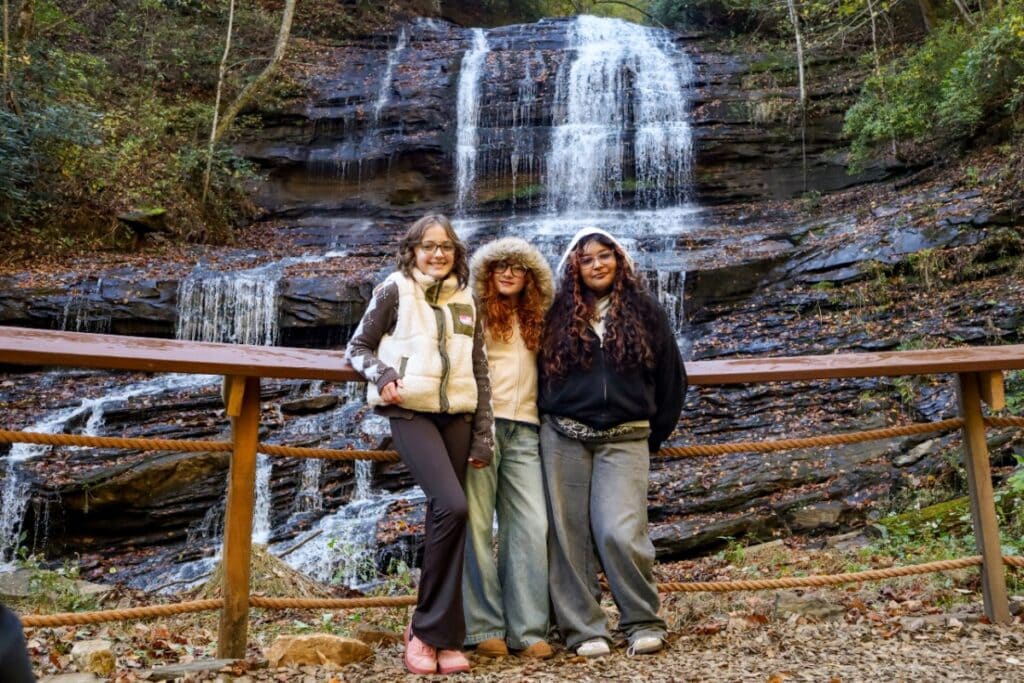
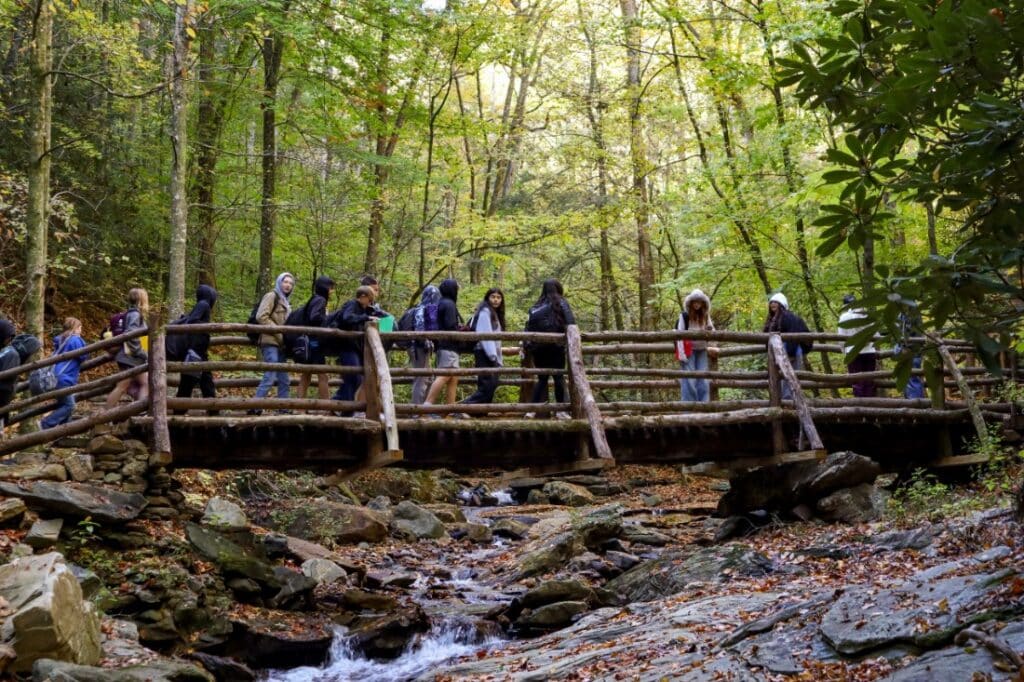
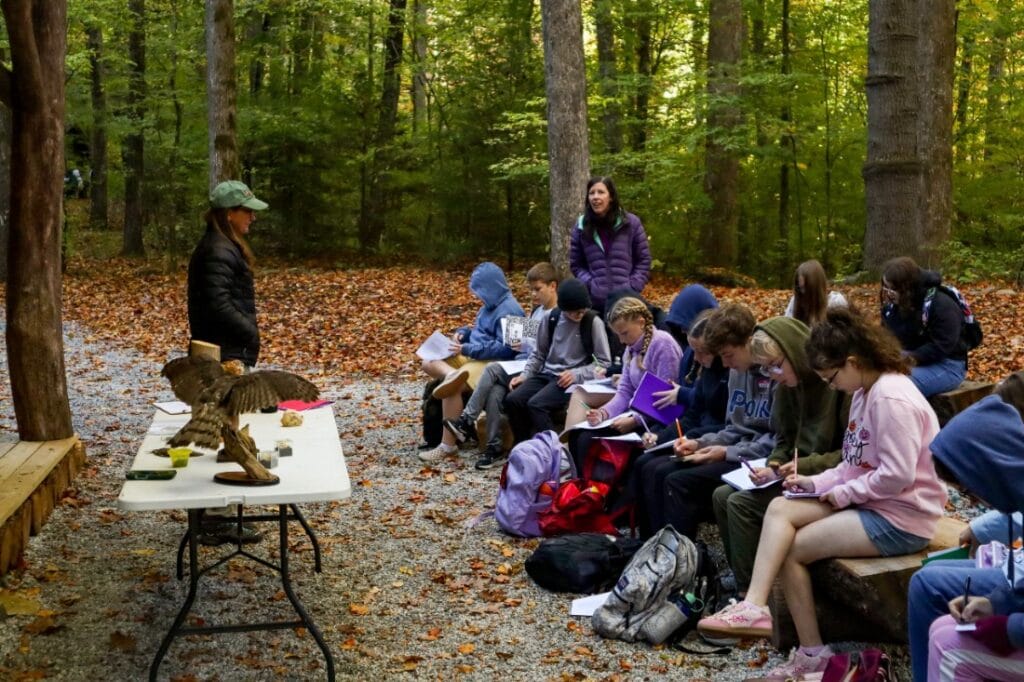
Their first field trip was to Pearson’s Falls, a nature preserve with a beautiful waterfall where they learned about wild communities—like, how a Carolina allspice attracts pollinators and how a hawk hunts its prey. Their second field trip took them to downtown Saluda, where they could see firsthand how the railroad had shaped the town, from the businesses clustered near the historic depot to the former boardinghouses on quiet backstreets. The next planned field trip will take them to Tryon, to explore creative traditions, such as stories, crafts, and music. The final field trip, in Landrum, will focus on the region’s economic past and future. This includes a tour of TIME Bicycles, the nation’s largest carbon fiber bicycle factory. The owners chose Landrum for the factory because of the trail, even before it was built!
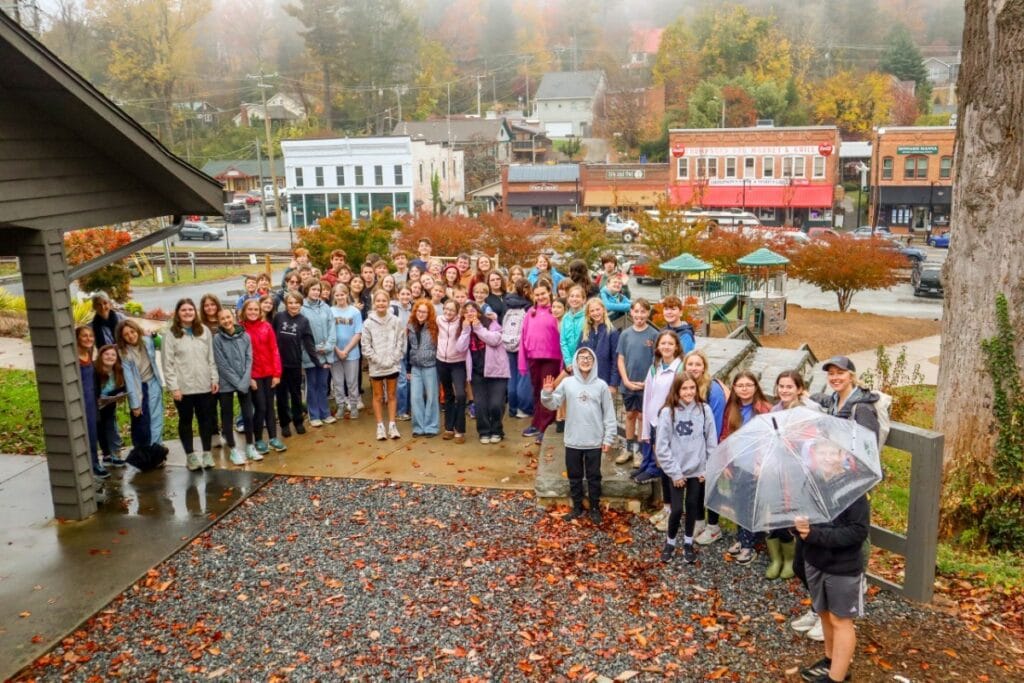
These students, who are in Ms. Ferran’s advanced English and Language Arts classes at Polk County Middle School, will research a topic of their choice about the Saluda Grade. Their findings will be shared in an interactive map of the rail corridor that Conserving Carolina will create. The students will also present their research to the community in an event next spring.
Called Stories of the Saluda Grade, this project is supported by funding from the Stuart and Margaret L. Forbes Endowment Fund at the Polk County Community Foundation.
Ms. Ferran says, “We are studying about what does it mean to be a conservator of not just nature but history. We’re tying together history, culture, and the treasures that we have in our environment. We’re developing a sense of pride in what we have, so we can pass it on for the people who are going to be enjoying the rail trail.”
Related: Polk County students plan for the future of natural areas near their schools.
Student Perspectives
She says that some of her students came into this project knowing what they wanted to research—but as they learn more, it’s hard to choose. Some can tie a family story to the rail line. Some are fascinated by the dramatic crashes when trains lost control, as well as the engineering solutions developed in response. Others are interested in the economic growth a rail trail could bring to their hometowns. Will the places where they’re growing up hold opportunities for them as adults?
At Pearson’s Falls, sixth-grader Eli said, “I wanted to research literally everything in the nature section, so we’re talking, like, minerals and rocks, flowers, trees, landmarks, waterways, and animals.” It’s important to him to ensure that plants and animals will have homes along the path of the trail, and he especially wants to protect endangered species.
Seventh-grader Carina predicted that the Saluda Grade Trail would bring economic growth, like the railroad did in its day. “The tourists that will come in to bike or walk the trail will go to the restaurants to eat and they’ll bring in revenue,” she said. “It also preserves a little bit of our history because it brings attention to the railroad and how important it was.”
Eli also points out that the trail will link towns like Inman, Landrum, Campobello, Tryon, Saluda, and Zirconia. “You’re connecting places that haven’t been connected since the railroad went out of commission,” he says.
On the field trip to downtown Saluda, eighth-graders Emory, Hadley, and Aubrey say they look forward to the rail trail coming to their community.
Emory said, “I’ve been to multiple rail trails and it’s so pretty, riding a bike or walking my dog down the trail. It gets people outdoors and makes them happier.”
Hadley says, “It brings the community together, like the young and the old. We have both, so it’s bringing it all together.”
These are the kinds of voices and ideas that Summer—a former teacher—had in mind when she proposed this partnership with local schools. And it’s the exact type of program that the community said it would like to see.
“These are very curious kids,” Summer says. “Not only are they learning more about the railroad but also the areas that they call home, and the heritage that brought us here, and the traditions we can carry on for the future as this railroad becomes a trail.
“I consider myself a steward of the project and it’s really for these kids. It’s for the younger generation. They’re the ones that are going to go on to enjoy it and reap the benefits of it.”