Land Protected Next to the Kingdom of the Happy Land
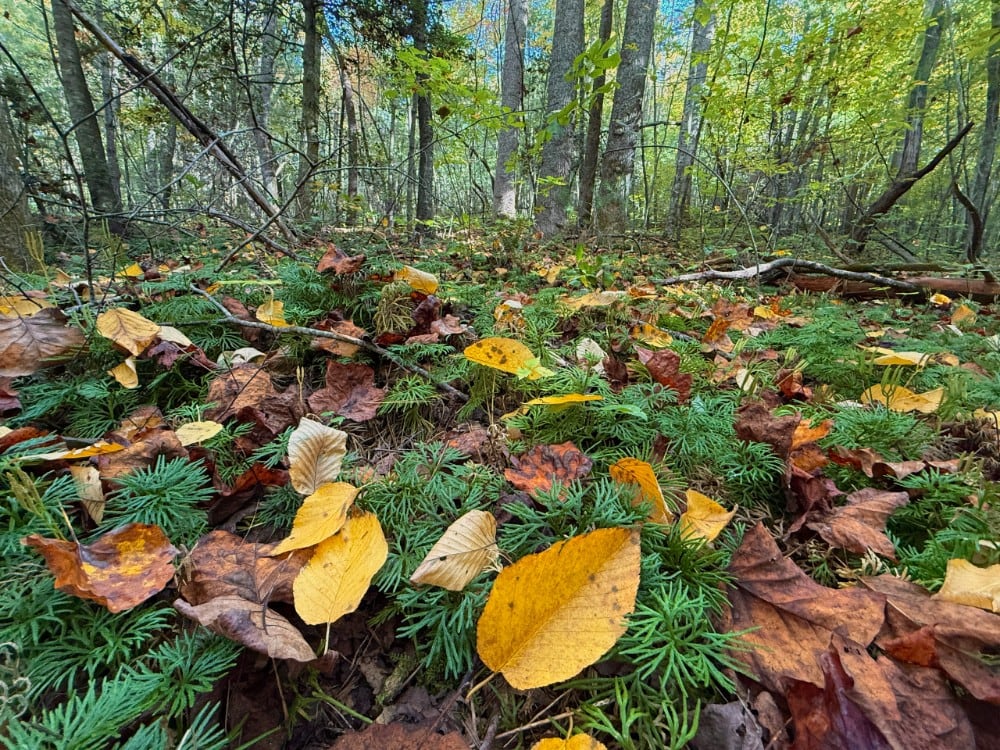
Wes Burlingame loved plants, which he felt connected him with some of the people who had come before him as landowners in Tuxedo—the inhabitants of the Kingdom of the Happy Land.
Wes and his wife bought property next to the site of the Kingdom—which is so important to local Black history—so they could preserve its forests and carry on its stories. On their land, the woods were full of flowering shrubs that Wes particularly treasured, like azaleas, mountain laurels, and rhododendrons. Wes and his wife, Sharon, would talk about the Happy Land with their friends—among them the local storyteller Ronnie Pepper and amateur historian Suzanne Hale. They knew that the freed people who settled there had sold a sought-after medicine known as Happy Land Liniment. Wes also knew that azaleas historically were used in topical pain relievers. Could the Kingdom inhabitants have harvested azaleas and other useful plants near, or even on, the land that he and Sharon owned?
They had first encountered the story on a tour of a private property in Tuxedo where part of a stone chimney remains from a house that crumbled long ago. This chimney is the last remnant of a place whose owners called it the Kingdom of the Happy Land.
They came from a land that was far from happy. In the decades after the Civil War, a group of people, who had been born into slavery, migrated north from Spartanburg County to the mountains on the border of North and South Carolina. They were fleeing from violence and persecution, looking for a new life. They found work on a plantation whose owner had been widowed in the war. Over time they were able to buy part of that farm for themselves, straddling the border between states. Here they established a settlement that they called the Kingdom of the Happy Land. They called their leaders the king and queen. The people lived communally, pooling their resources. They farmed the land, handled most of their own needs, and sold their popular liniment for aches and pains.
Years after they first heard this story, Wes and Sharon were helping a friend who was trying to buy property in Tuxedo—and they realized it was right there. It was next to the historic Kingdom of the Happy Land. When it turned out that their friend couldn’t buy the land, Wes and Sharon had the opportunity. He had just come into some inheritance from his grandparents, Sharon added what she had, as did their friend Steve Breckheimer, and they pulled together an offer that included Wes bartering some landscaping work for the seller.
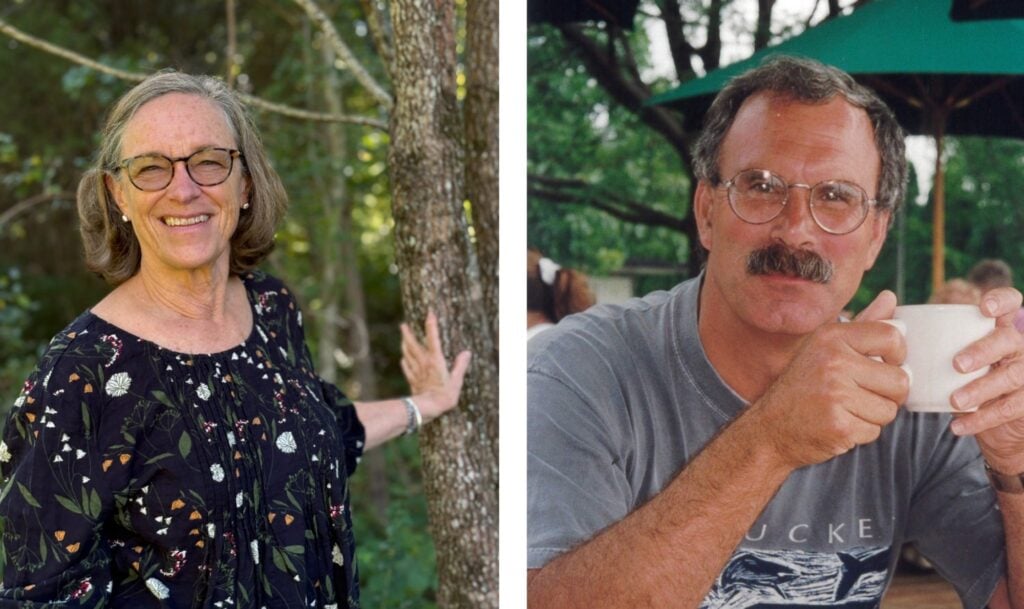
Sharon says, “We bought the land to hold it and to protect it because we knew that it was in an area that would get developed and it was so nicely undisturbed.”
Sadly, Wes passed away in 2019, but this year Sharon carried out their shared wish to protect the property forever with a conservation easement. She donated an easement on 18 acres to Conserving Carolina. The NC Land and Water Fund covered the transactional costs of this real estate project and also contributed toward future stewardship.
This mostly forested conservation land offers numerous public benefits:
- It’s located very near the vast, protected Greenville Watershed and the public Palmetto Trail—separated by only about a tenth of a mile.
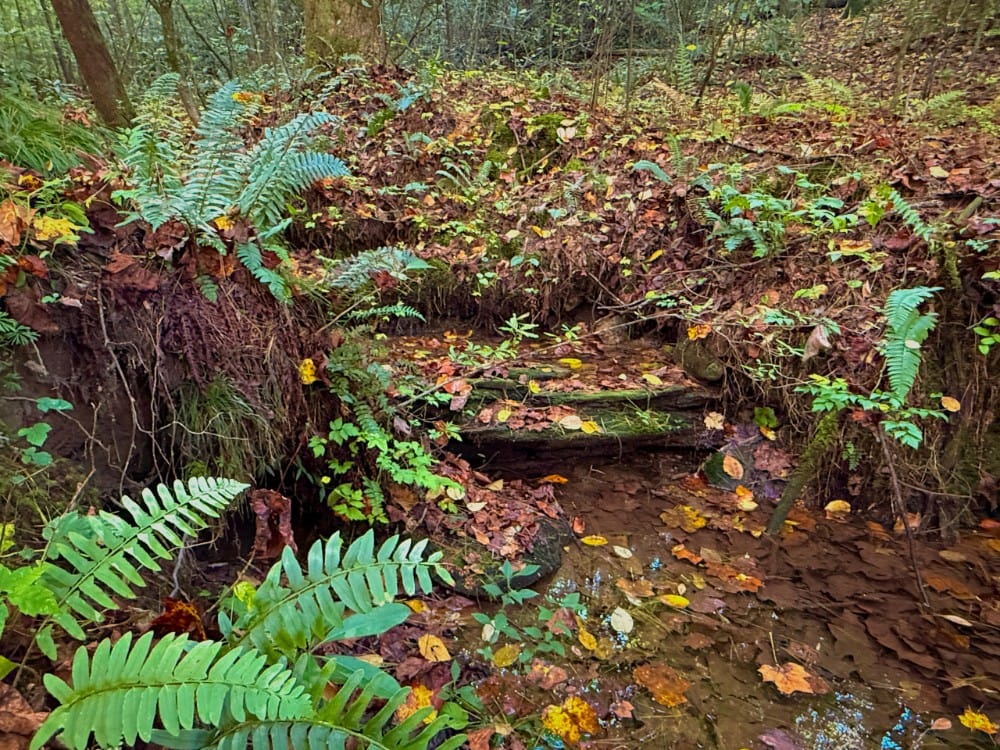
- It includes approximately 1,900 feet of headwater streams and seeps, providing clean water that feeds Jones Creek and Lake Summit.
- It’s home to rare plants, including sweet white trillium and ashy hydrangea, as well as many other wildflowers.
- It provides valuable wildlife habitat—a haven for animals like salamanders, bats, turtles, deer, and numerous songbirds.
- It adjoins the Kingdom of the Happy Land property and provides context for that historic site.
This protected land is only part of the impact that Wes and Sharon made over decades for their community in Henderson County. As a young man, Wes served in the Peace Corps in Thailand, and he continued to visit there throughout his life. He and Sharon also lived in Nepal for a time. But ultimately they settled in Hendersonville, raising their two children here.
Sharon worked for over 30 years as a special education teacher at local elementary schools. For his part, Wes ran a native plant nursery. Sharon recalls that people would show up looking for roses, and Wes would steer them in another direction, sharing his passion for wildlife-friendly native plants. He avidly promoted native plants through lectures and nature walks, planted trees at several elementary schools, and helped establish the native gardens behind Conserving Carolina’s office in Flat Rock.
Conserving Carolina’s Land Protection Director, Tom Fanslow, says, “We are deeply gratified to have made our small contribution to the enormous legacy of Wes and Sharon Burlingame. In his day, Wes led a cadre of volunteers in planting a virtual forest of trees beautifying Hendersonville’s public spaces, and he was present in spirit with Sharon for the conservation of an actual forest that he cherished as much for its historic significance as the stunning springtime display of trillium.”
Wes and Sharon’s friends Ronnie Pepper and Suzanne Hale contributed to new research and reimagining of the Kingdom of the Happy Land, which informed the new novel Happy Land by bestselling author Dolen Perkins-Valdez.
Suzanne, who is a Conserving Carolina board member, says, “It’s not clear whether the inhabitants of the Kingdom of the Happy Land would have also farmed or foraged on what is now the Burlingame property, although future research might shed light on that. In any case, it’s meaningful to protect the land that adjoins such an important historic site.”
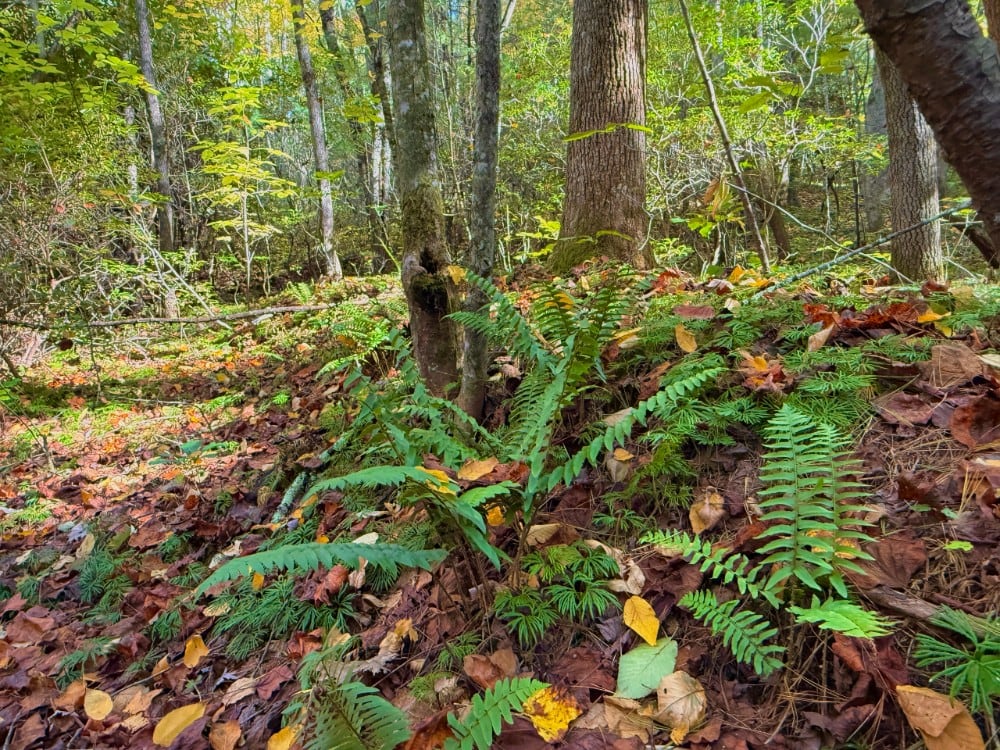
Sharon says of the land that they protected, “It’s a beautiful spot and Wes’s spirit is there because he loved it.”
She adds, “He had a special feeling for this piece of land, not only for its diversity of plants and habitat, but because it may have welcomed people in need of support. In return, those members of The Kingdom would have used the land’s resources peacefully and left it resilient for future generations. Our whole family just wants to be a part of that chain of care and respect for this land. Its cultural and natural significance are special.”