A Final Visit to the Deerwoode Reserve Restoration
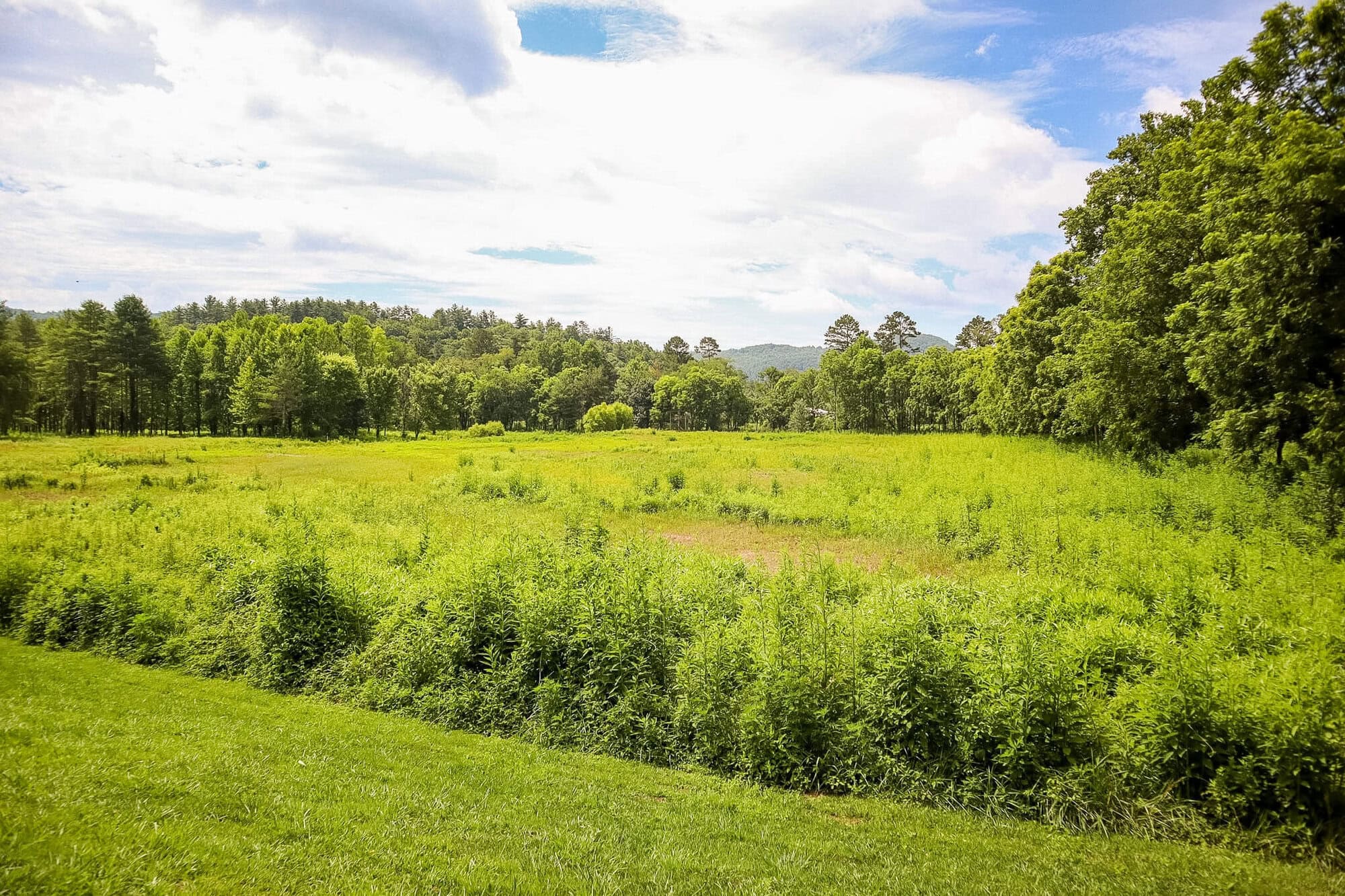
Some stories end with a ribbon cutting. This one ends with a healthy floodplain, a stabilized streambank, and nature taking the lead.
Three weeks before our final walk through Deerwoode Reserve, a significant storm rolled through Transylvania County — the kind of weather event that puts new restoration work to its first real test. When our team returned to the restoration site, what they found wasn’t damage. It was proof.
The work held. Every bit of it.
What’s Changed
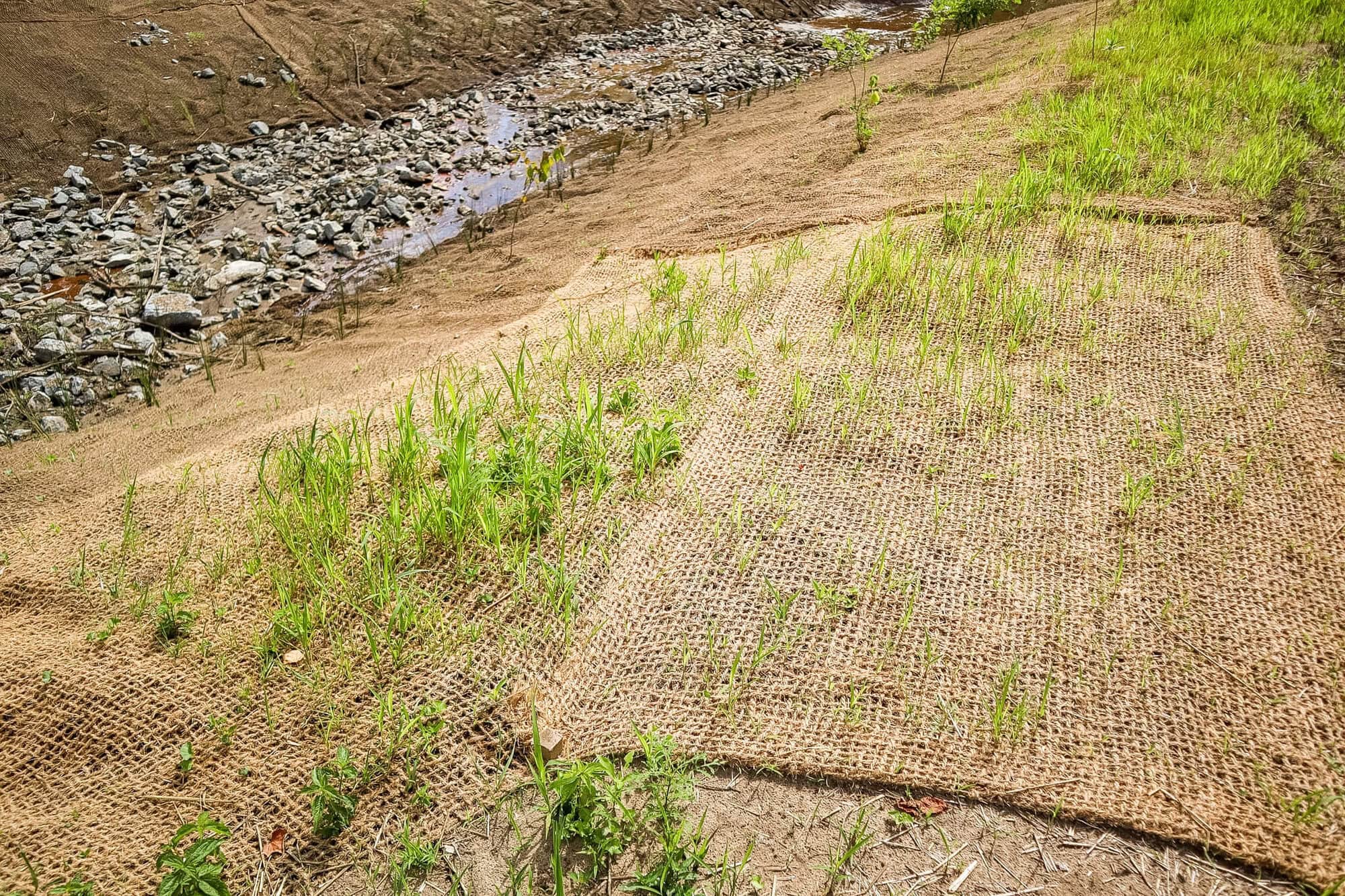
The difference between the Deerwoode of Part 1 and the Deerwoode of today is striking. Where there was once bare, eroding bank and invasive bamboo thickets, there are now planted sycamore, maple, dogwood, and other native species — and a newly completed slough quietly doing its work alongside the river.
Most of the bamboo stands have been removed — a significant victory, though one that comes with an honest caveat: bamboo, left unattended for decades, doesn’t give up easily. Complete eradication of these stands will be an ongoing effort, a slow and patient battle fought one stand at a time. But the tide has turned.
A Bank Built to Last
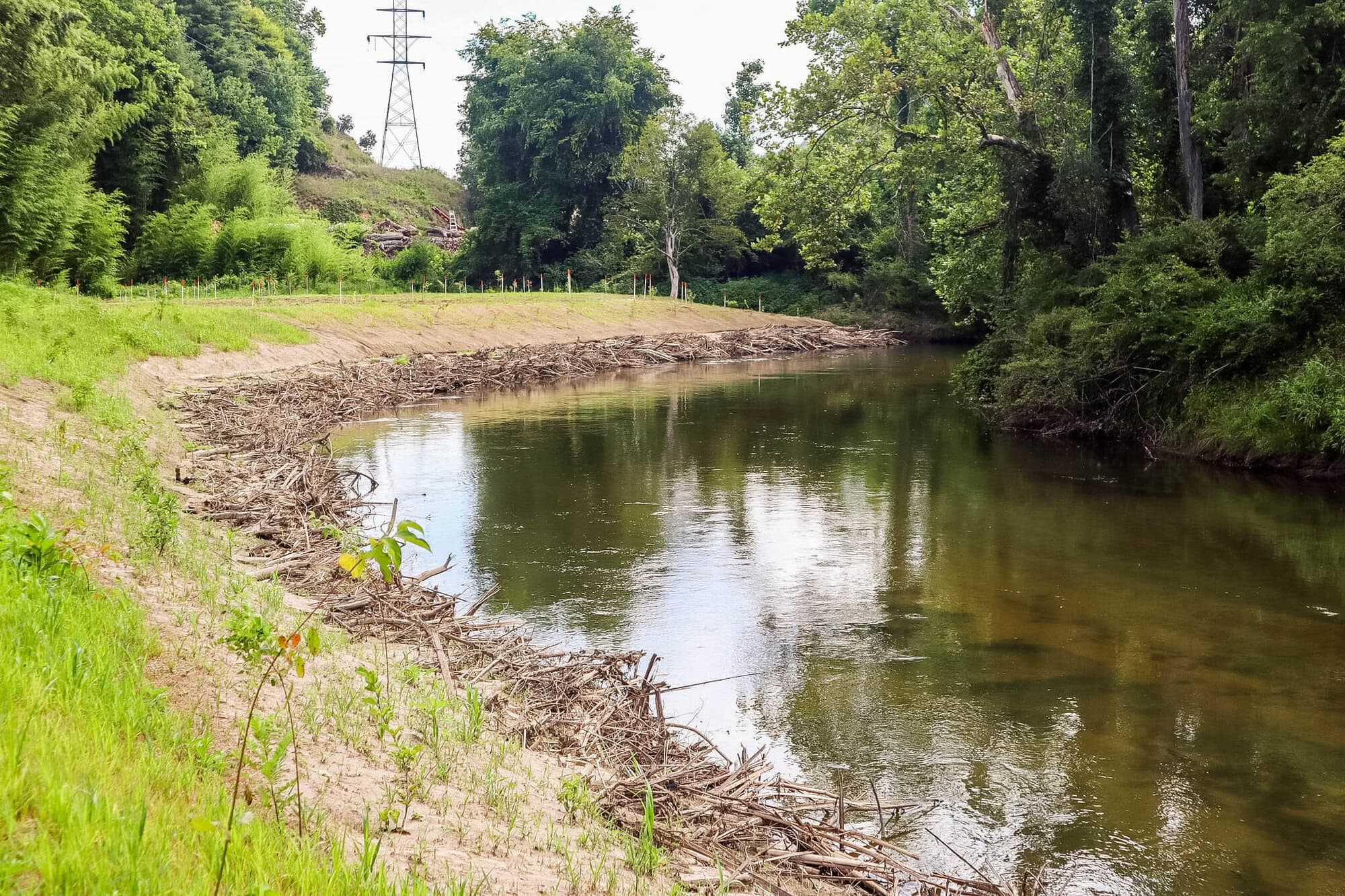
One of the most thoughtful elements of this restoration is what you can easily overlook — and eventually won’t be able to see at all.
The outer bank of a river meander is always under the most stress. When a river bends, it hits the outside of that curve with the greatest force, slowly pushing further into the land over time. Left unchecked at Deerwoode, that bend would have continued eating into the property for years to come. Instead, it was stabilized and reinforced — not with metal or plastic, but entirely with natural materials.
Dead wood from the removed bamboo and other cleared vegetation was buried deep into the bank — a technique called toe-wood reinforcement — creating a foundation that the newly planted trees and saplings will draw from as it decomposes. The wood holds the bank, but will eventually decompose to become nutrients. The nutrients feed the roots of the newly planted saplings, and these roots hold the bank. It’s a closed loop, entirely natural, and designed to disappear into the landscape over time.
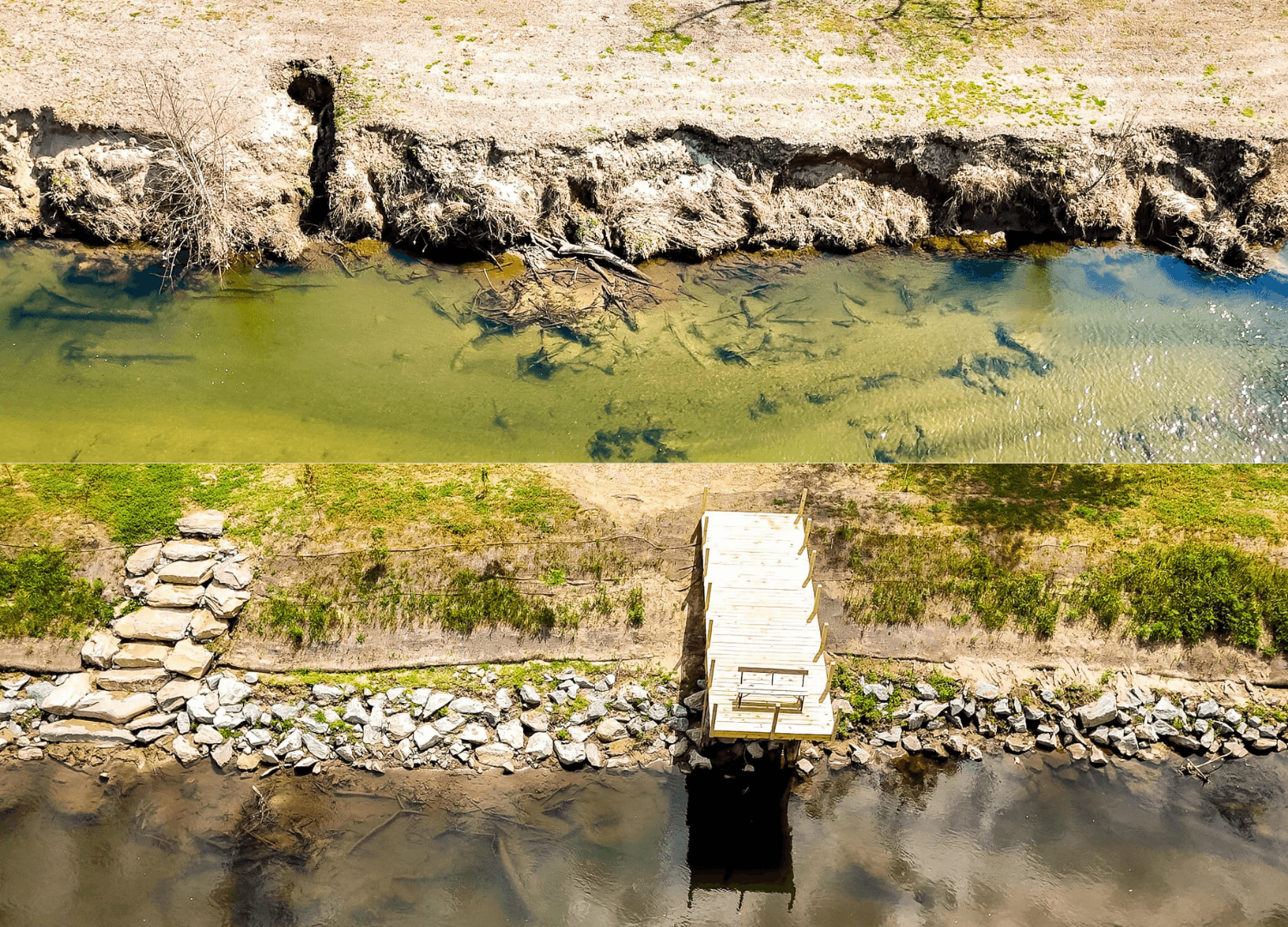
“The goal,” as Greg Jennings puts it, “is that years from now, you won’t be able to tell work was done here.”
That’s not a modest ambition. That’s the whole point.
The Slough — Already Working
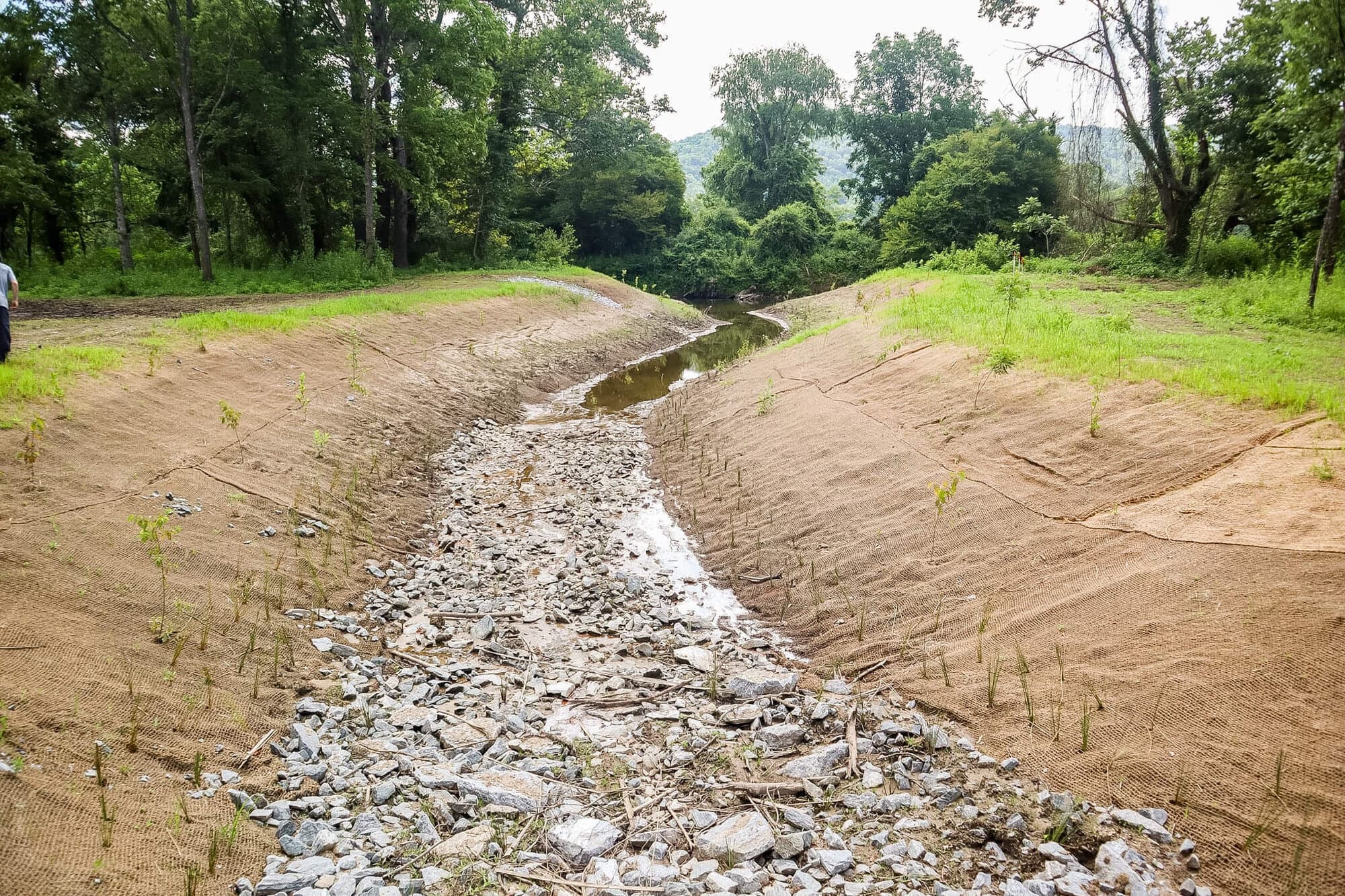
The new slough is in, and right now, with the river running low, it’s doing something quietly wonderful: providing habitat for salamanders and frogs in the shallow, still water at its edges. When Transylvania County’s famously generous rainfall fills it back up — and it will, this is one of the wettest counties in the eastern United States — it will become breeding and feeding habitat for fish as well.
It’s the sixth slough completed in partnership with engineer Greg Jennings of Jennings Environmental. Ten more are already in the pipeline across other sites, each one a piece of a larger regional effort to restore the kind of slow, complex, habitat-rich waterways that the French Broad River system was always meant to support.
A Blueprint Worth Sharing
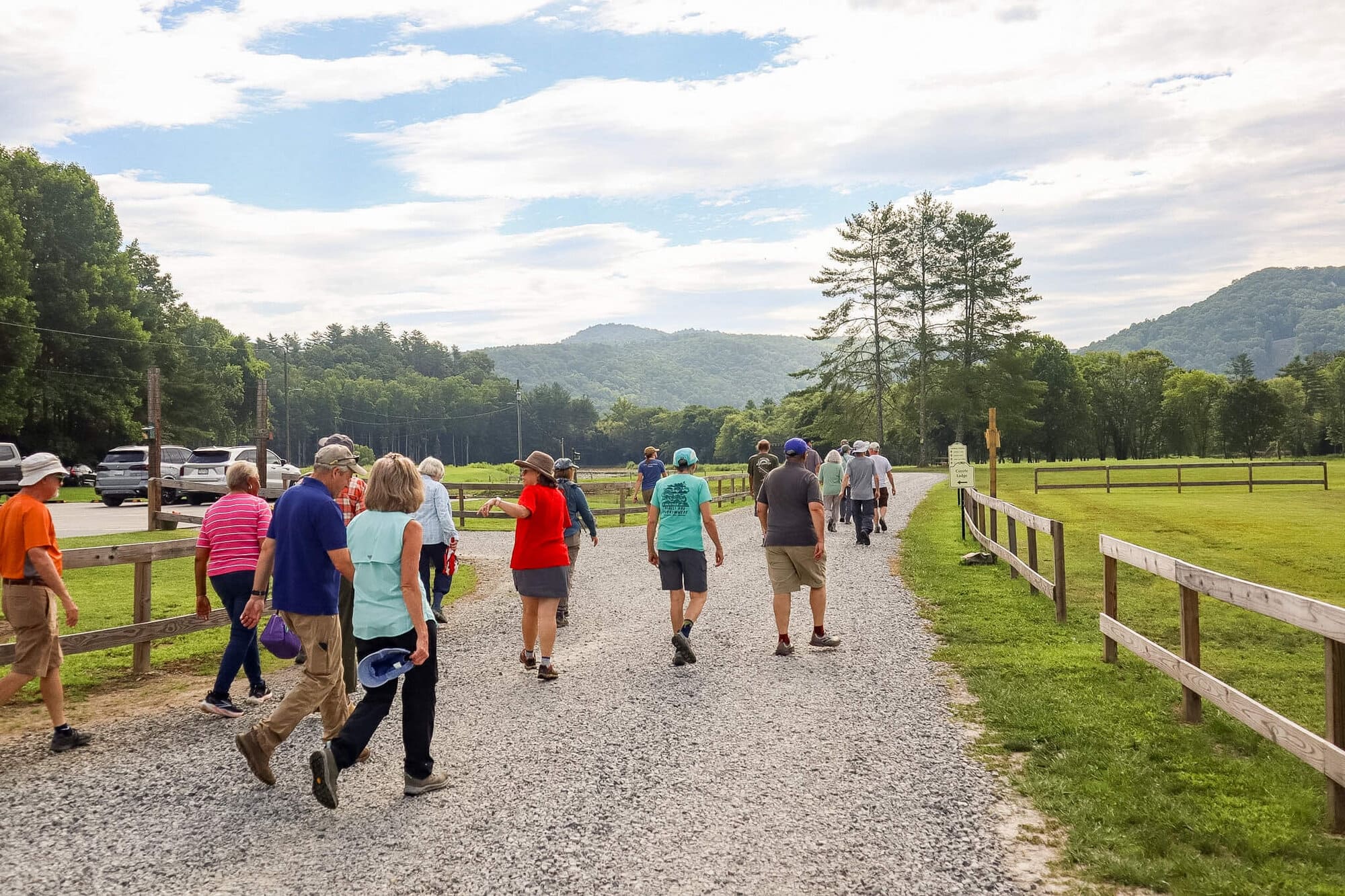
Deerwoode Reserve is held under a conservation easement — meaning the land remains in private hands, with a working business operation coexisting alongside the restored floodplain. That coexistence is itself worth noting. The restoration at Deerwoode didn’t come at the expense of the landowner’s livelihood. It enhanced the land they depend on.
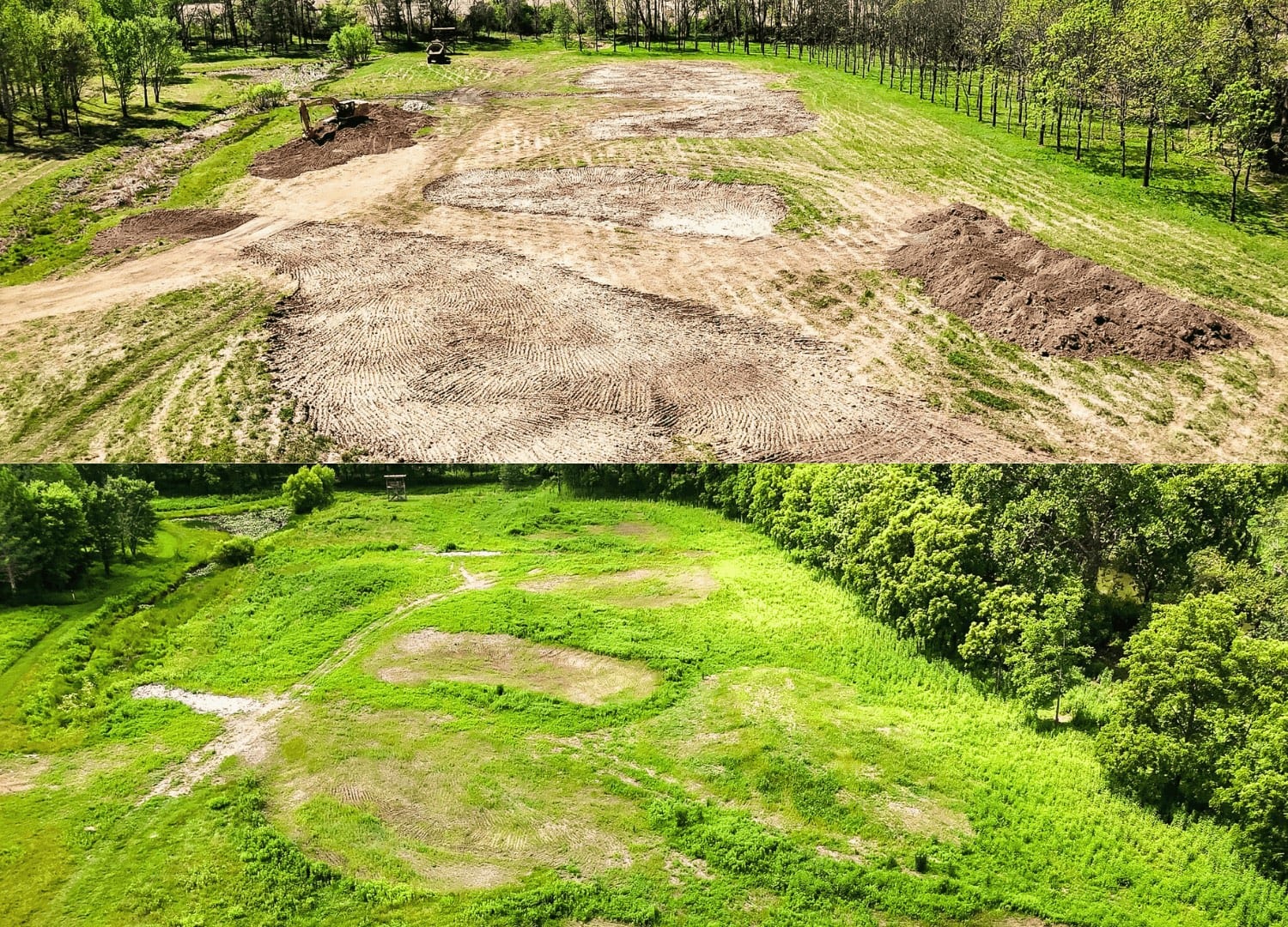
It’s a model that matters — proof that profit and conservation don’t have to pull in opposite directions. That a working landscape and a healthy river can share the same ground. And that the investment of time, care, and expertise in a place can pay dividends that outlast any single flood season.
The Work Continues
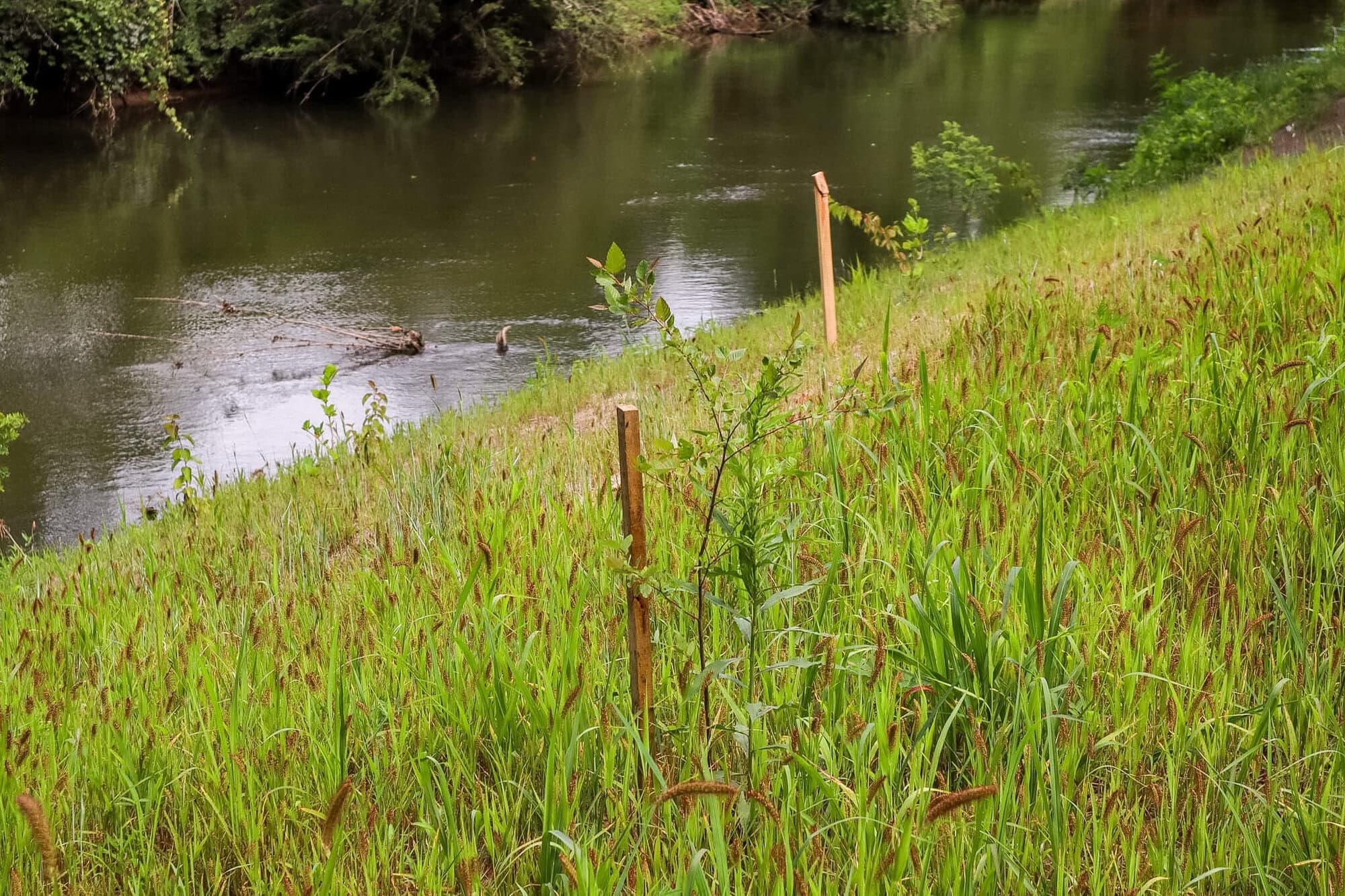
This fall, the team will return to Deerwoode to supplement the restoration with live stakes along the riverbank — filling in gaps and giving the newly planted trees and saplings additional company as they establish.
Floodplain restoration is never truly finished. But Deerwoode Reserve is, in a very meaningful sense, a different place than it was when we first walked it together — and the river, for its part, has already weighed in.