From the Black Forest to the Green River
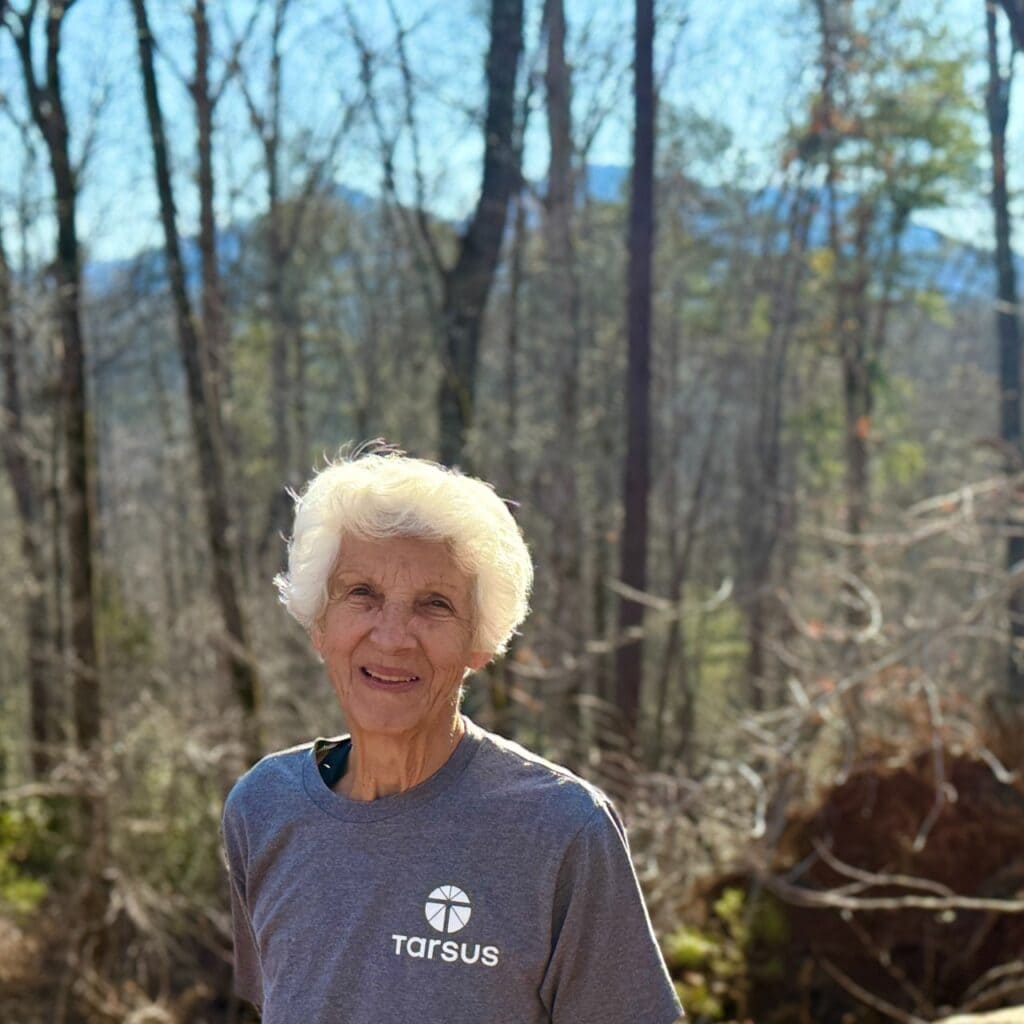
For Christel Walter, the decision to protect 135 acres along the Green River in Mill Spring goes back to her roots, growing up in a village near Stuttgart close to the Black Forest.
“We come from Germany,” she says. “Forests are something we feel spiritually connected to and deeply appreciate. Owning a woodlot, like owning a home, instills a sense of pride and responsibility.”
After moving to the U.S. at nineteen, Christel still felt that way about forests. Eventually, she and her husband Manfred were able to buy beautiful forest land on both sides of the Green River—and they acted on their ethic of stewardship by working with Conserving Carolina to protect it.
This spring, coming back from the catastrophe of Helene and a great personal loss, those woods are a place of new life.
Sustained by the Forest
In Germany, Christel’s family relied on their woods to sustain life—providing food, energy, and traditions.
She says, “Our parents were the first generation that moved off the farm. My father inherited a sliver of woodland when his brother took over the family farm. This is where he spent time coaxing pine seedlings into growing trees. This is where we went to pick wild raspberries and blackberries in the spring and this is where we cut our Christmas tree each year. It is a tradition we still maintain. When our family comes to North Carolina for Christmas, we go to the woods for a cedar tree.”
She says, “There was great scarcity after the war, when I was a child. One of my most vivid memories was that one year we collected beechnuts that were then pressed into oil. I have never seen such an abundance of beechnuts again. During that time, everyone went into the woods to get whatever firewood there was to supplement expensive coal. We were lucky to have a woodlot and relatives that shared. On Saturdays the hot water boiler was fired up, using wood, and everyone took a bath.”
Christel moved to the States in 1961 and then Manfred did. The two had been neighbors in Germany; now in America, they became a couple. They went on to have three children.
Christel says it was by “sheer luck” that she and Manfred found themselves living on this mountainside overlooking the Green River.
Manfred fell in love with this area as he traveled for work and they bought their land in 1971. Before moving here in 2002, the Walters had been living in Wisconsin—which was also good luck, Christel says, because their neighborhood bordered a nature preserve that gave them access to Lake Michigan.
It was in Wisconsin that they started learning how to be “habitat healers” by removing invasive species, restoring a prairie, and collecting and sowing native seeds. So, when they came to the mountains of North Carolina, Christel says, “we were primed.” They managed their land for nature, encouraging native plants and thriving wildlife habitat.
Land Was What Mattered
Coming from Germany, where most land holdings were tiny, it was unbelievable that their family could own a large expanse of woods. Christel says their relatives didn’t believe it until they came and saw for themselves.
Christel says that they thought, “We don’t need any big house. We don’t have to pretend to be rich.” They could have traveled the world like some people do in retirement, but it was land that mattered to them. Their daughter also came to live on the property, in a historic log cabin.
In 2014, Christel and Manfred donated a conservation easement to Conserving Carolina—protecting 66 acres of beautiful mountainside land forever. Then, along with their two sons, they bought another parcel on the other side of the river, where the family protected another 69 acres this December.
Now, the Walter family has conserved a total of 135 acres of private land—providing a legacy for their family while preserving the benefits of nature for the wider community.
Coming Back After Disaster
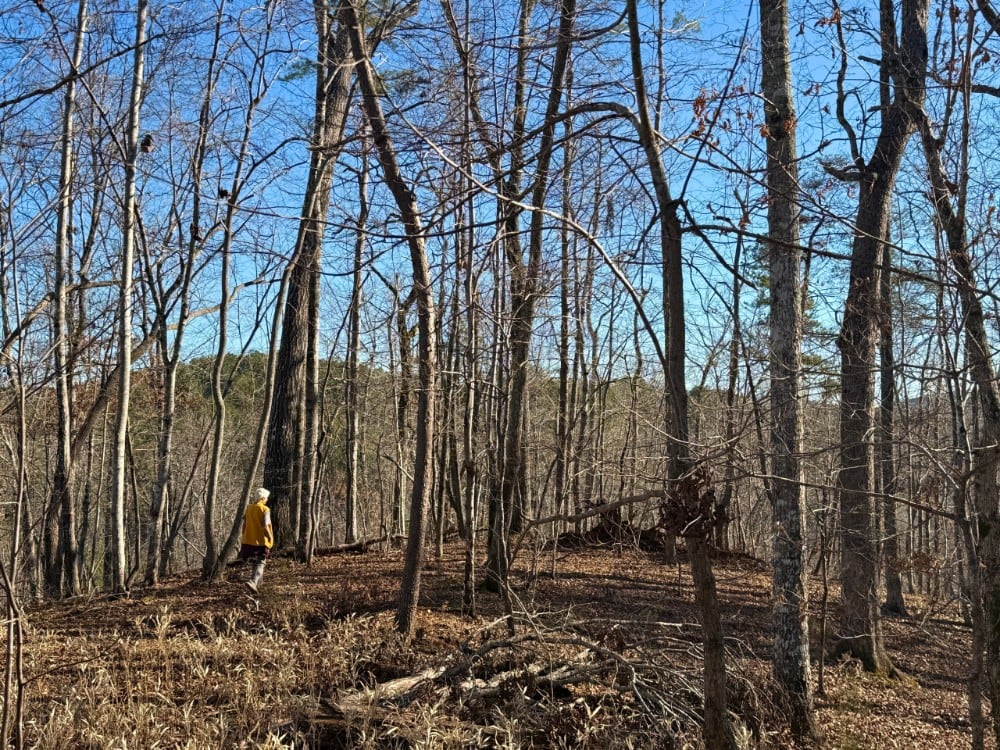
It’s almost the time of year that Christel starts to look for spring beauty, showy orchis and trilliums to pop up from the forest floor. Soon, flame azaleas will glow in the spring woods. The white-blooming trees will start flowering—silverbells, serviceberry, and dogwoods.
It’s a time of beauty in the woods—and it’s also the first spring coming back after a very hard year.
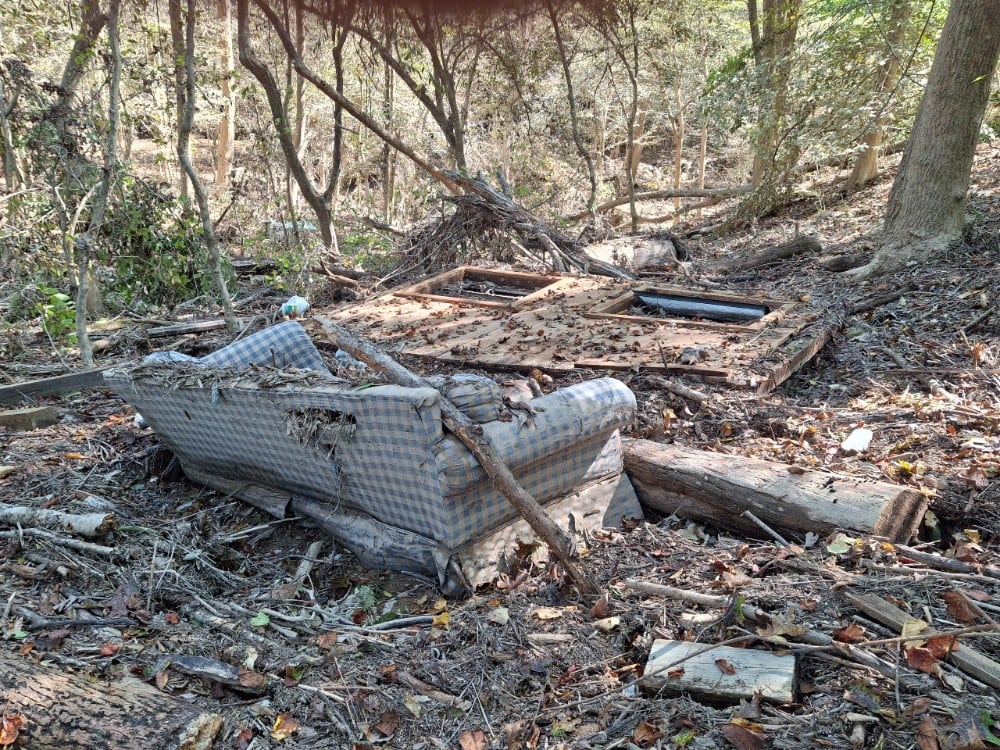
In January last year, Manfred, Christel’s husband of 62 years passed away unexpectedly. That came only four months after Helene—when the water rose a staggering 32 feet and left their riverbanks covered in fallen trees and wreckage. The ruins of someone’s cabin washed up on their land and a blue-and-white couch perched on a tangle of logs.
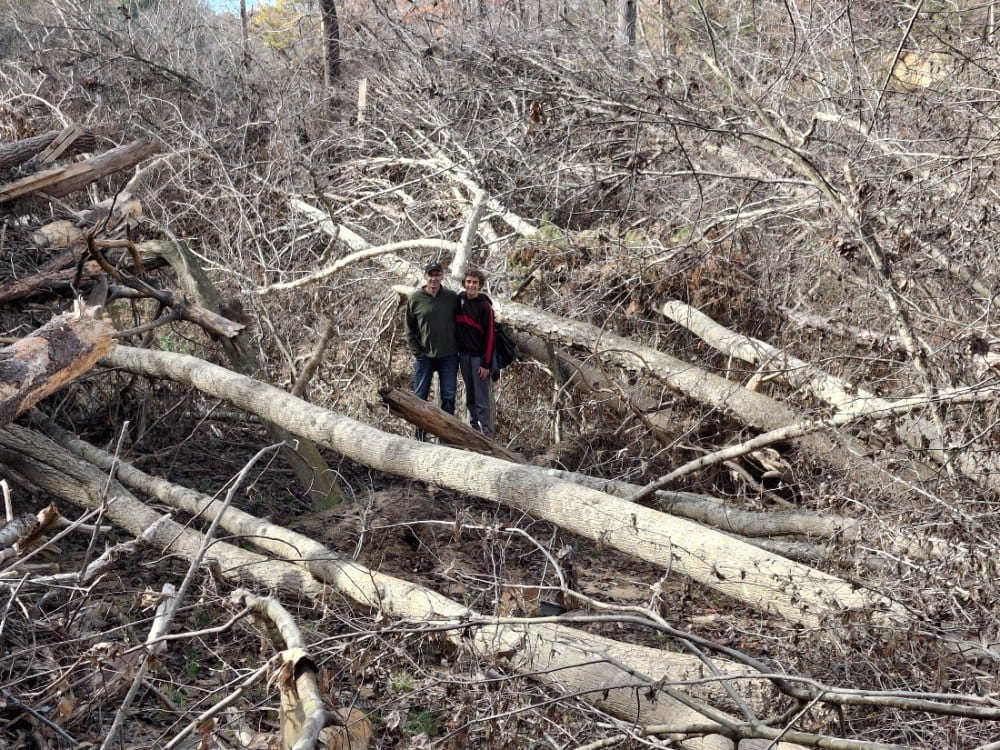
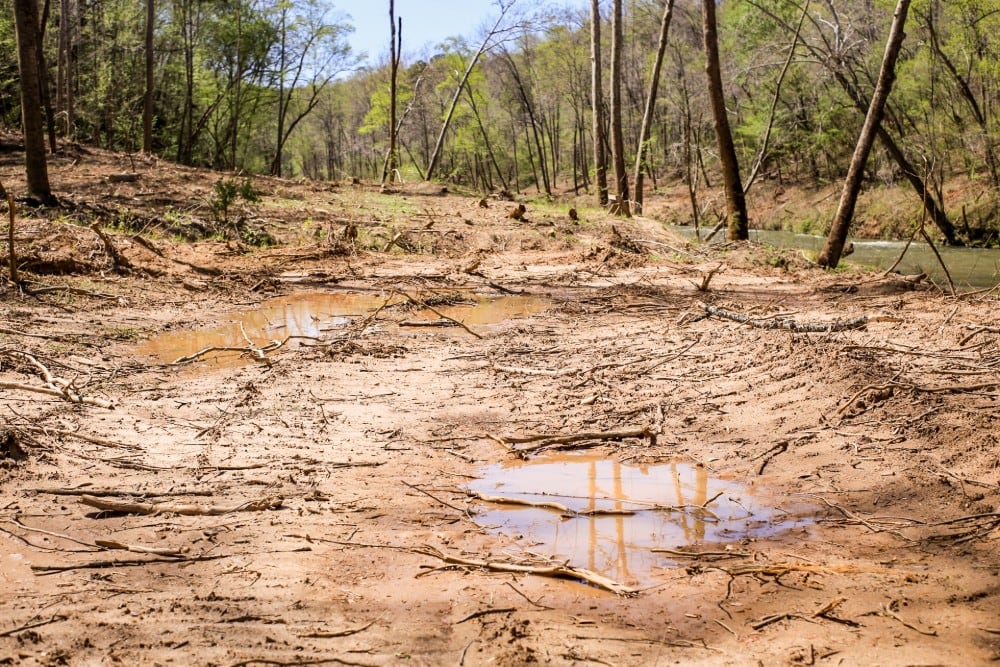
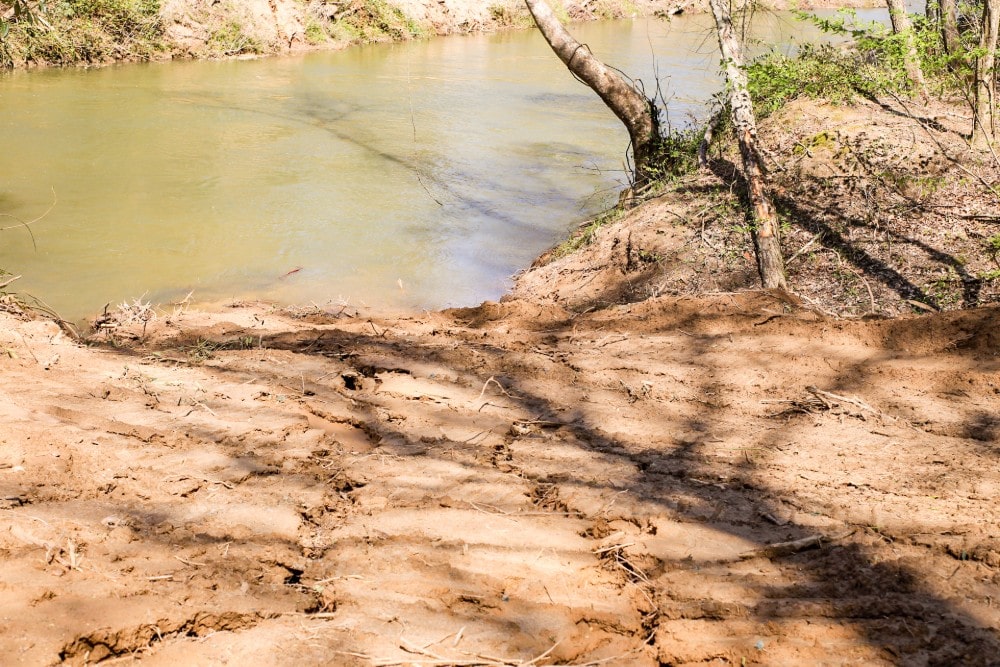
Then, the land suffered another blow. Last spring, contractors hauled off the flood debris, but they also drove heavy machinery and cleared wide swaths along the riverbanks that Christel and Manfred had tended so carefully. Banks where trees used to shade and cool the water, where wildflowers had bloomed, were now bare mud bleeding into the river.
Christel says, “When I first went down there, I was crying, I was devastated.”
Still, she is a doer.
With help from her family, she took up the big task of repairing the damage. Hans Lohmeyer, Conserving Carolina’s Stewardship Manager also came out to help. Last spring, he was there sowing seed to stabilize the bared riverbanks.
While Conserving Carolina isn’t usually able to offer this kind of hands-on support, the team does what they can to help conservation landowners with their stewardship goals. And after Helene, everyone wanted to help where they could.
How to Restore Streambanks After Helene
Hans also saw Christel’s property as a demonstration project that could be used to illustrate how to restore streambanks after the flood. First, sow annual seed so native grasses and wildflowers can quickly start holding the soil in place. Next, replant trees—and the simplest way to do that is through live staking.
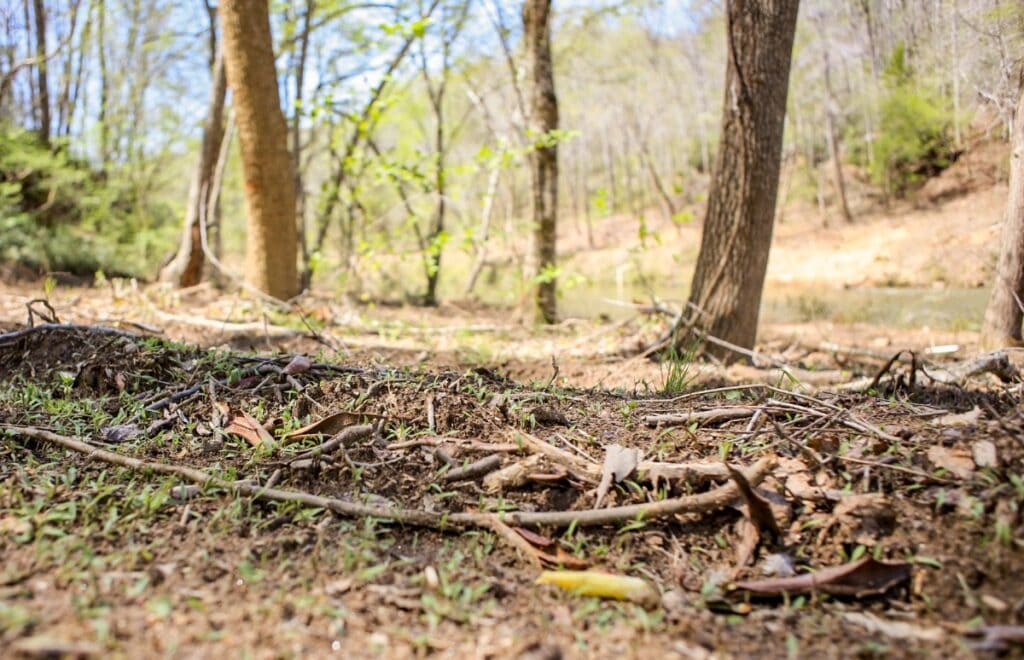
With live staking, you take live branches cut from trees like silky dogwood, black willow, and elderberry, and drive them into the moist soil along waterways. These living branches take root and sprout, without the expense of buying nursery trees or the back-breaking work of digging holes.
This March, Hans plans to come back to Christel’s place for live staking.
Update April 8, 2026: See Live Staking on the Green River – a Blueprint for Streambank Recovery After Helene.
He says, “Although it’s definitely a disturbance and it’s a shame to see the land changed in this way, it’s also provided a canvas for restoration—a restart, because the landowner can choose what species that they want to see growing there.”
Already, the land is showing its resilience, with some trees that were snapped or crushed now growing back. “A lot of silverbells are coming up along the river,” Christel says. “It’s going to be gorgeous. I’m really looking forward to that.”
Looking Out from the Bench Manfred Made
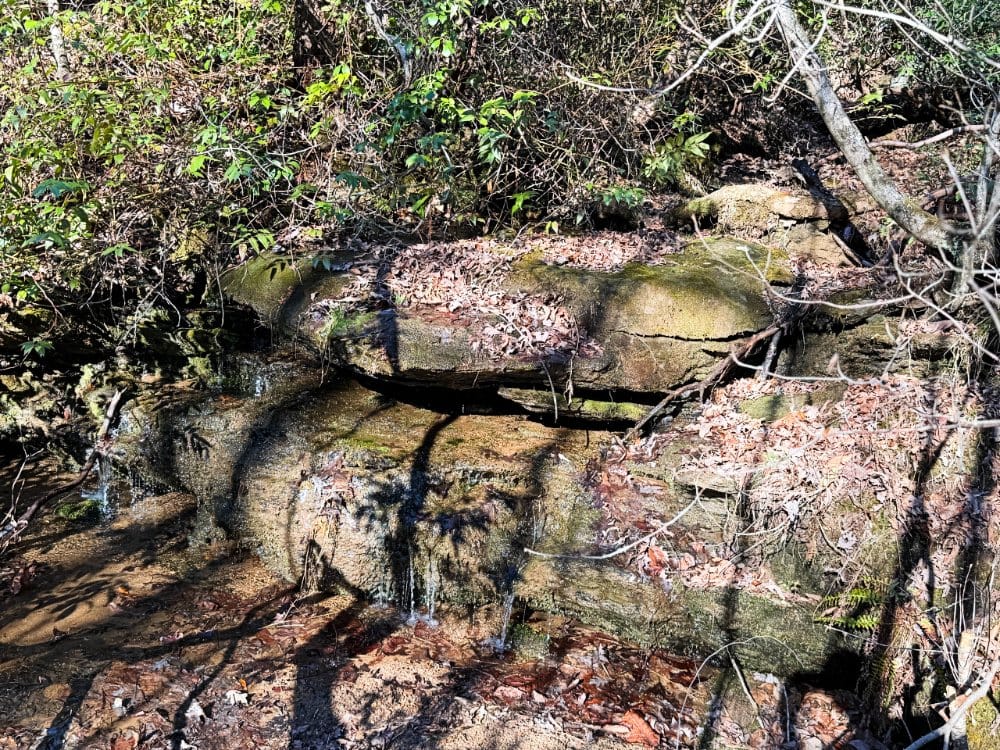
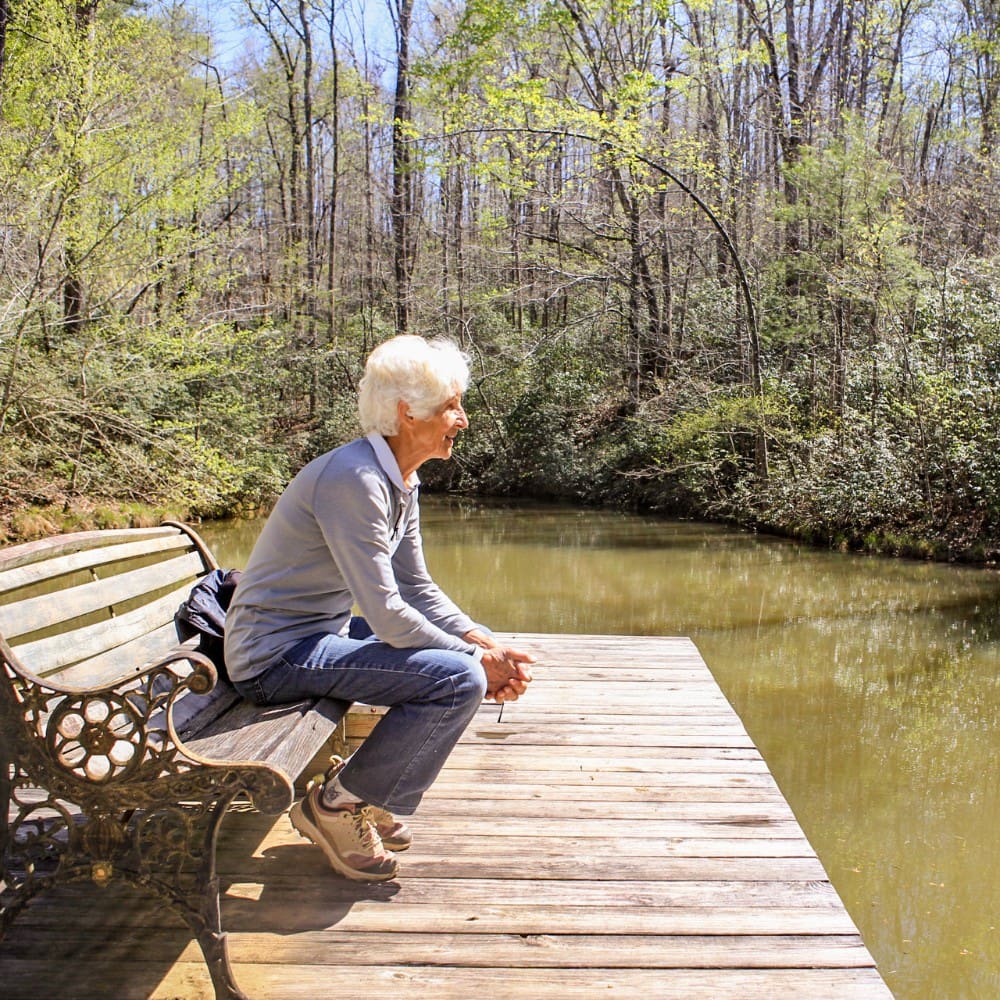
Christel says, “When I sit by the Green River on the Aldo Leopold bench that Manfred made and that miraculously survived Helene, I am in awe and incredibly grateful that we are able to protect and steward this land.”
She says that land conservation can feel like having her cake and eating it too.
The easements help fulfill her goal of lasting stewardship for this land. They ensure that these mountains will continue to be a place for wildflowers and wild animals. They will continue to offer beautiful scenery for paddlers on the Green River. They will also provide clean water, with over two miles of streams and half a mile of river frontage.
But the Walter family still owns the property, so her children and grandchildren can have land to call their own. They set aside a portion of the land where their children or grandchildren can build homes, as Christel hopes they will do. Her grandkids can still take a canoe out on the river, like they did this Christmas. She can still go for walks, hunt chanterelles, and teach her grandchildren how to identify trees. And she can do what she loves most out in the woods—
“I just breathe.”
Article by Communications and Marketing Director, Rose Lane.