School in the Woods
Conserving Carolina just purchased 226 acres for the Fairview Community Forest! This protected forest surrounds The WORX Project, which provides outdoor education for students in local public schools.
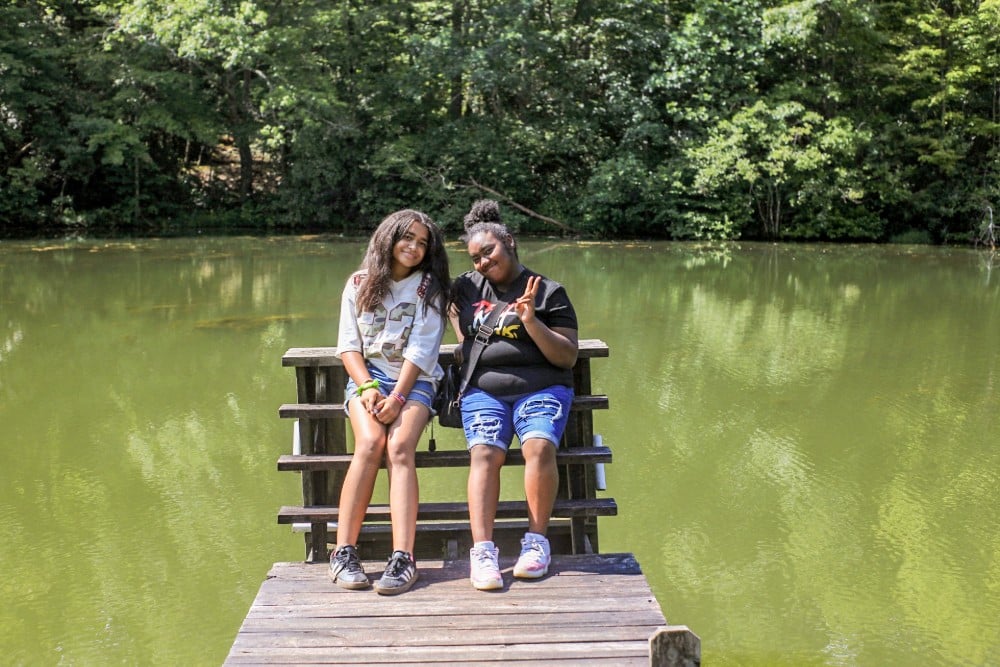
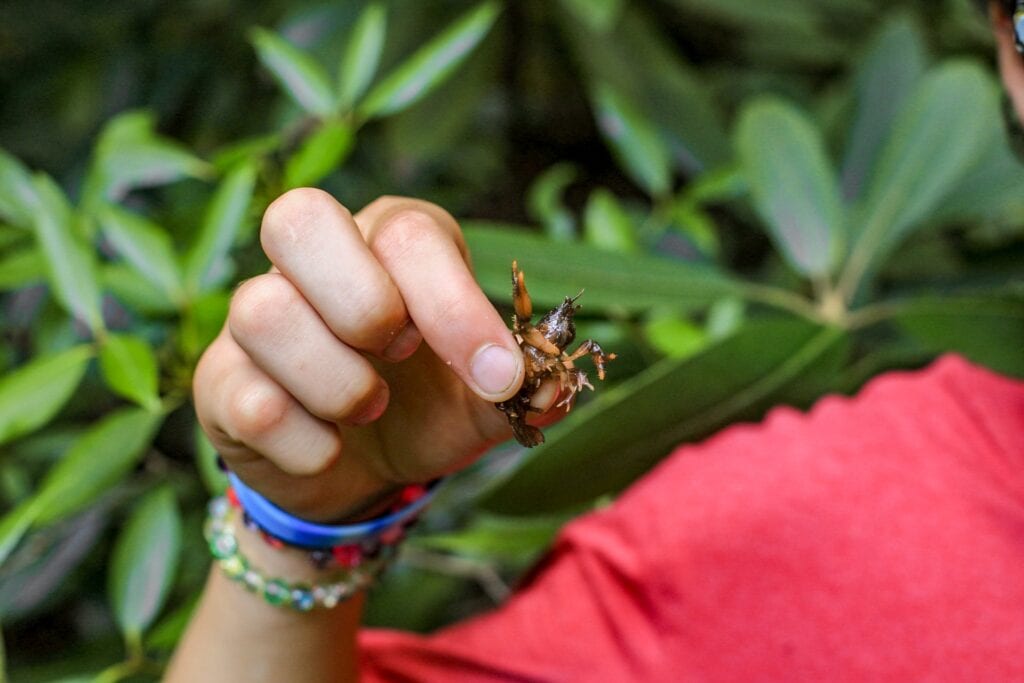
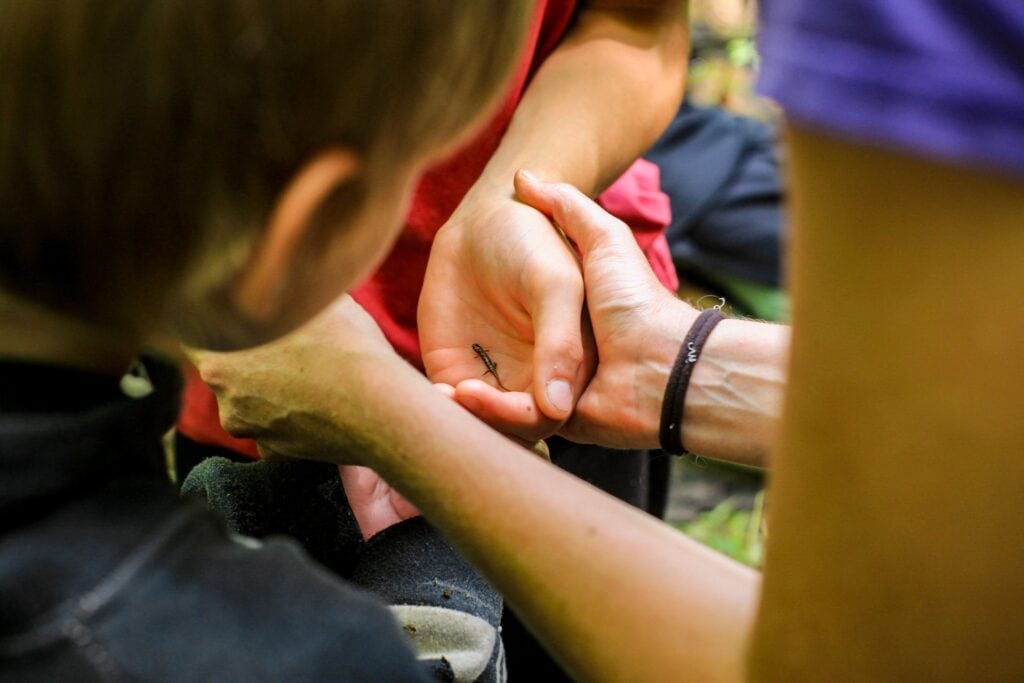
One morning in late July, on a former camp in Fairview, a group of eighth graders went out looking for animals around three bodies of water. In a pool of standing water, they discovered wriggling tadpoles. They learned that frogs seek out this kind of deep puddle, where there are no fish to eat the young. In the grassy bank nearby, they even found a nest of baby bunnies! Next, the teenagers walked to the camp lake and combed through wads of slippery weeds, looking for tiny insects. They learned that the animals living in the water can tell you if the lake is clean and safe for swimming. Finally, they explored a stream and discovered crayfish—like tiny lobsters scampering in the clear water.
One thing they learned—led by Rose Wall, an environmental educator with Buncombe County Soil and Water—is that environmental stewardship can be a job.
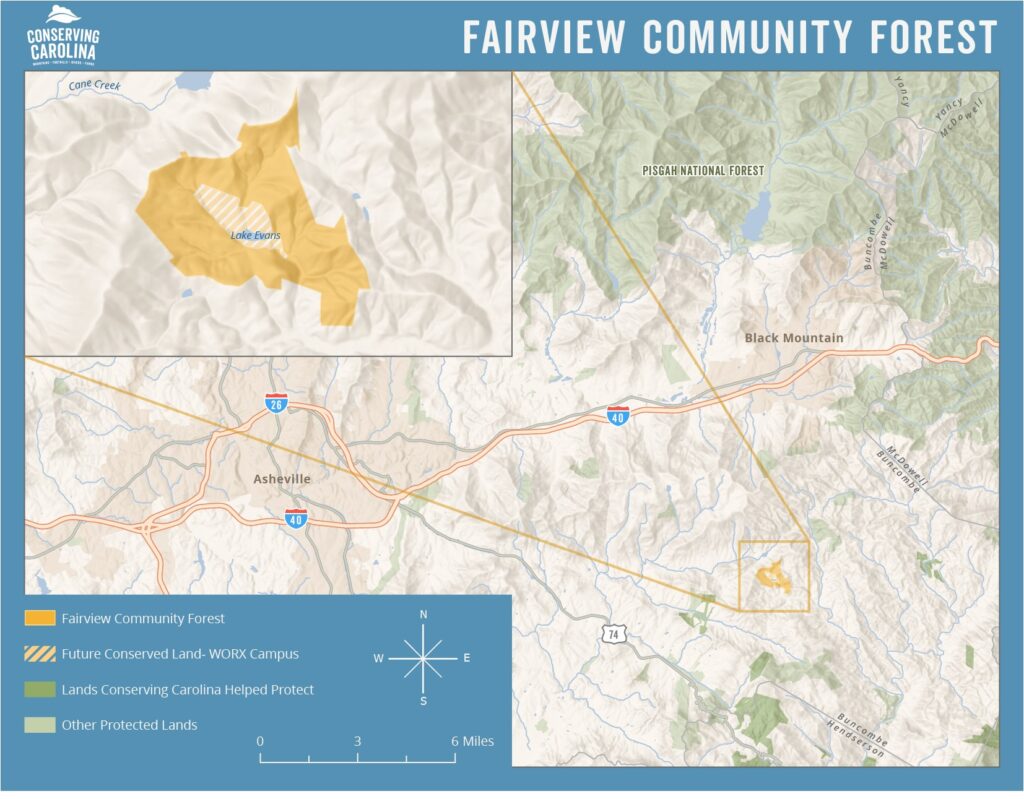
The students were spending a week with The WORX Project, a career-focused educational program for Asheville and Buncombe public school students, based at a former summer camp. In addition to WORX, this land will be home to the future Fairview Community Forest, which will be open to the community for hiking, biking, and fishing. This summer, Conserving Carolina purchased 226 acres of the property. The nonprofit Camp Grier will own another 27.5 acres including The WORX Project campus and will lease the rest of the land, managing it for public access.
On that July morning, the students could choose to explore the woods and water with Rose. Or they could spend the morning with Cane Creek Cycling Components, exploring careers in the bicycle industry. Others joined the kitchen staff to try their hand at culinary jobs while others learned about beekeeping.
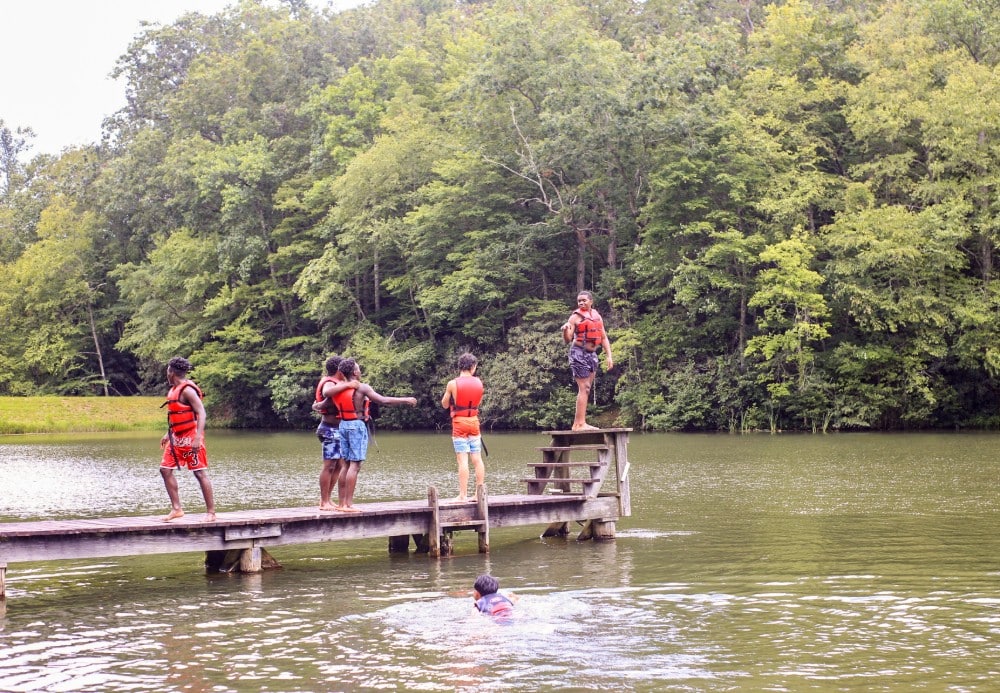
At the WORX Project, students have also gotten hands-on experience in the solar industry, forestry and saw milling, sustainable agriculture, construction, and other potential career paths. All of the education takes place outdoors and there are opportunities to swim in the lake or have fun on the trails. In that sense, The WORX Project is an outdoor summer camp, free for any students who want to go.
Career Paths and Connecting with Nature
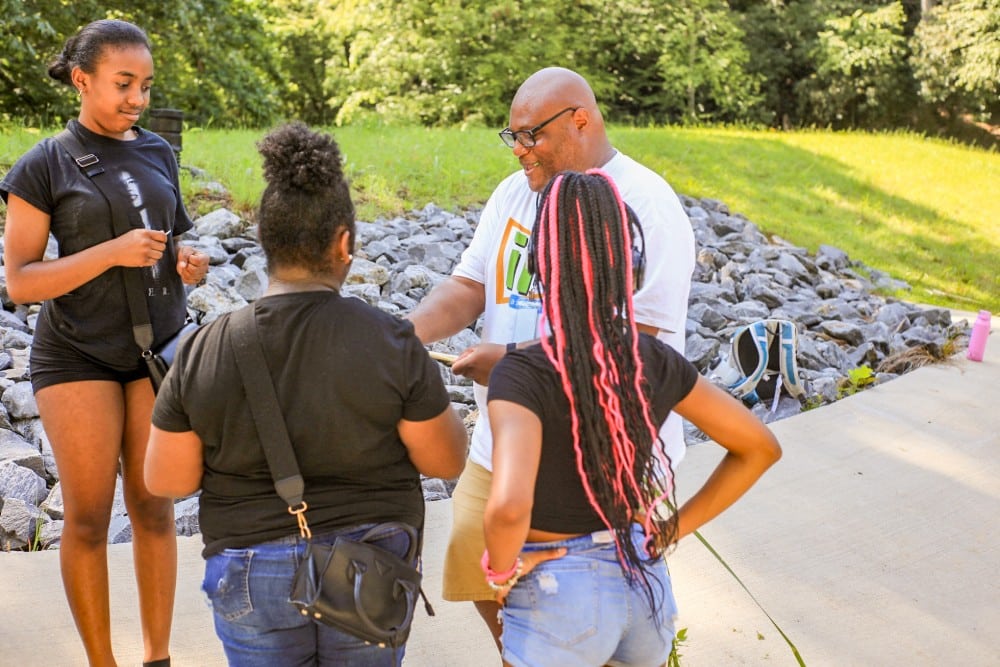
Greg Hall II, director of the In Real Life after-school program, led the group of students in July. He said that, even though the students live in Western North Carolina, many of them haven’t spent much time in the outdoor areas that make this region famous—and drive so much of the local economy. Getting outdoors can lead to a powerful personal connection with nature, and it can also open up new career paths, he said.
“When the students first get here, a lot of times, they say ‘It’s hot,’ ‘I don’t want to be here,’ ‘I’m tired,’ or ‘the bugs.’ But later, when we check in with them, they say ‘I had an awesome time, Mr. Greg.’ I had one young lady in sixth grade, a person of color, who came out last week. Afterward she said, ‘I think I want to be an environmental educator.’ So just being immersed in the environment and learning about that opportunity provided a new option for what she wants to do with her life.”
Greg came to Asheville when his parents moved from Raleigh to the mountains, seeking a new adventure. The place inspired a deep love for nature that continues to grow, and he found opportunities in school and in work. He made the decision, “I want to put my roots here, I want to invest in my community and invest in the next generation.”
He said The WORX Project gives students a chance to deepen their own connection with this place.
“If you just say we need to conserve our environment, that sounds good and I might consider it, but if I actually come out here and I’m engaging with a beautiful space and I’m doing something that I may not have not done before, then I have a deeper understanding about why this is important.”
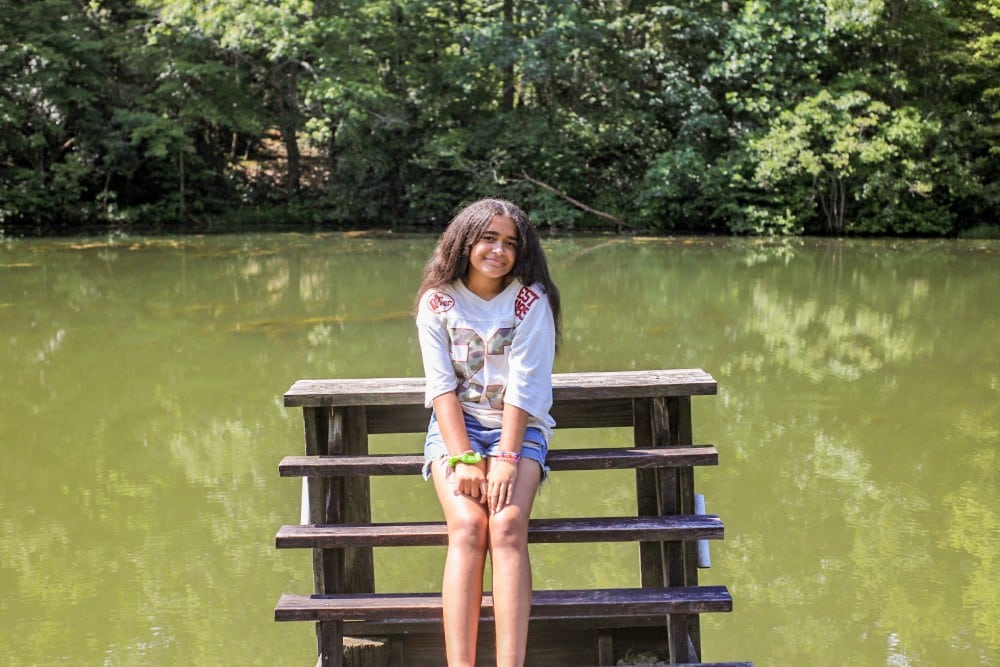
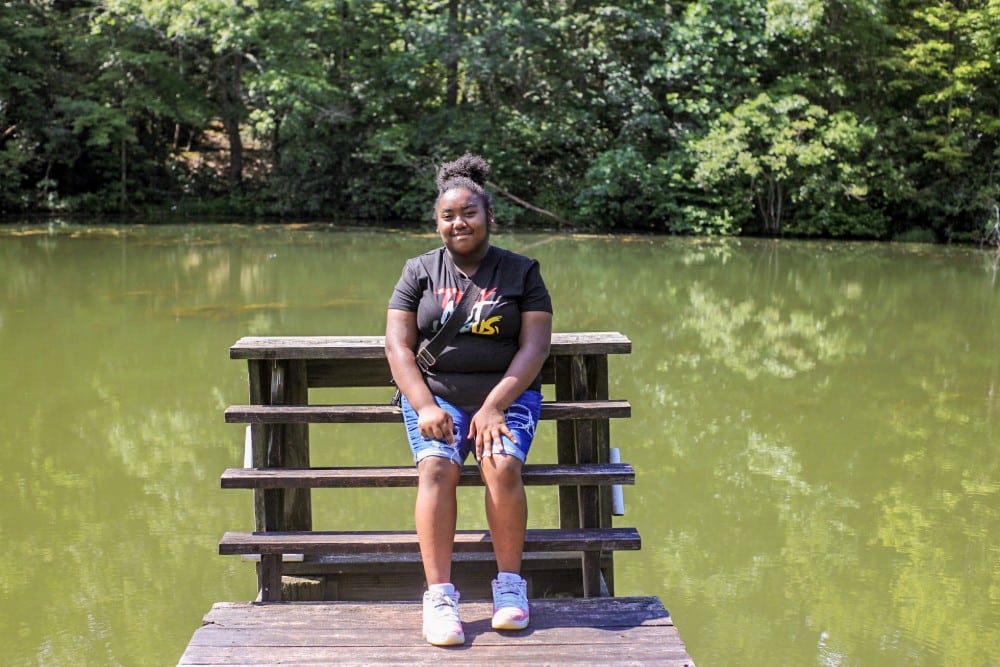
Two of the teenagers at WORX that morning, Savannah and Quiciyah, said it’s not just about what you learn and do at WORX but about the community.
Savannah said, “Everybody tries to include everyone, no matter what. Everyone cares about your opinion and what you think about a certain topic. They take that into consideration and add more. I love that about this place. I’ve had a lot of fun here and I’ve found a lot more things that I like about myself and about different topics.”
Quiciyah added, “I would say I haven’t gotten judged here. People can just be themselves and not worry about what people say about them and just have fun.”
The Land Needed to Serve Kids
WORX is located on the former Camp Woodson, which was originally a Presbyterian summer camp. Later, it served as a base camp for young people in the state’s juvenile correction system. Instead of spending their days confined in a detention center, youth who had earned the opportunity did wilderness-based service work on trails and public lands. They would come back to the camp every couple weeks to shower, do laundry, and sleep in a bed.
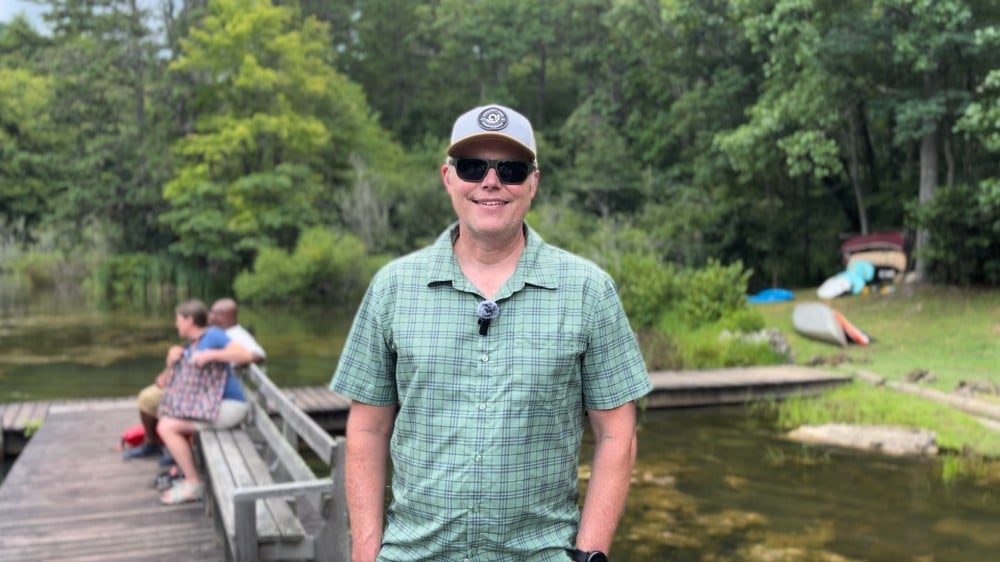
Jason McDougald, now the director of the Camp Grier—a nonprofit that includes The WORX Project—worked for a decade with this program, until the state ended it in 2011. He was the kids’ teacher and he helped them transition to schools when they left. For young people who had setbacks early in life, this outdoor experience offered another chance to learn, grow, and prepare for adult life.
Even before the state closed the program, Jason reached out to Conserving Carolina to look for ways to protect the camp—a process that ultimately took fourteen years!
“I’m not one to easily give up I guess,” Jason said. “It’s just such a great little micro-watershed and it just had such good memories.
It just seemed like the land needed to serve kids and serve the community.”
As the partners worked toward a conservation solution, Jason launched WORX on the site in 2023, with funding from Dogwood Health Trust.
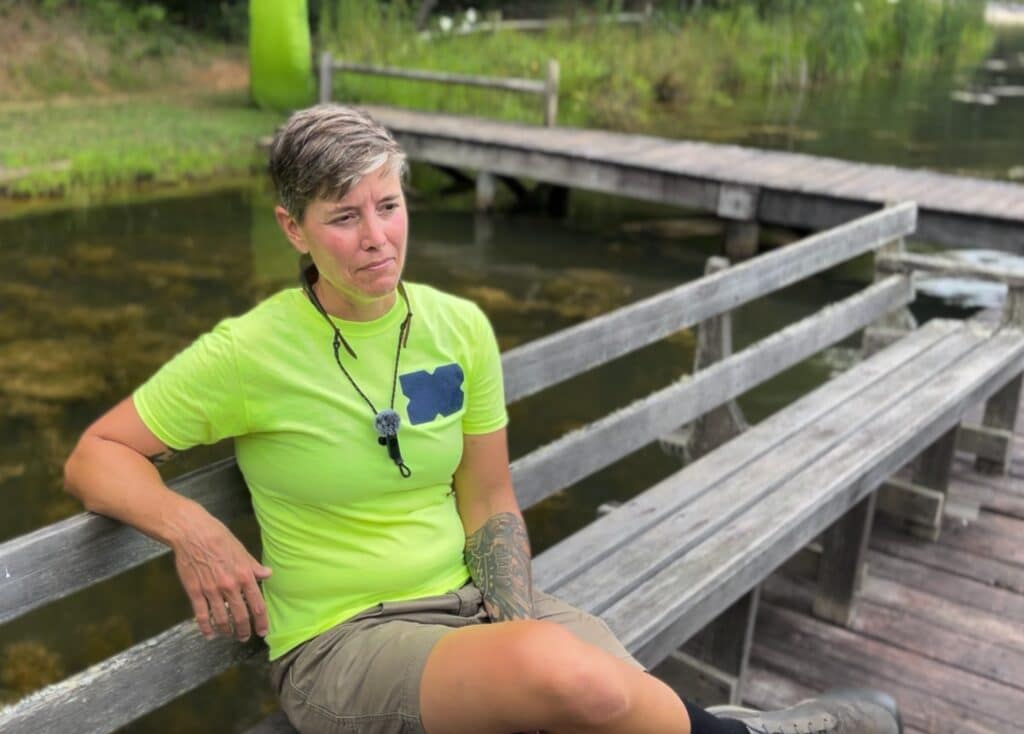
Sara Jarrell, who directs The WORX Project, had worked in the bike industry for 20 years, including programs in Colorado to get more people on bikes. When the WORX job came up, she welcomed the chance to move her family home to Western North Carolina and to work more with kids. She sees the program offering something that she could have used when she was in school.
“For a lot of kids, their learning style is not conducive to being cooped up within four walls. Personally, as a student I struggled a lot with sitting still and doing things exactly how everyone else had to do them. For me and for a lot of students, I think it’s necessary to get out into the fresh air. There’s a lot of research that backs up the benefits of doing education outside.”
Vocational Campus Surrounded by Community Forest
The vision for the former camp is to provide not only an outdoor campus, but also a recreational asset for the local community. The WORX campus is located at the center of the property, surrounded by the newly protected 226 acres that will become the Fairview Community Forest.
Conserving Carolina purchased that land from the Presbytery of Western North Carolina this summer, with funding from numerous sources, including federal, state, local, and private partners. Camp Grier will own an additional 27.5-acres, including the WORX campus. Camp Grier will lease the rest of the property and manage the community forest. In all, over 250 acres will be protected forever with conservation easements.
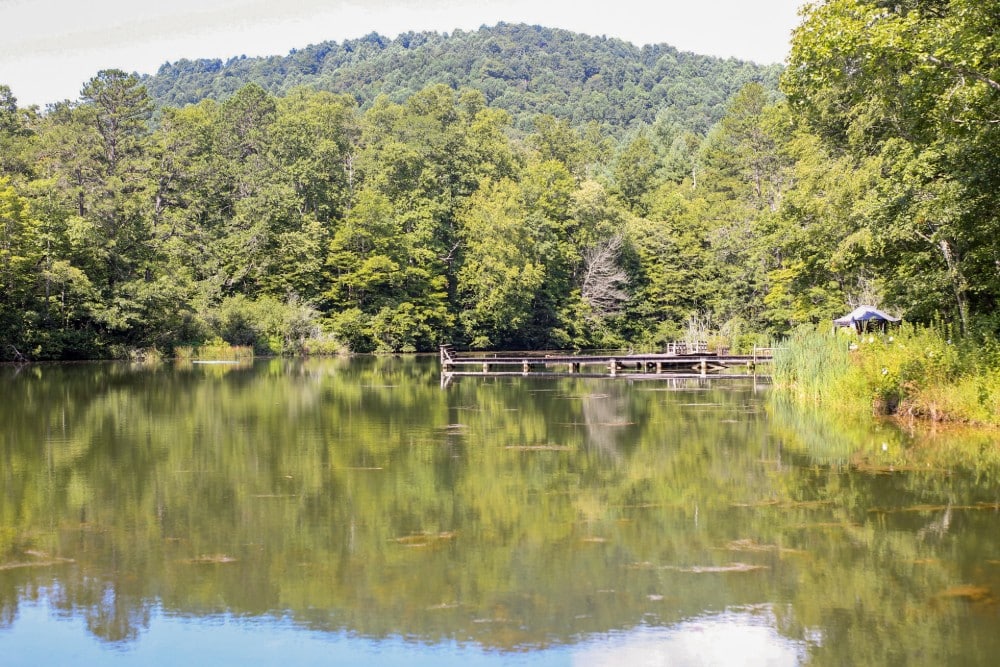
Tom Fanslow, Conserving Carolina’s land protection director said, “In addition to the vital community benefits, there are important water quality and wildlife benefits. This property encompasses an entire watershed, with over a mile of headwater streams. It also has important bat habitat. It ranked as one of our top priorities for conservation in the Rocky Broad River watershed.”
When it opens, the Fairview Community Forest will be a place for hiking, biking, and fishing. Conserving Carolina and Camp Grier plan to open the first three miles of the new trails by next year and the long-term vision is to develop more than ten miles of trails.
Jason said, “The big vision for this property is just connecting people to the land. We’re really excited to finally get the property conserved.”
Article by Rose Lane, Communications and Marketing Director.